Get The End of Day Closing Note
The news tells you what happened. We explain what changed.
- Free. Delivered every evening.

Explore all past issues, only on Beehiiv.
City Signals
All City Signals stories, newest first.
In Case You Missed It · Page 3
City Signals
Sugar Land Is Running Out of Land. Another 2,300 Homes Are Moving In.
Nearly 1,000 acres south of the city are being transformed as suburban Houston continues pushing outward.
By Social Storytellers Collective News Desk · October 5, 2026
City Signals
Houston Walked Away From $150 Million. The Conditions Attached to the Money Became the Story.
Houston wanted federal money for violent crime, homelessness and domestic violence. Questions about immigration enforcement ultimately…
By Brandon Crenshaw · October 5, 2026
City Signals
The City That Was Affordable Isn’t Anymore. That’s the Global Story.
Prague’s rent crisis isn’t a local anomaly. It’s the same mechanism SSC has documented in Austin,…
By Social Storytellers Collective News Desk · June 6, 2026
City Signals
Charlotte Added 40,000 Jobs. The Distribution Question Follows.
The headline growth number is real. So is the gap between who is driving it and…
By Social Storytellers Collective News Desk · June 4, 2026
City Signals
Why Are So Many Cultural Debates Really About Scarcity?
From concert tickets to housing costs, many of today’s loudest culture wars are rooted less in…
By Social Storytellers Collective News Desk · June 1, 2026
City Signals
City Signals | Dallas Isn’t a City Under Strain. It’s a City Revealing What Unmanaged Growth Actually Produces.
The signals point in one direction. The distribution of what those signals are producing points in…
By Social Storytellers Collective News Desk · May 10, 2026
City Signals
Mexico City Is Starting to Push Back Against Remote Worker Privilege
When affordability collapses for locals, global mobility starts to look less like freedom and more like…
By Social Storytellers Collective News Desk · May 7, 2026
City Signals
City Signals | Boston: Growth Without Access Is Just Gentrification With Better PR.
Boston doesn’t present as a city in decline. The numbers don’t support that narrative, and neither…
By Social Storytellers Collective News Desk · May 5, 2026
City Signals
City Signals | Miami Is Becoming a Different Kind of City
An influx of wealth is reshaping who the housing market serves — and who can afford…
By Social Storytellers Collective News Desk · May 4, 2026
City Signals
Miami’s Affordable Housing Efforts Are Operating at Scarcity Scale
A limited number of “affordable” homes reveals how access is being rationed in high-cost cities.
By Social Storytellers Collective News Desk · May 3, 2026
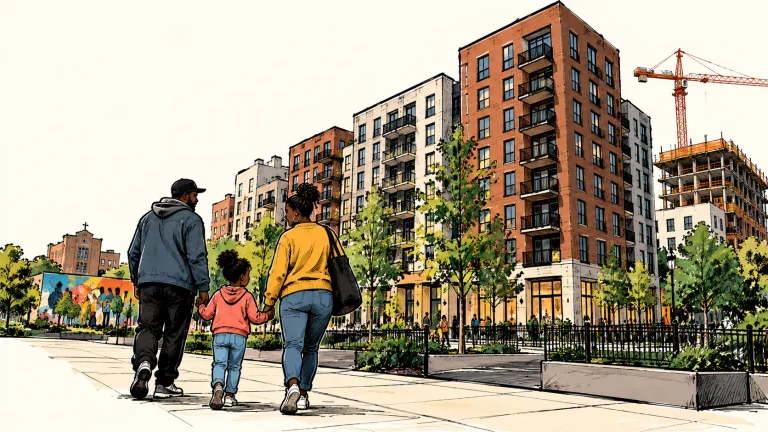
The first phase of a nearly 2,000-home development on a megachurch's East New York campus is open, with 453 more homes and a child-care center on the way. Whether it keeps longtime Brooklyn families in place depends on how far its rents sit from what the neighborhood actually earns.
The settlement exposes a weakness in major public infrastructure projects: once a city becomes dependent on finishing the work, its bargaining power changes.
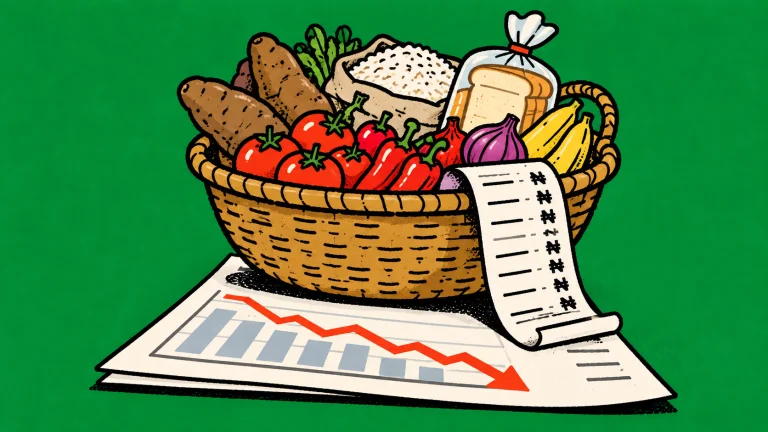
Inflation is falling, but food costs remain high and a $12.4 billion gap in the country’s external accounts is raising a different question about how much confidence the recovery can carry.
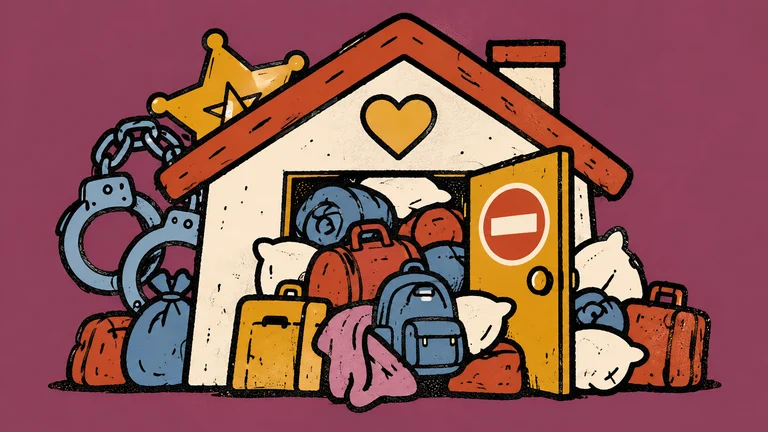
Harris County authorities arrested 117 people during a five-day warrant operation earlier this month, including 79 people wanted in domestic violence cases. The operation, called “Break the Cycle,” targeted outstanding warrants across the county and connected victims in those cases with advocates through the sheriff’s office.
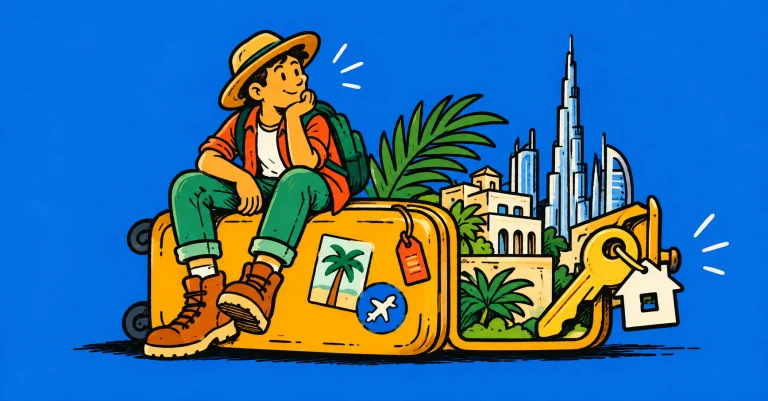
Dubai is adjusting how it measures tourism success, putting more emphasis on higher-spending repeat visitors who could eventually become residents, business owners or investors rather than simply maximizing arrival numbers. Issam Kazim, CEO of the Dubai Corporation for Tourism and Commerce Marketing, said the city is increasingly focused on the “quality rather than the quantity” of visitors as it plans toward 2027. The strategy fits Dubai’s broader effort to use tourism as the top of a longer economic funnel: visit the city, return, establish a business, buy property or relocate. That changes tourism from a hospitality strategy into a population and capital strategy. Cities around the world compete for visitor spending, but Dubai is increasingly competing for what visitors might do after the vacation ends. The more important metric may no longer be how many people arrive at the airport, but how many eventually decide they have a reason to stay.
Chicago is moving to make its Smart Streets camera-enforcement program permanent and expand it citywide after a downtown pilot produced nearly $4.5 million in fines for vehicles blocking bus lanes, bike lanes and bus stops. Cameras mounted on CTA buses and city vehicles document violations, allowing tickets to be issued without an enforcement officer standing on the street. City data show that roughly $2.6 million from those citations has actually been collected. Supporters argue that blocked lanes slow buses, force cyclists into traffic and make infrastructure ineffective even after taxpayers pay to build it. Critics of automated enforcement often focus on whether cameras become another revenue-generating system that disproportionately penalizes drivers. Chicago’s expansion pushes that debate into a broader question: if a city builds dedicated space for transit and bicycles but drivers routinely occupy it, how much enforcement is necessary before the infrastructure works as designed?
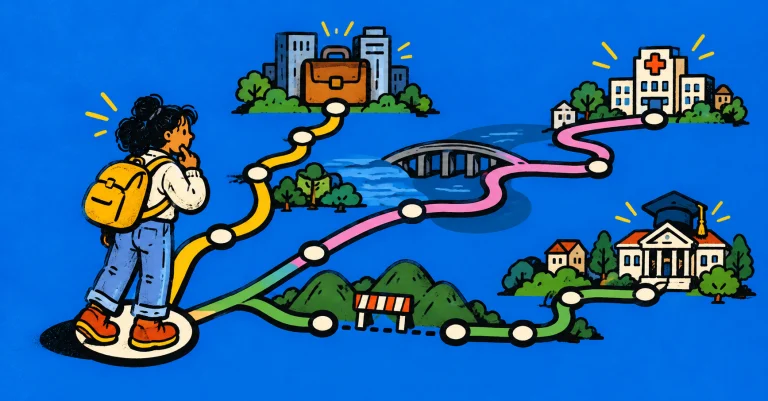
Jobs, healthcare and education can exist in the same metropolitan area without being practically reachable by every resident.
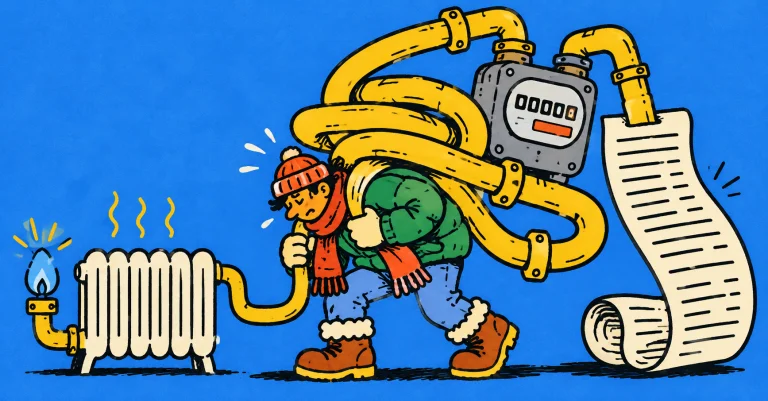
About 1.2 million National Grid customers in Brooklyn, Queens and Staten Island are expected to spend an average of $87 more on natural gas between November and March than they did last winter. The increase is not primarily coming from the commodity price of natural gas. Gothamist reports that gas prices themselves are expected to be lower, while delivery charges are projected to rise by about $211 over the five-month period under rates approved by New York regulators in 2024. Actual household bills will still depend on weather and consumption. The numbers illustrate why falling energy prices do not automatically produce falling utility bills: customers are paying both for the fuel and for the infrastructure, labor and financing required to deliver it. For households already budgeting around rent, food and transportation, the delivery side of an energy bill can erase savings that appear to exist in the underlying commodity market.
Houston officials say they can close a widening budget shortfall without increasing the property tax rate. The unresolved issue is how the city will sustain public services while its revenue expectations continue to deteriorate.
Scammers allegedly used a lookalike email domain to impersonate a legitimate vendor and redirect a real city payment. The case shows how payment fraud can exploit routine administrative trust without breaching an organization’s internal systems.
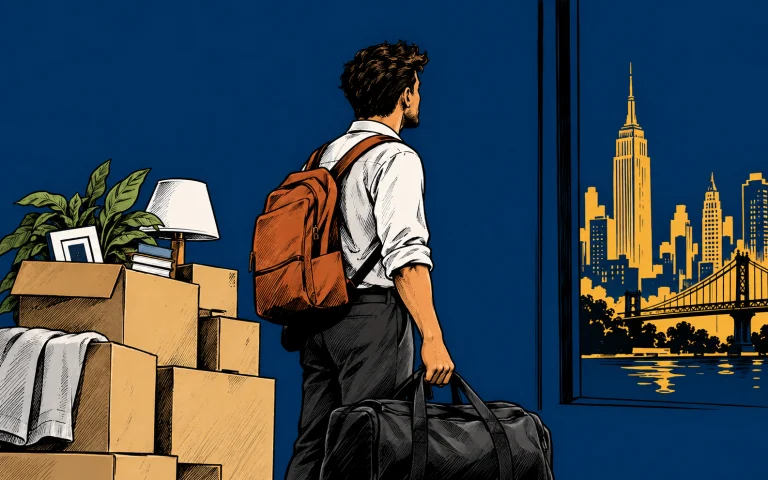
Christian did not leave New York City because he stopped loving it. He left because remaining there increasingly required him to accept conditions that no longer made financial sense. He lived on West 118th Street near Riverside Drive in Harlem, a prime Manhattan location where access to Riverside Park, transit, restaurants and the broader energy of the city helped justify compromises inside the apartment. He was paying about $3,500 a month for a one-bedroom in a pre-war building, where the appliances were old, the elevator was frequently out of order and what was technically an elevator building regularly became a walk-up. Mice became enough of a problem that he plugged openings around the oven and air-conditioning unit to keep them from entering the apartment. None of those conditions stopped his landlord from raising the rent three separate times during his tenancy. For a while, the location made those compromises easier to rationalize because much of the value of living in New York existed outside his front door. Eventually, however, the price of staying overtook the value of the experience, and moving became less of a lifestyle choice than a financial necessity.

New York City is moving toward banning horse-drawn carriage rides in Central Park by 2028, potentially ending a tourist tradition that has operated in the city for more than 150 years. The latest push followed the death of 18-year-old Romanch Mahajan, an Indian tourist who was fatally injured after a carriage horse bolted in Central Park this summer. Animal-welfare advocates and city leaders argue that horse-drawn carriages no longer belong in a crowded modern park where pedestrians, cyclists, vehicles and tourists compete for space. The carriage industry and its union say a ban would eliminate the livelihoods of workers, many of them immigrants, and argue that stronger safety rules would be preferable to eliminating the trade. The proposed legislation includes a transition plan for affected workers and requirements governing what happens to the horses after the industry closes. New York has debated this question for years, but the argument is now larger than whether carriage rides are charming or outdated: it is about what happens when a city’s cultural traditions collide with changing standards for safety, labor and animal welfare.