Get The End of Day Closing Note
The news tells you what happened. We explain what changed.
- Free. Delivered every evening.

Explore all past issues, only on Beehiiv.
City Signals
All City Signals stories, newest first.
In Case You Missed It · Page 4
City Signals
City Signals | Miami Is Becoming a Different Kind of City
An influx of wealth is reshaping who the housing market serves — and who can afford…
By Social Storytellers Collective News Desk · May 4, 2026
City Signals
Miami’s Affordable Housing Efforts Are Operating at Scarcity Scale
A limited number of “affordable” homes reveals how access is being rationed in high-cost cities.
By Social Storytellers Collective News Desk · May 3, 2026
Houston officials say they can close a widening budget shortfall without increasing the property tax rate. The unresolved issue is how the city will sustain public services while its revenue expectations continue to deteriorate.
Scammers allegedly used a lookalike email domain to impersonate a legitimate vendor and redirect a real city payment. The case shows how payment fraud can exploit routine administrative trust without breaching an organization’s internal systems.

Christian did not leave New York City because he stopped loving it. He left because remaining there increasingly required him to accept conditions that no longer made financial sense. He lived on West 118th Street near Riverside Drive in Harlem, a prime Manhattan location where access to Riverside Park, transit, restaurants and the broader energy of the city helped justify compromises inside the apartment. He was paying about $3,500 a month for a one-bedroom in a pre-war building, where the appliances were old, the elevator was frequently out of order and what was technically an elevator building regularly became a walk-up. Mice became enough of a problem that he plugged openings around the oven and air-conditioning unit to keep them from entering the apartment. None of those conditions stopped his landlord from raising the rent three separate times during his tenancy. For a while, the location made those compromises easier to rationalize because much of the value of living in New York existed outside his front door. Eventually, however, the price of staying overtook the value of the experience, and moving became less of a lifestyle choice than a financial necessity.

New York City is moving toward banning horse-drawn carriage rides in Central Park by 2028, potentially ending a tourist tradition that has operated in the city for more than 150 years. The latest push followed the death of 18-year-old Romanch Mahajan, an Indian tourist who was fatally injured after a carriage horse bolted in Central Park this summer. Animal-welfare advocates and city leaders argue that horse-drawn carriages no longer belong in a crowded modern park where pedestrians, cyclists, vehicles and tourists compete for space. The carriage industry and its union say a ban would eliminate the livelihoods of workers, many of them immigrants, and argue that stronger safety rules would be preferable to eliminating the trade. The proposed legislation includes a transition plan for affected workers and requirements governing what happens to the horses after the industry closes. New York has debated this question for years, but the argument is now larger than whether carriage rides are charming or outdated: it is about what happens when a city’s cultural traditions collide with changing standards for safety, labor and animal welfare.
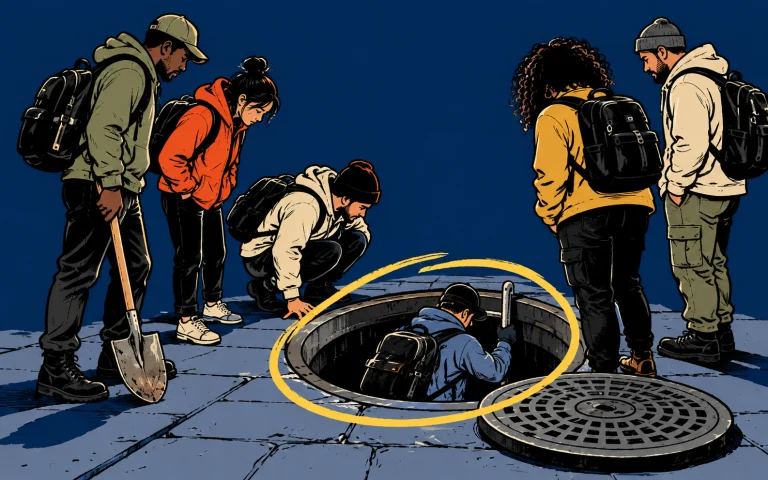
Groups have repeatedly been seen entering and emerging from New York City manholes, sometimes carrying or leaving behind shovels and other tools. Police say there is no evidence of a terror plot, but repeated unauthorized access to underground infrastructure deserves more than a shrug.

Houston’s weekend calendar is unusually dense, with major art, food and cultural events competing for the same two days. Here is how to build a Sunday around them without turning the weekend into another checklist.
An 81-page commission report proposes new limits on Texas school takeovers while supporters of the Houston intervention point to improved campus ratings.

The waterfront’s future should include clear protections for workers, small businesses and public access throughout construction.
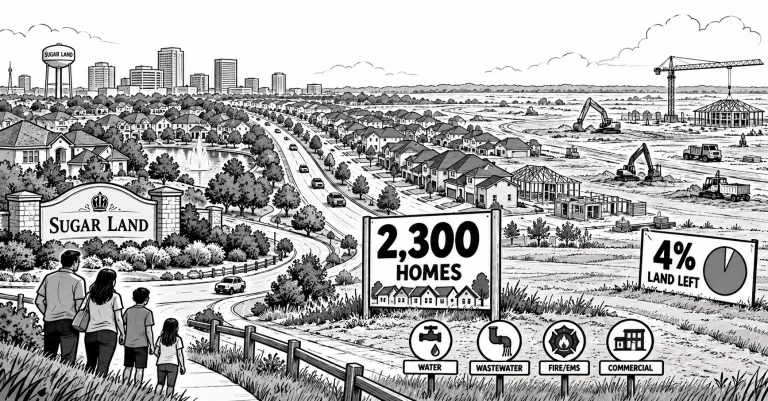
Nearly 1,000 acres south of the city are being transformed as suburban Houston continues pushing outward.
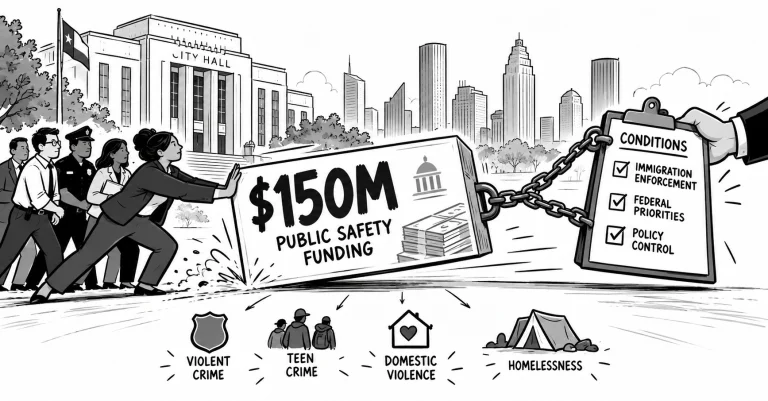
Houston wanted federal money for violent crime, homelessness and domestic violence. Questions about immigration enforcement ultimately changed the calculation.
Prague’s rent crisis isn’t a local anomaly. It’s the same mechanism SSC has documented in Austin, Houston, and cities across the United States — playing out on a different stage.
The headline growth number is real. So is the gap between who is driving it and who is being reached by it.