Harris County authorities arrested 117 people during a five-day warrant operation earlier this month, including 79 people wanted in domestic violence cases. The operation, called “Break the Cycle,” targeted outstanding warrants across the county and connected victims in those cases with advocates through the sheriff’s office.
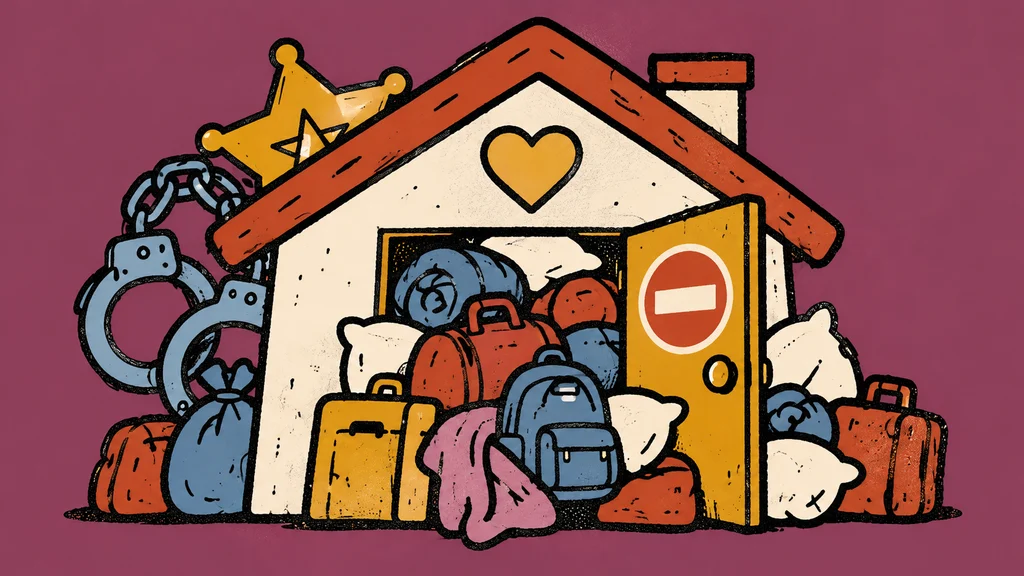
The arrests are significant, particularly because some of the cases involved allegations of strangulation, assaults on children and violence against pregnant women. But the enforcement push is happening alongside a much harder problem: many survivors still have limited options once they decide to leave. Harris County has the highest domestic violence shelter turn-away rate in Texas, at 75%, according to the Texas Council on Family Violence.
That creates a difficult contradiction. Local authorities are making a more aggressive effort to find and arrest people accused of serious family violence, while the nonprofit and shelter systems survivors rely on remain under strain. Federal funding cuts have reduced staffing at domestic violence organizations across Harris County, even as local officials have announced new investments in protective-order assistance, victim services and warrant enforcement.
There are signs of progress. Domestic violence-related homicides in Harris County fell from 47 in 2024 to 20 in 2025, the largest decline of any county in Texas. But a lower homicide count does not mean the underlying system is adequately resourced. Survivors can still face waiting lists, shelter shortages, legal barriers and financial instability at the moment they are trying to get away from an abusive household.
That is what makes the latest crackdown more than an arrest story. Harris County is showing that enforcement can be intensified quickly when agencies coordinate around outstanding warrants. The more difficult test is whether the county can build the same capacity on the survivor side — enough shelter beds, advocates and long-term support to make leaving violence a realistic option rather than another crisis.