
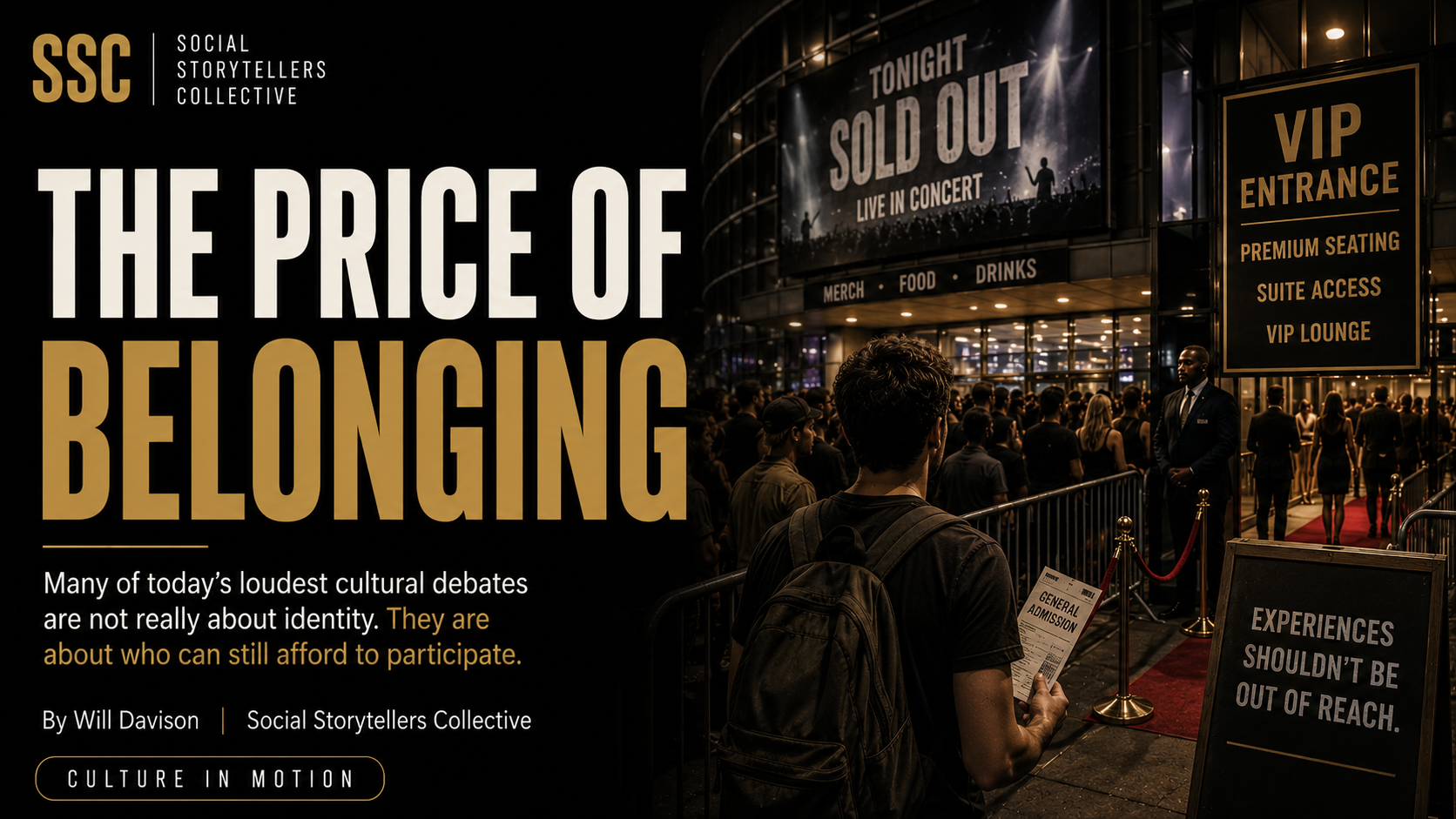
A floor ticket to a major stadium tour now runs hundreds of dollars before fees, parking, food, and transportation enter the equation. The same household absorbing that price is often carrying rising rent, student debt, and healthcare costs that have grown faster than wages for more than a decade. Public conversation frames these frustrations as taste disputes, generational conflict, or political identity. The economics keep pointing somewhere else.
Most of the cultural arguments dominating social media start as access arguments. Live music is the visible version. Fans debate whether an artist deserves premium prices, but the frustration underneath is simpler: people are being priced out of experiences that were not always priced this way. The same structure runs through higher education, where debates about merit and prestige routinely obscure the more fundamental question of who can afford to show up. What looks like a culture war is frequently a resource war wearing a different name.
The numbers are not subtle. Median home prices in most major metropolitan areas remain dramatically higher than they were a decade ago. Tuition, childcare, and healthcare costs continue consuming larger shares of household budgets. At the same time, cultural experiences have been repositioned as status markers — concert attendance, destination travel, wellness retreats, exclusive memberships, and premium events are sold not simply as activities but as signals of belonging. Participation itself has become a form of social capital. Which means being excluded from participation carries a social cost that goes beyond missing the show.
This is where the contradiction lives. Culture is described as something that brings people together. Cultural institutions increasingly run business models that sort audiences by purchasing power. Premium seating, VIP access, subscriber tiers, and paywalled content generate revenue by making the distinctions visible. The market rewards exclusivity. The culture continues to celebrate inclusivity. Both things are true at once, and the gap between them is where the resentment builds.
The same dynamic operates online. Social platforms appear free. Access is mediated by algorithms, paid subscriptions, and promotional spending that advantages those with resources. Creators compete for visibility. Audiences compete for attention. The barriers look different than they did in previous generations — they are less formal, harder to name, easier to dismiss as individual failure rather than structural design. But they remain barriers.
What mainstream coverage consistently misses is the role scarcity plays in driving the temperature of these arguments. People are not arguing only about music, housing, education, or entertainment. They are arguing about belonging — and when belonging becomes expensive, the arguments become proportionally more charged. Scarcity is no longer confined to material goods. It has moved into cultural life itself. As participation becomes more costly, the debates that read as ideological are more often rooted in something older and more concrete: who gets to be in the room, and who keeps getting told the room is full.