The news tells you what happened. We explain what changed.

Explore all past issues, only on Beehiiv.
Exploring the changing economy, the future of work, and the people behind the numbers.
Business
96% of participating voters supported strike authorization at SEIU Local 1000, which represents roughly 100,000 California…
By Social Storytellers Collective News Desk · October 10, 2026
Layoffs
August sales were reportedly 70% below their level two years earlier, while store traffic fell 32%…
By Social Storytellers Collective News Desk · October 10, 2026
Layoffs
Dharmesh Shah apologized for a “curt and insensitive” LinkedIn post after HubSpot’s AI-driven restructuring. The backlash…
By Social Storytellers Collective News Desk · October 10, 2026
Analysis
The company stopped reporting regional comparable-store sales as Greater China revenue fell 26% on a currency-neutral…
By Will Davison Jr. · October 10, 2026
Workforce
The bank is reportedly considering steep reductions across parts of its U.K. wealth business. The shift…
By Social Storytellers Collective News Desk · October 9, 2026
Business
Taiwan Semiconductor Manufacturing Company reported approximately $46.7 billion in third-quarter revenue, a 50% increase from the…
By Will Davison Jr. · October 9, 2026
Business
Amazon cut fewer than 1,000 white-collar jobs from its Stores business this week, even as the…
By Will Davison Jr. · October 9, 2026
Business
A $9.69 billion proposal avoids new taxes and layoffs for now, while the sources of the…
By Social Storytellers Collective News Desk · October 9, 2026
Workforce
Starting November 1, Target's grocery employees will wear branded hats and aprons as the retailer expands…
By Social Storytellers Collective News Desk · October 9, 2026
Workforce
An aging workforce, immigration enforcement and data-center construction are converging on the skilled trades. Texas is…
By Social Storytellers Collective News Desk · October 9, 2026
Business
AMD will substantially increase its chip supply in 2027 to keep up with AI demand, CEO…
By Social Storytellers Collective News Desk · October 8, 2026
Workforce
Ratified contracts put wages, leave and working conditions at the center of the institutions that present…
By Social Storytellers Collective News Desk · October 8, 2026
The IMF's October 13 Global Financial Stability briefing warned that calm markets may conceal pressure from sovereign debt, cyberattacks and leveraged nonbank lenders. Reuters reported that the share of global banking assets in banks with weak capital cushions rose to 22%, from 18% in the earlier comparison, even as the IMF judged the banking system broadly resilient under stress tests. Those percentages do not mean one-fifth of banks are failing; they describe assets held by institutions that appear vulnerable under the report's capital test. The warning shifts attention from headline stock gains to the channels through which market stress could reach credit availability and borrowing costs.
Workers' wages rose in dollar terms in September, but their purchasing power declined. The Bureau of Labor Statistics reported October 14 that average hourly earnings increased 0.1% from August while consumer prices rose 0.6%, leaving inflation-adjusted hourly earnings down 0.5% for all private nonfarm employees. Real weekly earnings also declined 0.5% over the month, and real hourly earnings were 0.7% lower than a year earlier. These are averages across workers, not evidence that every employee experienced a pay cut. They illustrate how a nominal raise can be overtaken by higher prices, leaving less spending power for housing, transportation and routine purchases. The release does not establish what happened to any individual household.
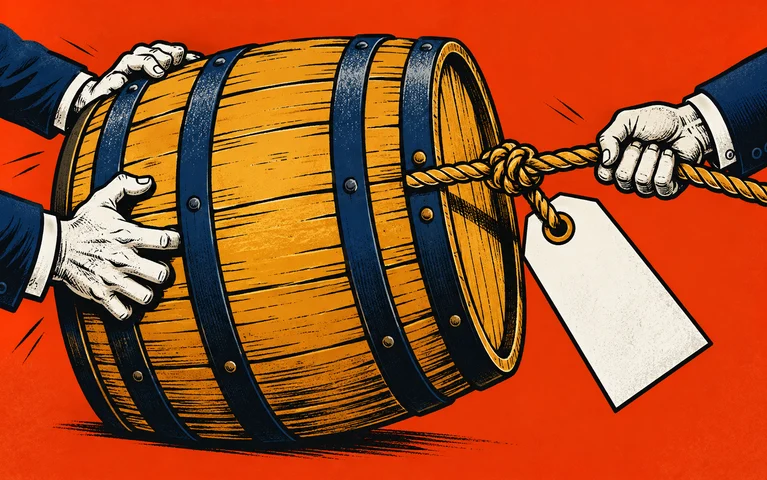
Three potential buyers are now circling the whiskey brand after an earlier deal collapsed. The receiver plans to use Chapter 11 to sell the assets without carrying over the company’s existing liabilities.

The airline is meeting travelers in a chatbot before they reach its website. What the launch doesn’t say matters as much as what it does.

China’s automakers are leaning harder on foreign markets as home sales weaken, but the export surge is already colliding with quotas, tariffs and pressure to build cars overseas.
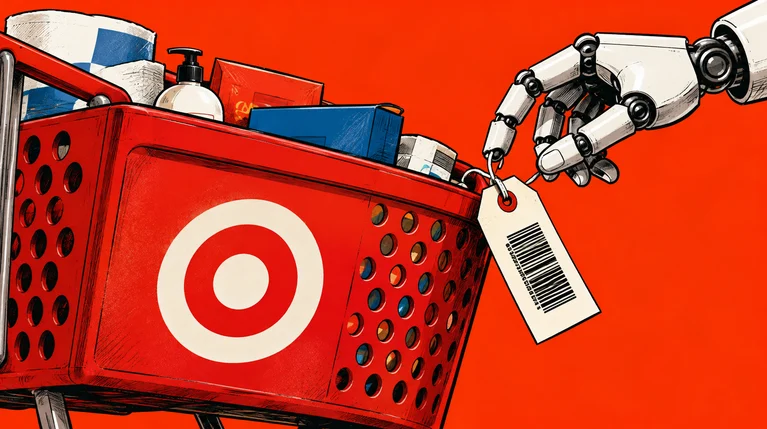
The retailer says it does not use customer identity, location, time of day or demand spikes to raise prices. The statement adds to a broader effort by major companies to reassure shoppers about how AI and customer data are being used in pricing.

Nearly half of women laid off in a new national survey said they received no severance or support. For one former CDC employee, years at the agency offered little protection after she had recently moved into a new role.
Safe-haven demand and rate expectations pushed the dollar to its strongest level since April 2025.
Federal Reserve Chair Kevin Warsh wants financial markets to rely more on economic data and less on central bank forecasts. Other policymakers argue that withholding guidance could make an already uncertain economy harder to navigate.
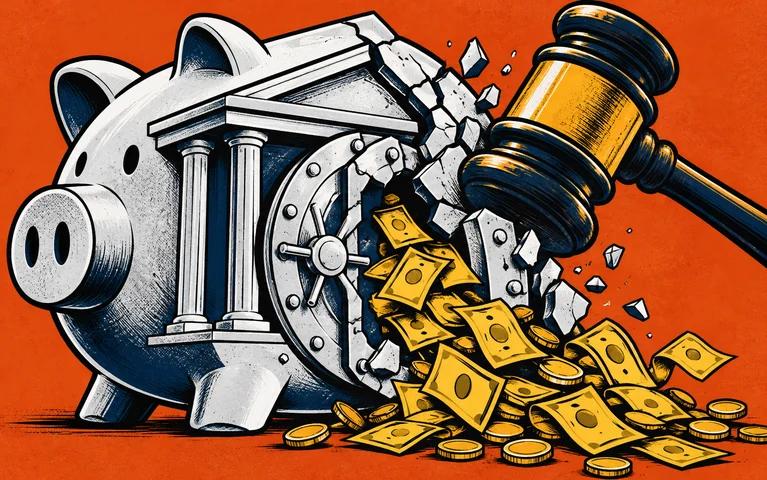
Bank of America entered earnings day carrying an unusually large problem. Federal regulators had just imposed more than $1.2 billion in penalties over failures in the bank’s anti-money-laundering controls, forcing the company to book a $1.2 billion charge against third-quarter results. The settlement followed findings that the bank failed to adequately monitor suspicious activity and did not report billions of dollars in potentially suspicious transactions on time.

Retail sales rose 0.8% in September, but gasoline accounted for an unusually large share of the increase. For commuters already reorganizing their lives around fuel costs, higher spending is increasingly a measure of what it costs to maintain the same routine.
U.S. stocks recorded their worst trading day since July on October 14 as accelerating inflation renewed expectations that the Federal Reserve could raise interest rates again. The S&P 500 declined 1.1% to 7,718.94, while the Nasdaq Composite fell 1.9% to 26,692.87, according to the Associated Press. The Dow Jones Industrial Average slipped 0.1%, and the Russell 2000 index of smaller companies also declined 1.9%. The selloff followed inflation data showing consumer prices had risen 3.7% over the previous year, increasing concern about tighter monetary policy. Higher financing costs can affect business expansion, corporate investment and hiring decisions, particularly for companies dependent on borrowed capital. However, a single trading session does not establish that employers will reduce hiring or that economic growth will slow. The more consequential development is the return of uncertainty around the cost of financing future growth. For businesses already evaluating whether to invest, expand or preserve cash, that uncertainty may become more important than the stock market's daily movements.
