
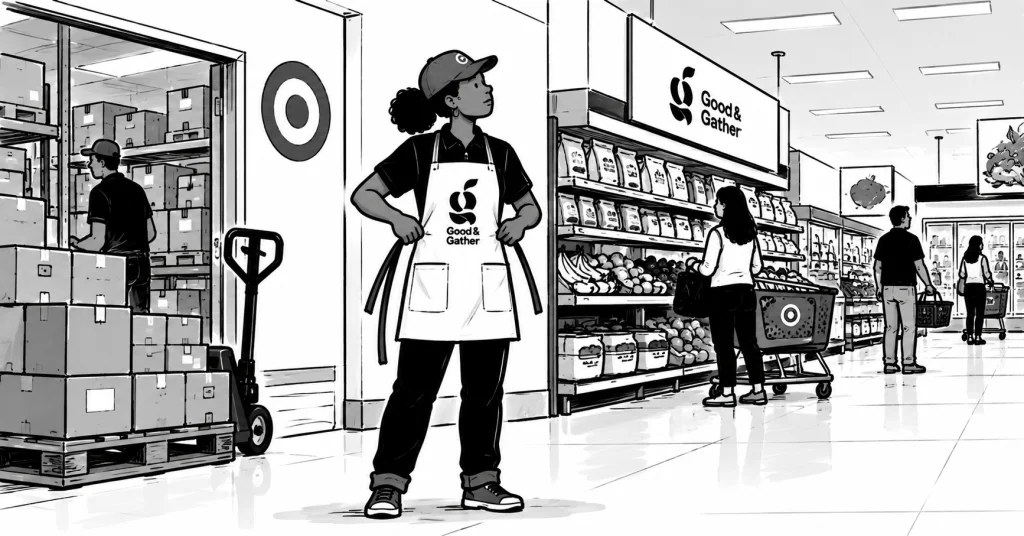
Starting November 1, Target’s grocery employees will wear branded hats and aprons as the retailer expands its food business. The new dress code is intended to improve customer service, but employee concerns reveal the operational challenges behind a corporate growth strategy.
BUSINESS & WORKFORCE
Target is preparing to require its Food & Beverage Experts to wear branded hats and aprons beginning November 1, introducing a new dress code as the retailer works to make grocery shopping a more prominent part of its business. The uniform change follows a quarter in which Target’s food and beverage sales increased 7%, the department’s fastest growth in three years, according to Reuters reporting cited by USA TODAY. The company also plans to introduce 600 additional private-label food and beverage products over the next two years. Together, these moves point to an effort to turn grocery departments into destinations rather than secondary stops during shopping trips. But for employees responsible for stocking shelves, handling merchandise and assisting customers, the strategy introduces another set of daily expectations.
A Grocery Strategy That Goes Beyond the Shelves
Target’s new accessories will feature branding associated with Good & Gather, its private-label grocery line. The company told USA TODAY that the uniforms were tested with employees and customers and received positive feedback. Similar accessories are already used in its beauty, technology and Starbucks departments. The objective is straightforward: make grocery workers more recognizable and give the department a distinct identity. Yet the rollout also demonstrates how retailers use employee appearance to reinforce their commercial priorities. A worker wearing a Good & Gather apron is no longer simply stocking groceries; that employee becomes a visible representative of the retailer’s food brand. The question is whether that visibility translates into better service or simply creates another requirement for employees already managing physically demanding responsibilities.
Employees Question the Practicality
The response among some apparent Target employees has been considerably less enthusiastic. On the Target employee-focused Reddit forum, commenters questioned whether aprons are appropriate for workers unloading pallets, handling boxes, pushing merchandise carts and moving between refrigerated storage areas and sales floors. Some described concerns about loose fabric catching on equipment, additional laundry and the inconvenience of removing accessories throughout a shift. Others acknowledged potential benefits, including pockets for box cutters and other work supplies. These comments are anecdotal and do not establish how Target’s workforce as a whole views the policy. They do, however, identify practical questions that employee testing and store-level implementation will need to address.
Target Is Investing in a Different Shopping Experience
The uniform policy is arriving alongside substantial changes to Target’s merchandise strategy. According to Target’s second-quarter earnings report, companywide net sales increased 5.3% year over year, while comparable sales grew 3.8%. Food and beverage was among the categories delivering high-single-digit growth. Target also reported that it had transformed nearly half of its center-store grocery experience, creating additional space for fresh foods, snacks, bakery items and emerging products. Following those changes, snack sales increased 15% year over year. The retailer has lowered prices on more than 10,000 items over the past year, reflecting an effort to compete on affordability while offering merchandise that distinguishes its stores from conventional supermarkets. The planned introduction of 600 private-label grocery products, including 400 under Good & Gather, extends that strategy.
When Branding Becomes Another Workplace Requirement
There is a practical tension between how corporate leaders design the shopping experience and how employees execute it. Target’s Food & Beverage Experts are responsible for stocking, pricing and maintaining grocery departments, tasks that involve physical movement, merchandise handling and time-sensitive operational demands. Adding a branded apron may improve recognition among customers, but it does not necessarily provide workers with additional time, staffing or resources to assist them. Indeed, increased visibility could bring more customer inquiries to employees who must simultaneously meet stocking and fulfillment expectations. Target has not publicly demonstrated that the new accessories will improve productivity or customer satisfaction, and the online complaints do not establish that they will reduce either. The policy’s effectiveness will depend on how the retailer accommodates the different working conditions across grocery departments and whether employees can perform their responsibilities without unnecessary interference.
The Business Case Will Be Tested on the Sales Floor
For Target, the stakes extend beyond a uniform change. Grocery shopping offers opportunities to attract recurring store visits, build loyalty around proprietary products and introduce customers to merchandise elsewhere in the store. A recognizable food team can support that experience, particularly when shoppers need help locating products or navigating redesigned departments. But branding alone cannot deliver the service that corporate strategy promises. As the November 1 rollout approaches, the more useful measures will be employee feedback, operational safety, customer satisfaction and whether the grocery department continues to grow. Target is asking its workers to become more visible as the company elevates food within its business. Its next challenge is ensuring that the employees wearing the strategy have the conditions necessary to make it work.