The news tells you what happened. We explain what changed.
Explore all past issues, only on Beehiiv.
All Finance stories, newest first.
Finance
Major financial institutions are restricting AI agents that can access customer accounts, raising questions about security, financial responsibility and who pays when automated technology makes a mistake.
By Brandon Crenshaw · October 27, 2026

Finance
San Francisco supervisors have approved new protections for tenants who owe less than one month's rent. The legislation raises a larger question…
Budget
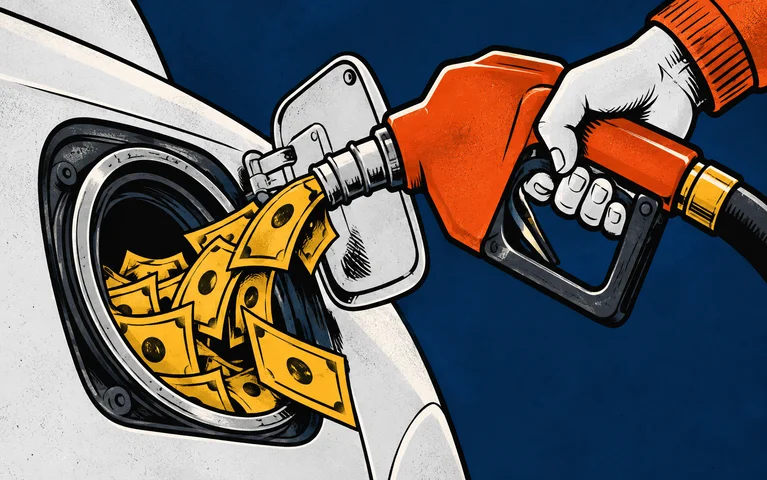
Retail sales rose 0.8% in September, but gasoline accounted for an unusually large share of the increase. For commuters already reorganizing their…
Finance
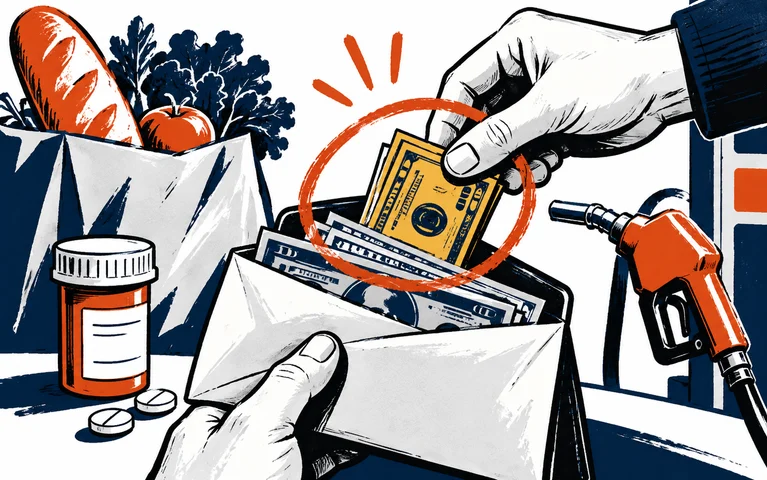
Nearly 72 million Social Security beneficiaries will receive a larger payment in 2027. The increase arrives as inflation continues to pressure household…
Finance
One in four financed new-car buyers is now signing up for at least seven years of payments. As…
By Bryson Davis · October 15, 2026
Finance
White-collar America is producing more while employing fewer people, a shift that could change one of the basic…
By Brandon Crenshaw · October 14, 2026
Breaking News
Opinion
The latest Census figures offer encouraging news, but nearly 8 million Black Americans still live below the poverty line. At what point do we stop celebrating small improvements and confront…
By Bryson Davis · October 27, 2026
Read the column →Consumer confidence improved in October as gas prices declined, but inflation, weak hiring and rising borrowing costs continue to strain households ahead of the midterm elections.
Major financial institutions are restricting AI agents that can access customer accounts, raising questions about security, financial responsibility and who pays when automated technology makes a mistake.
New Pew Research Center data shows how financial strain feels from the inside: stuck, angry and sometimes ashamed for those at the bottom, content and proud for those at the top. With the midterms days away, those feelings may matter as much as the numbers.
San Francisco supervisors have approved new protections for tenants who owe less than one month's rent. The legislation raises a larger question about housing security: should a relatively small financial setback be enough to cost someone their home?
A Goldman Sachs survey finds that more than one-third of America's highest-income households struggle to make progress on long-term financial goals. Rising expenses, family obligations and lifestyle expectations are changing what financial security looks like.
The IMF's October 13 Global Financial Stability briefing warned that calm markets may conceal pressure from sovereign debt, cyberattacks and leveraged nonbank lenders. Reuters reported that the share of global banking assets in banks with weak capital cushions rose to 22%, from 18% in the earlier comparison, even as the IMF judged the banking system broadly resilient under stress tests. Those percentages do not mean one-fifth of banks are failing; they describe assets held by institutions that appear vulnerable under the report's capital test. The warning shifts attention from headline stock gains to the channels through which market stress could reach credit availability and borrowing costs.
Safe-haven demand and rate expectations pushed the dollar to its strongest level since April 2025.
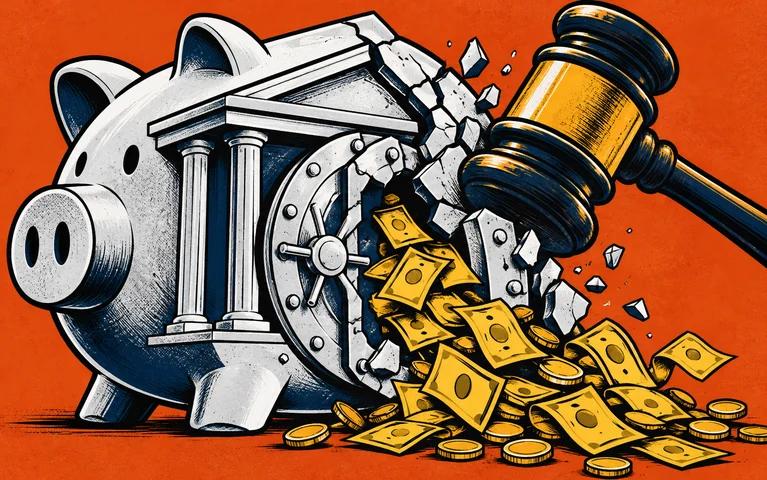
Bank of America entered earnings day carrying an unusually large problem. Federal regulators had just imposed more than $1.2 billion in penalties over failures in the bank’s anti-money-laundering controls, forcing the company to book a $1.2 billion charge against third-quarter results. The settlement followed findings that the bank failed to adequately monitor suspicious activity and did not report billions of dollars in potentially suspicious transactions on time.
Retail sales rose 0.8% in September, but gasoline accounted for an unusually large share of the increase. For commuters already reorganizing their lives around fuel costs, higher spending is increasingly a measure of what it costs to maintain the same routine.
Nearly 72 million Social Security beneficiaries will receive a larger payment in 2027. The increase arrives as inflation continues to pressure household budgets.
One in four financed new-car buyers is now signing up for at least seven years of payments. As vehicle prices remain high and delinquencies rise, repossession is becoming the final consequence of a much longer affordability problem.
White-collar America is producing more while employing fewer people, a shift that could change one of the basic assumptions workers have made about economic growth. An analysis by Gad Levanon, chief economist at the Burning Glass Institute, found that employment across finance, insurance, information and professional and business services has fallen roughly 2% since the end of 2022, while real output from those same industries has increased approximately 16%. For roughly two decades before that point, employment and output largely moved together, with stronger business activity generally creating demand for additional workers. That relationship has now separated enough for Levanon to describe the trend as evidence that something unusual is happening inside the professional economy. Business Insider subsequently highlighted the analysis as an explanation for why many white-collar workers are encountering a job market that feels dramatically weaker than corporate activity would suggest. Demand for what these businesses produce has not disappeared, but companies increasingly appear capable of satisfying that demand without expanding payrolls at the same rate. For workers, that means a growing company or industry can no longer be assumed to be a growing source of jobs.