
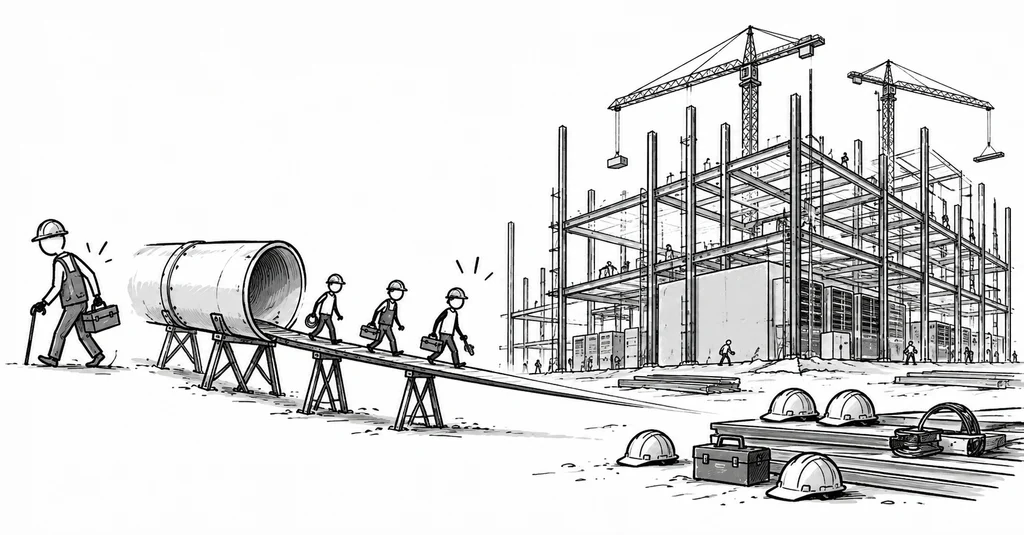
An aging workforce, immigration enforcement and data-center construction are converging on the skilled trades. Texas is among nine states facing particularly difficult labor shortages.
The United States will need an estimated 1.7 million new skilled-trades workers annually through 2035, according to a September 2026 industry report cited by Stateline. Existing training programs produce only slightly more than half the workers required, and only about half of those enrolled complete their programs. The shortage is becoming increasingly consequential as contractors compete to build housing, factories and data centers while experienced electricians, plumbers, carpenters and technicians approach retirement. The country has spent years encouraging young people to consider alternatives to four-year degrees. Now employers are confronting how difficult it is to rebuild a workforce after generations of treating many of those occupations as secondary career choices.
A Labor Shortage With Several Causes
The Associated General Contractors of America found in a September workforce survey that labor shortages were the leading reason for construction delays. Roughly half the contractors surveyed reported that applicants lacked the qualifications or training needed for available positions. Employers are not simply competing for people willing to work; they are competing for workers with specific technical competencies, certifications and experience. Training a new electrician or machinist takes time, while construction schedules are often driven by financing commitments and deadlines that cannot easily be postponed.
Immigration enforcement has added another complication. Foreign-born workers occupy a substantial share of certain construction trades, and industry representatives say enforcement activity has disrupted the available labor pool. Contractors have also expressed concern that workers who are legally authorized to work may avoid jobs or travel because they fear encounters with immigration authorities. The economic tension is increasingly visible: federal policy is emphasizing domestic manufacturing and infrastructure development while immigration restrictions may reduce the workforce available to complete those projects. Expanding training programs addresses one part of the shortage, but it cannot immediately replace experienced workers who leave the labor market.
Texas Is Among the States Under Pressure
The Alliance for America’s Skilled Trades identified nine states with especially high demand relative to available labor: Arizona, Colorado, Delaware, Florida, Georgia, New Jersey, North Carolina, South Carolina and Texas. Florida ranked particularly poorly for available supply as construction activity increased and older workers approached retirement. Texas faces its own competition for skilled labor across residential construction, industrial projects and technology infrastructure. When several industries need the same electricians, HVAC specialists and technicians, wages and project costs can rise even when the underlying projects serve entirely different markets.
The data-center boom is especially revealing because artificial intelligence is frequently discussed as a force that will replace jobs. Yet the physical infrastructure supporting AI requires extensive human labor before a single facility becomes operational. Electrical systems, cooling equipment, backup power and network infrastructure depend on skilled workers whose capabilities cannot be reproduced through software alone. Technology investment can therefore create demand for occupations that have struggled to attract new entrants. It also exposes the limits of treating workforce development as something that can be solved after companies announce ambitious expansion plans.
Training Must Lead to Sustainable Careers
Employers and workforce organizations are responding with recruitment campaigns, accelerated training and apprenticeships. Ford Motor Company and the Ad Council have promoted careers in the trades, emphasizing compensation, stability and the satisfaction of producing tangible work. But recruitment campaigns alone cannot address concerns about physical demands, unpredictable employment, workplace safety and long-term earning potential. A prospective apprentice needs more than a promise of available jobs; the pathway must offer reliable training, paid experience and a realistic opportunity for advancement.
For community colleges, technical schools and workforce programs, the shortage creates an opening to build stronger employer partnerships. Programs that connect instruction directly to apprenticeships and recognized credentials may be more valuable than short courses that leave graduates without the experience employers require. Policymakers also face decisions about immigration, licensing portability and training subsidies. The central challenge is coordinating those policies before shortages delay additional construction and increase costs for households and businesses.
America’s skilled-trades shortage is not evidence that young workers lack ambition or that college education has lost its value. It reflects years of insufficient investment in vocational pathways, demographic change and demand that has grown faster than the workforce supporting it. Employers now have a strong incentive to improve wages, training and working conditions. Whether they make those investments will determine how much of the country’s planned infrastructure expansion can actually be delivered.