BREAKING NEWS | BUSINESS
August sales were reportedly 70% below their level two years earlier, while store traffic fell 32% from a year ago.
BY SSC NEWS DESK
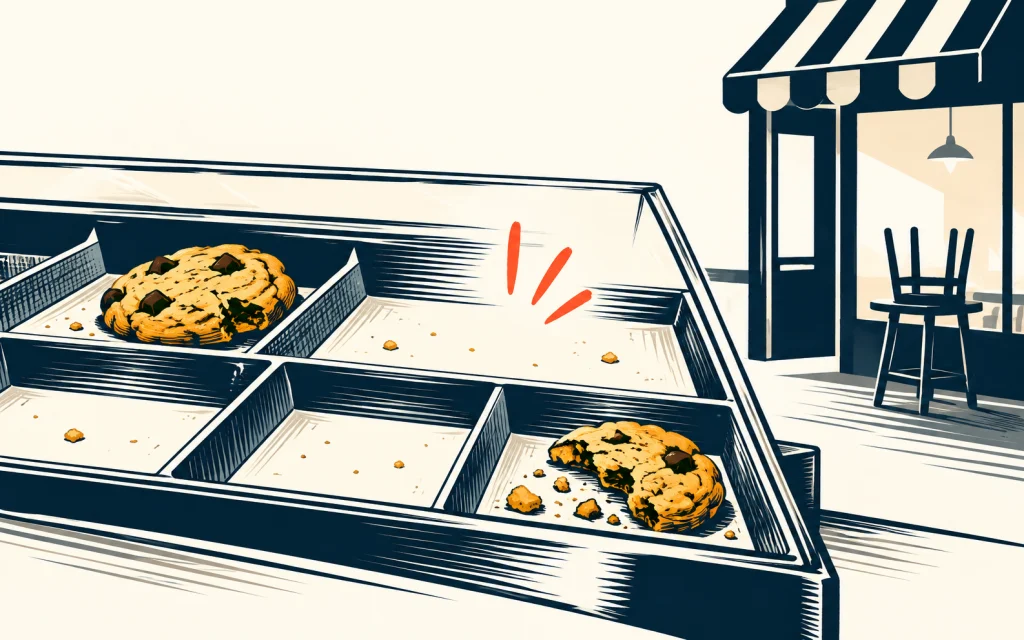
Crumbl has closed at least 57 stores in 2026 and cut staff at its Utah headquarters as the once rapidly expanding cookie chain confronts a sharp decline in sales and customer traffic. An internal company document obtained by Restaurant Business showed that August sales were 70% lower than two years earlier, while data from Placer.ai showed traffic across the chain’s more than 1,000 locations fell 32% year over year. Several franchisees described August as the worst month in the company’s history.
The downturn is emerging after years of extraordinary expansion for Crumbl, which grew from a single Utah bakery into a national franchise known for oversized cookies, rotating weekly flavors and an aggressive social-media strategy. The company still operates more than 1,000 locations, but the closures suggest that rapid unit growth is no longer insulating individual franchisees from weaker consumer demand. At least 55 additional franchises are reportedly listed for salethrough brokerage websites.
The strain is also showing up inside the company. Crumbl recently laid off employees at its Lindon, Utah, headquarters, including much of the staff responsible for supporting franchisees, according to Restaurant Business. CEO Jason McGowan acknowledged the problems in a presentation to franchise owners, telling them that responsibility ultimately rested with him.
Crumbl’s attempt to move beyond cookies has also come under scrutiny. The company introduced dirty sodas nationally this summer after projecting the drinks could increase sales by roughly 20%. Instead, revenue continued to weaken after the rollout, and McGowan reportedly told franchisees that the company’s August Soda Week became its worst-performing week ever.
There is a broader consumer story underneath the company’s problems. Robert Spendlove, a senior economist at Zions Bank, told KSL that persistent price pressure may be leading consumers to reduce spending on products they view as discretionary. A premium cookie is a relatively small purchase, but businesses built around frequent discretionary spending can feel household belt-tightening quickly when customers begin cutting nonessential trips.
Crumbl’s problems therefore extend beyond whether consumers still like its cookies. The company expanded rapidly when demand, social-media attention and franchise openings were all reinforcing one another. Now falling traffic, weaker store economics and franchisees looking for exits are testing whether that footprint can remain profitable when consumers are more selective about where they spend.
For a brand built on constant novelty, the next phase may require something less flashy: stabilizing existing stores, rebuilding franchisee economics and figuring out how much demand exists once rapid expansion stops doing part of the work.