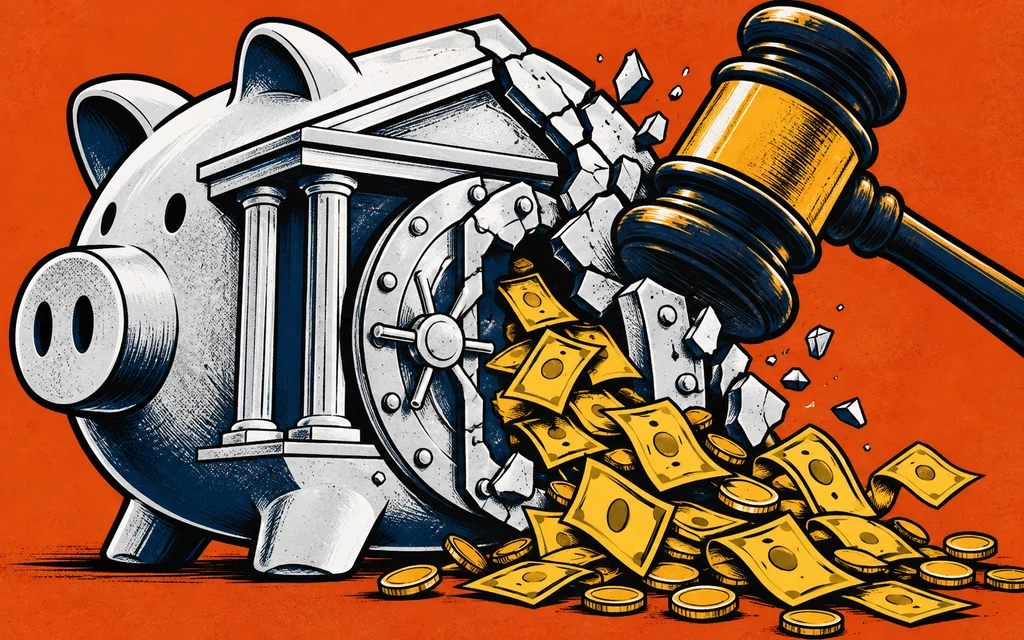
Bank of America entered earnings day carrying an unusually large problem. Federal regulators had just imposed more than $1.2 billion in penalties over failures in the bank’s anti-money-laundering controls, forcing the company to book a $1.2 billion charge against third-quarter results. The settlement followed findings that the bank failed to adequately monitor suspicious activity and did not report billions of dollars in potentially suspicious transactions on time.
The timing made an already difficult earnings report worse. Bank of America reported third-quarter profit of $6.9 billion, down from $8.3 billion a year earlier, while trading revenue fell 5% to $5.1 billion. The bank’s fixed-income, currencies and commodities business underperformed, offsetting record equities trading and stronger net interest income. Investors responded by sending the stock down more than 8% during the session before some of those losses narrowed.
CEO Brian Moynihan said the bank was well advanced in addressing the regulators’ concerns, but the settlement puts renewed attention on the cost of compliance failures at the largest financial institutions. Bank of America agreed to improve its anti-money-laundering systems and work with an outside party as part of the regulatory action.
The larger issue is that this was not simply a regulatory fine landing on an otherwise strong quarter. Bank of America was already contending with weaker trading and investment-banking conditions, part of a broader slowdown across Wall Street after a stronger first half of the year. That made the $1.2 billion charge harder for investors to look past.
What matters: Large banks routinely absorb fines without threatening their underlying businesses, but a penalty of this size becomes more consequential when it arrives alongside weaker operating performance. For Bank of America, the question now is not only whether it can satisfy regulators, but whether it can improve returns while doing so.