The news tells you what happened. We explain what changed.

Explore all past issues, only on Beehiiv.
All Global Affairs stories, newest first.
Global Affairs
Across India’s advertising industry, campaigns featuring interfaith families, changing gender roles and cultural inclusion have drawn…
By Leena Alridge · October 21, 2026
Global Affairs
A woman who traveled from Uganda has tested positive in Abuja as the fastest-spreading Ebola outbreak…
By Will Davison Jr. · October 20, 2026
Global Affairs
Saudi Arabia’s juvenile justice reforms were meant to end executions for childhood offenses. A counterterrorism exception…
By Social Storytellers Collective News Desk · October 20, 2026
Global Affairs
Thousands of arrests, burned public buildings and violent clashes have overshadowed protests over living costs and…
By Will Davison Jr. · October 20, 2026
Global Affairs
Bank lending increased 34.6%, but the distribution of credit raises questions about which businesses are benefiting.
By Social Storytellers Collective News Desk · October 19, 2026
Global Affairs
The government is defending its economic reforms despite continued pressure from fuel prices and the cost…
By Social Storytellers Collective News Desk · October 19, 2026
Global Affairs
Housing costs in parts of Nigeria's commercial capital have nearly doubled while wages have barely moved.…
By Social Storytellers Collective News Desk · October 19, 2026
Global Affairs
Sanae Takaichi says household duties add three to four hours to days already defined by extreme…
By Social Storytellers Collective News Desk · October 19, 2026
Global Affairs
Kenya Railways alleges that public housing units have been occupied and sublet while intended beneficiaries remain…
By Social Storytellers Collective News Desk · October 18, 2026
Global Affairs
A 50% drop in one developer's sales has not stopped it from investing in luxury residences,…
By Social Storytellers Collective News Desk · October 18, 2026
Global Affairs
The airport says expansion could support more than 100,000 jobs, but the government remains divided over…
By Social Storytellers Collective News Desk · October 18, 2026
Global Affairs
More than 11,000 rural telecom sites depend on generators, exposing a basic constraint on digital inclusion:…
By Social Storytellers Collective News Desk · October 18, 2026
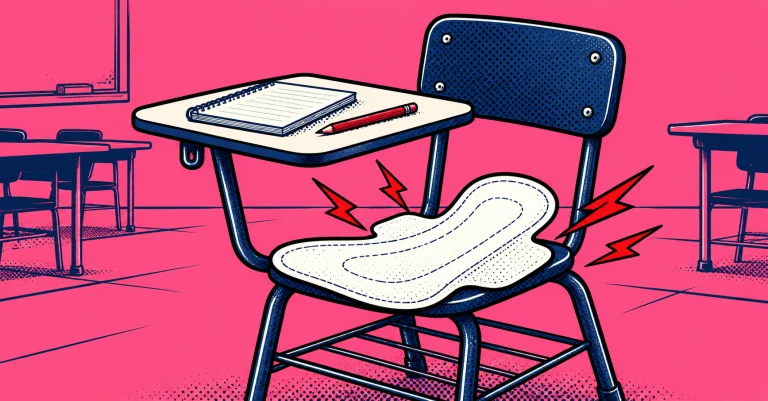
New reporting from Kenya shows how menstrual pain, stigma and inadequate school facilities can interrupt education even when girls have access to sanitary products.

One of Europe's busiest shopping streets will become partly traffic-free on Monday. London's $200 million-plus regeneration effort is betting that better public space can revive retail, even as questions remain about transportation access and who benefits from the changes.

More than 70,000 Moroccan civil servants are expected to reach retirement age by 2030, with education accounting for the largest share. The projections are forcing a closer look at how governments replace experienced workers without weakening the public services people depend on.
Flávio Bolsonaro has promised to free his father, a convicted coup plotter, and the margin is thin enough that the pardon may decide what the vote means.

President John Mahama says Ghana is negotiating with European nations over reparations for the transatlantic slave trade. The discussions extend beyond cash payments to include cultural artifacts, debt relief and economic development.

Global accident rates improved in 2025 while North America’s rose, and the findings that explain October’s incidents will arrive long after the videos did.

More than 9,700 teacher trainees received results requiring reexamination after Kenya relaxed admission requirements. The results are prompting questions about academic preparation, institutional support and the consequences of education reform.
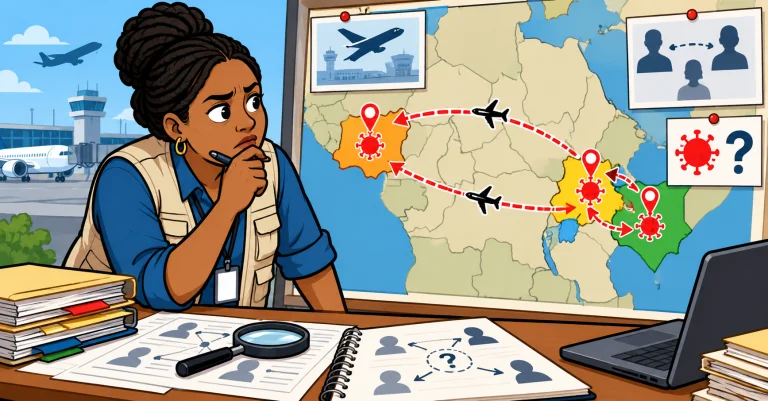
Two travelers passed through Uganda's Entebbe International Airport on the same day in early October. Both would become part of an expanding Ebola investigation, one in Kenya and the other in Nigeria. African health authorities are now examining whether their journeys intersected in a way that could help explain how the virus reached West Africa. The possibility remains unconfirmed, but the investigation has exposed a difficult problem for disease-control systems: a virus can move between countries faster than health authorities can establish where an infection occurred.

France's student-led demonstrations have turned violent in places, yet coverage has kept their grievances in view. That raises an old question about American journalism: whether race shapes which protests are explained and which are simply described as disorder.

A household does not need an economist to tell it when money is getting tighter. The calculation happens at the supermarket, when a planned purchase goes back on the shelf, or at home, when a family postpones replacing an appliance because next month's bills feel less predictable. Across Britain, those private calculations are adding up to a sharp deterioration in consumer confidence, raising concerns about how much additional economic pressure households can absorb.
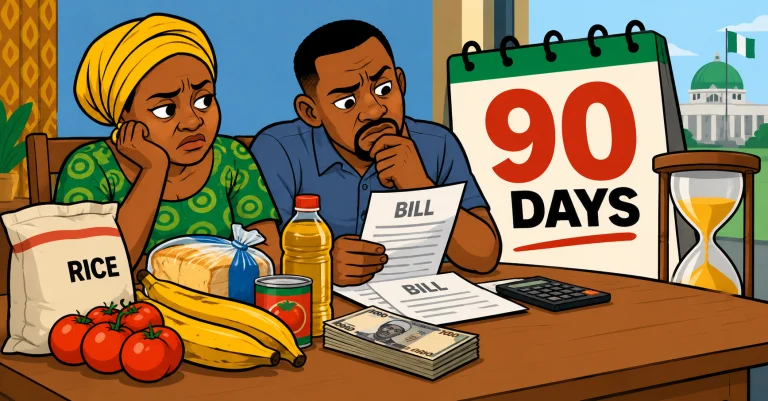
For a Nigerian household calculating the week's expenses, a new government economic plan matters only if it eventually changes what remains after buying food, paying for transportation and meeting basic obligations. The country has spent years defending difficult economic reforms as necessary for long-term stability. Now, with consumers continuing to face pressure from prices and operating costs, the government has endorsed a 90-day action plan intended to make the benefits of those reforms more visible.
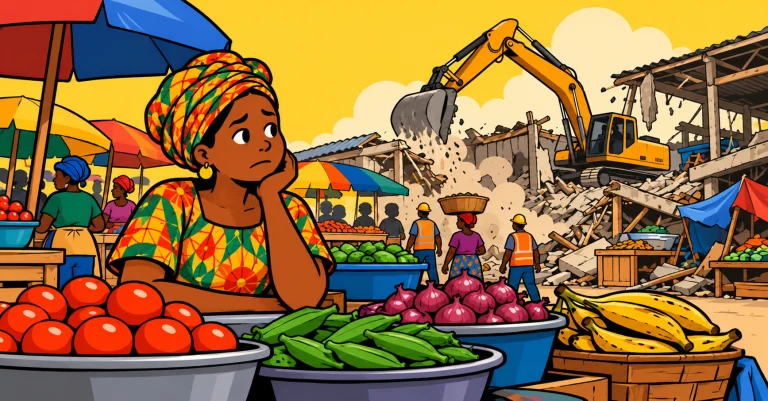
For a market trader, a familiar selling location is more than a place to arrange merchandise. It is where returning customers know to find them, where goods are delivered and where daily sales generate the money needed to restock inventory and support a household. When that space disappears, even temporarily, the consequences can begin long before a new building takes its place. Traders in Accra's Madina Market are confronting that uncertainty as local authorities demolish an aging section of the commercial complex to make room for a modern facility.
