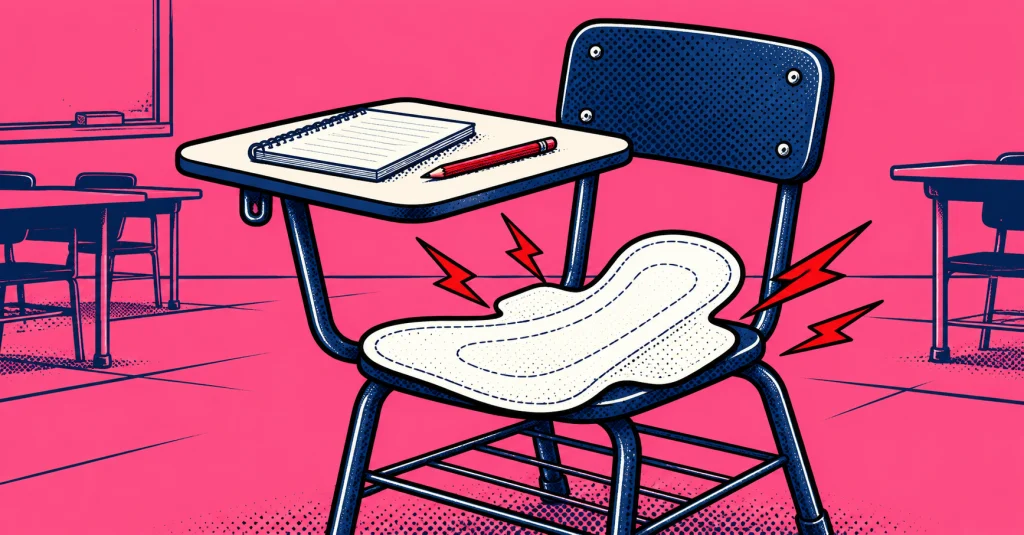
New reporting from Kenya shows how menstrual pain, stigma and inadequate school facilities can interrupt education even when girls have access to sanitary products.
A girl can have everything she needs to attend school on paper—a uniform, textbooks, a classroom and access to sanitary products—and still miss lessons because of her menstrual period. Severe cramps may make sitting through classes difficult. Inadequate bathrooms can complicate managing bleeding, while fear of embarrassment may discourage her from asking for help. For girls experiencing those conditions repeatedly, missed school days can accumulate over an academic year, affecting their learning even when enrollment is not the problem.
New reporting published October 24 by Daily Nation examines how menstrual health continues affecting school attendance in Kenya. The findings challenge the assumption that distributing sanitary pads is sufficient to eliminate the barriers girls encounter during menstruation. Products are important, but pain management, privacy, clean facilities and social attitudes also influence whether students can participate fully in school.
The reporting cites evidence that menstrual-health-related absenteeism remains substantial among Kenyan girls, including estimates that one in three misses at least five school days. Different studies measure attendance and menstrual barriers in different populations, so such estimates should not automatically be applied to every school or student in Kenya. They nevertheless point to an education-access problem that deserves more comprehensive attention.
Pain Is More Than an Inconvenience
Menstrual cramps are common, but their intensity varies considerably. Some students can continue normal activities with minimal disruption, while others experience pain severe enough to interfere with concentration, mobility and attendance.
Pain that repeatedly prevents a student from attending school may require medical assessment. Severe menstrual symptoms can sometimes be associated with conditions that need treatment, and adolescents may not know when their experiences warrant attention from a healthcare professional.
In communities where menstrual pain is normalized as something girls are simply expected to endure, students may be reluctant to report symptoms or seek assistance. Families and educators may also lack information about available treatment and when medical evaluation is appropriate.
That creates a gap between recognizing menstruation as a normal biological process and providing the support necessary when symptoms interfere with daily functioning. Normalizing menstruation should not require dismissing debilitating pain.
The School Environment Matters
Managing menstruation during a school day depends partly on the availability of clean, private and functional facilities. Students need bathrooms where they can change products, wash their hands and dispose of used materials safely. Reliable water, adequate sanitation and privacy can help reduce anxiety about leaks or embarrassment.
When those conditions are missing, even students who have sanitary products may struggle to manage their periods comfortably. A girl who fears staining her uniform or being mocked by classmates may decide that remaining home is less stressful than attending school without sufficient facilities.
The challenge can also extend beyond rural schools. Urban students may have easier access to shops and healthcare facilities while still attending institutions with inadequate sanitation, limited privacy or insufficient support for menstrual pain.
Menstrual-health policy therefore involves more than distributing supplies. It requires attention to school infrastructure, student health education and the everyday procedures teachers use when students need help.
The Cost of Missing School
A missed school day can mean losing instruction, classroom discussion or time needed to prepare for an examination. When absences recur monthly, the cumulative impact becomes more significant.
Students may attempt to catch up independently or rely on classmates for notes, but those arrangements cannot always replace direct instruction. Girls who feel embarrassed discussing menstruation may also avoid explaining their absences to teachers, making it harder for schools to identify patterns and provide assistance.
The consequences can extend into academic confidence. A student who repeatedly misses lessons may feel increasingly unprepared, particularly in subjects where new material builds on previous instruction. Those effects may be difficult to separate from other challenges involving household income, transportation, nutrition and school resources.
The available evidence does not establish that menstruation-related absences affect every girl in the same way or that they independently determine academic outcomes. It does establish a practical barrier that education systems can address more effectively.
Beyond the Sanitary Pad
Programs supplying menstrual products remain important, particularly for students whose families struggle to afford them. But product distribution should be understood as one part of a broader response.
Schools can also improve sanitation facilities, provide reliable access to water, establish procedures for students experiencing severe symptoms and ensure that teachers understand how to respond sensitively. Age-appropriate menstrual education can help reduce stigma among students of all genders while encouraging those with concerning symptoms to seek medical advice.
The challenge is also one of institutional responsibility. Girls should not have to choose between enduring severe discomfort in a classroom and losing access to instruction. Addressing that problem requires schools, healthcare providers and education authorities to recognize menstrual health as part of educational participation.
Policies should be evaluated through outcomes rather than the number of products distributed. More useful measures would include whether students have reliable access to private facilities, whether reported symptoms are addressed appropriately and whether menstruation-related absences decline over time.
Kenya has made substantial commitments to expanding access to education. The menstrual-health challenge demonstrates that enrollment is only one measure of whether students can participate.
For a girl who misses several days of school because she cannot manage her symptoms or access appropriate facilities, the barrier may be temporary each month. Its cumulative effect on her education can be much more lasting.