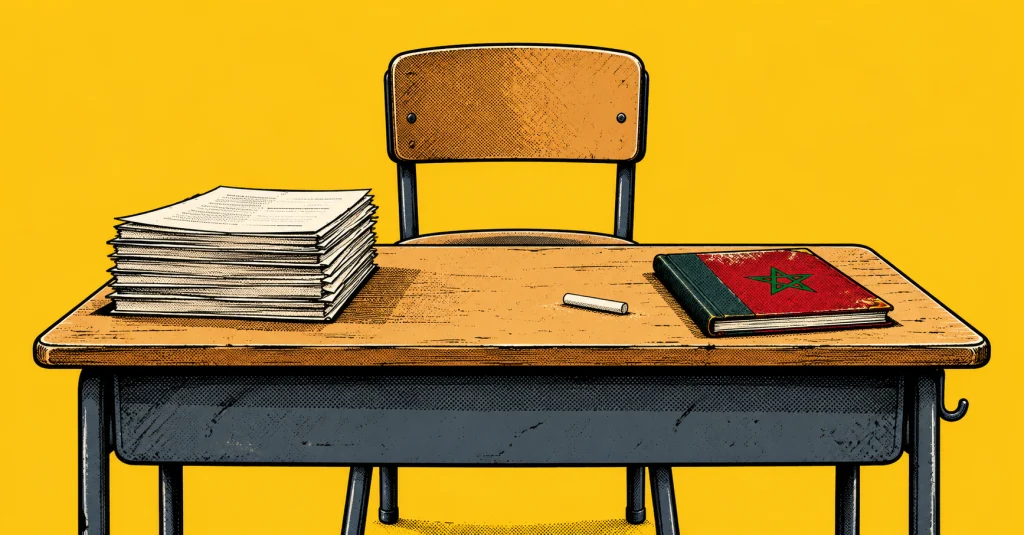
More than 70,000 Moroccan civil servants are expected to reach retirement age by 2030, with education accounting for the largest share. The projections are forcing a closer look at how governments replace experienced workers without weakening the public services people depend on.
Morocco’s public education system is approaching a significant workforce transition. Between 2026 and 2030, approximately 28,000 employees in the national education and preschool sector are expected to reach retirement age. That represents nearly 15% of the sector’s current workforce. The figures come from the Moroccan Pension Fund and appear in a human-resources report accompanying the country’s proposed 2027 budget. As Mohamed Hamidi reported for Hespress on October 24, education will account for the largest share of an expected wave of civil-service retirements across the country.
The broader projections are substantial. 70,266 civil servants are expected to reach legal retirement age during the five-year period. The Interior Ministry faces approximately 15,945 departures, while the health sector expects 5,645. Higher education could lose another 4,793 employees. These are projections based on retirement eligibility, not confirmed vacancies or evidence that every departing employee will go unreplaced. But the concentration of departures creates a staffing challenge that ministries can anticipate years in advance. The decisions they make now will determine whether retirement becomes an orderly transition or a prolonged shortage.
Education faces a particular challenge because replacing an experienced employee requires more than authorizing another position. Teachers need training, subject knowledge and classroom-management experience. School administrators need familiarity with institutional procedures and the communities they serve. When experienced employees retire, some of that practical knowledge leaves with them. New hires can eventually rebuild it, but recruiting large numbers of workers in a short period may place additional pressure on training programs, school leadership and the employees who remain.
Morocco has already invested heavily in expanding public employment. According to additional reporting by Madar, the government created 36,985 budgeted public-sector positions in 2026, while the proposed 2027 budget provides for 34,454 openings. The country has also used regional education and training academies to recruit teachers over the past decade. Those efforts demonstrate that the government has mechanisms for bringing workers into public service. They do not, by themselves, establish whether recruitment is sufficiently targeted to replace retiring education employees in the schools and regions where they are needed.
That geographic issue deserves attention. A national staffing total can look adequate while individual communities struggle to recruit qualified teachers. Urban schools may offer easier access to housing, transportation and professional opportunities than remote communities. If recruitment fails to account for those differences, staffing gaps could become concentrated in places where students already have fewer educational resources. The available retirement figures do not establish where shortages will occur, but they provide a reason to examine how replacement positions will be distributed.
The financial picture creates another constraint. Morocco’s state payroll expenditure reached approximately 195.3 billion dirhams in 2026, up from 118.7 billion dirhams in 2016, according to the budget-related figures reported by Hespress. Rising payroll costs do not mean replacing retirees is unaffordable. They do mean that recruitment decisions compete with other public spending priorities, including facilities, equipment and training. A government can reduce staffing pressure on its budget by leaving some positions vacant, but the resulting workload does not disappear. It shifts to remaining employees and, eventually, to the people waiting for services.
The coming retirements also create an opportunity. Planned departures give ministries time to recruit replacements, transfer institutional knowledge and reconsider how public services are staffed. Younger professionals could gain access to stable public-sector careers, while schools could benefit from a more deliberate mix of experienced educators and new recruits. Achieving those outcomes will require more than matching the total number of employees leaving with the number entering. Governments must identify which skills, subjects and locations face the greatest exposure.
Morocco has several years to prepare, but the education system operates on an annual calendar. A teacher who retires without a qualified replacement can affect an entire school year. If recruitment, training and regional placement fail to keep pace, the consequences will accumulate classroom by classroom, long before the national retirement projections reach their final year. The country’s ability to manage this transition will depend on whether workforce planning becomes a sustained investment in public education rather than a yearly exercise in filling vacancies.