The news tells you what happened. We explain what changed.

Explore all past issues, only on Beehiiv.
All Global Affairs stories, newest first.
Global Affairs
About 25 Black actors, models, writers, musicians, photographers, designers and dancers met in Seoul this month…
By Social Storytellers Collective News Desk · September 29, 2026
Global Affairs
New Inter-American Development Bank research estimates AI could expand the region's economy by 5.1% in a…
By Social Storytellers Collective News Desk · September 28, 2026
Global Affairs
The insult started as a way to mock British women. Black British women say it became…
By Social Storytellers Collective News Desk · September 28, 2026
Global Affairs
President José Antonio Kast's new plan speeds up public works, subsidizes hiring and gets money to…
By Social Storytellers Collective News Desk · September 28, 2026
Global Affairs
Ru'ya 2026 brings more than 150 employers together with young Emiratis this week. The harder question…
By Social Storytellers Collective News Desk · September 28, 2026
Global Affairs
New research on the UAE's four-and-a-half-day week points to a question the four-day-week debate usually skips:…
By Social Storytellers Collective News Desk · September 28, 2026
Global Affairs
When affordability collapses for locals, global mobility starts to look less like freedom and more like…
By Social Storytellers Collective News Desk · May 7, 2026
Global Affairs
The Central Bank’s new remittance routing rules affect millions of Nigerian families globally — and signal…
By Will Davison Jr. · April 13, 2026
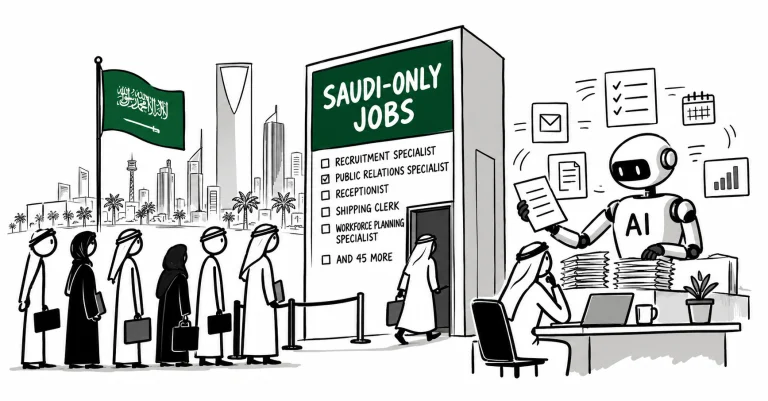
Fifty administrative occupations became Saudi-only this weekend. At the same time, the government is accelerating AI adoption across a labor market where Saudi workers are especially exposed to automation.
German Chancellor Friedrich Merz arrived in Kyiv Sunday with €1 billion in new military aid and another €350 million for repairs to Ukraine’s energy infrastructure, as Russia intensifies attacks on cities and critical systems. The visit comes as Volodymyr Zelenskyy says Ukraine will increase strikes on Russian oil refineries in response, pushing both sides further into a war aimed at degrading the infrastructure that finances and sustains military operations. Germany and Ukraine also signed a series of defense and industrial agreements during the visit, including new drone and air-defense cooperation. Energy is increasingly becoming both a target and a weapon: Russia is attacking Ukraine’s grid while Kyiv is trying to reduce the refinery capacity that helps fund Moscow’s war. Reuters reported on Merz’s Kyiv visit and the new aid package.
The Houthis say they struck a Saudi Aramco facility near Riyadh with missiles and drones as fighting in Yemen intensifies, while the Saudi-led coalition disputes the claim. The escalation matters beyond Yemen because Saudi energy infrastructure is again becoming part of the battlefield, with Brent crude already trading above $100 after earlier attacks on Saudi facilities pushed prices higher. Yemen’s humanitarian position is also worsening as the conflict expands, with food insecurity already affecting much of the population. The immediate market risk is straightforward: every successful or attempted strike on Saudi oil infrastructure adds another geopolitical premium to energy prices already under pressure. Al Jazeera has been tracking the attacks and their impact on oil markets.

The BBC has permanently removed an article examining the return of bare nails after concluding that it failed to meet the corporation's editorial standards. The September 27 story explored a social-media and runway trend toward natural, undecorated nails and included beauty journalist Kristina Rodulfo's argument that the aesthetic can promote “sameness and erasure of culture and identity” and that descriptions such as elegant and tasteful can reinforce white standards of beauty. According to the BBC's explanation quoted by The Guardian, editors ultimately determined that those claims had not received sufficient context or challenge.
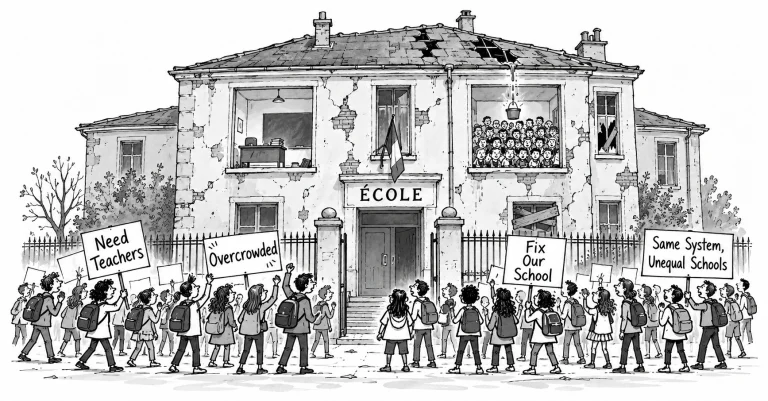
Students in disadvantaged Paris suburbs helped ignite a national protest movement over teacher shortages, overcrowded classrooms and deteriorating buildings. The unrest is exposing how unequal public services can become even when every student is formally enrolled in the same national system.
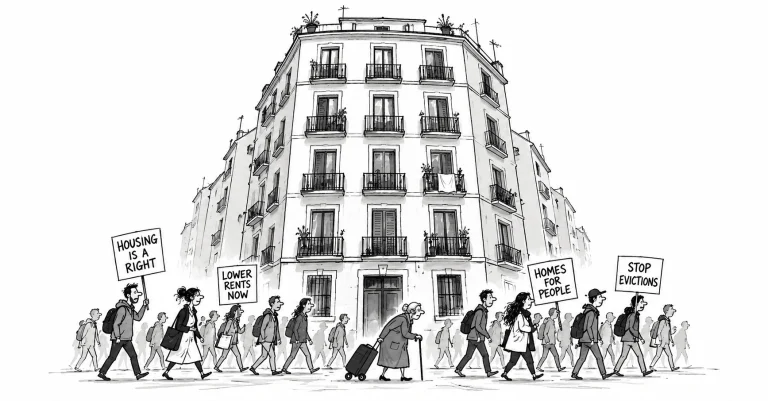
About 70,000 people marched in Madrid and demonstrations spread across dozens of cities after lawmakers rejected new housing measures. The protests show what happens when an affordability crisis becomes a question of whether ordinary households still have a secure place in the market.

More than a quarter of UK employees are covered by non-compete clauses. Technology founders say restrictions designed to protect existing companies are slowing the formation of the competitors Britain says it wants.

Twenty-five years after liberalization, mobile connectivity has become part of everyday economic life. The next phase is harder: maintaining the infrastructure, financing upgrades and extending reliable access after the easy growth has already happened.
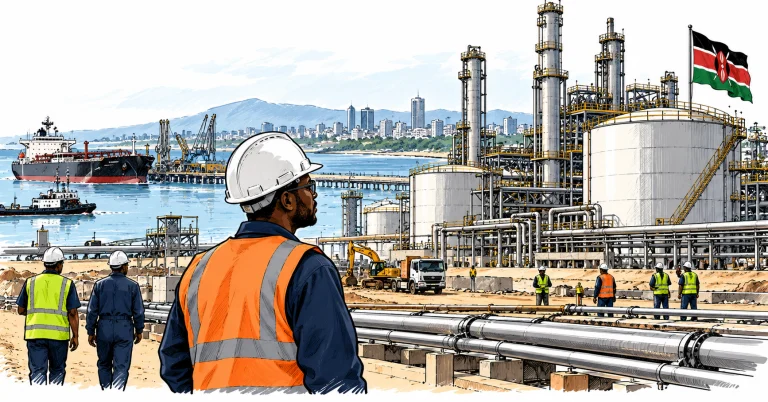
Dangote’s new Kenya project is designed to keep more of the region’s energy supply chain at home. The economic promise comes with an environmental and infrastructure test.

Programs in artificial intelligence, data science, sports and event management are moving closer to the center of university recruitment. Higher education is responding to labor demand before many of the occupations have settled into traditional career paths.

Ottawa changed a rule that normally makes workers spend down separation pay before unemployment benefits begin. Trade disruption is forcing the government to reconsider who should carry the first financial shock of a layoff.
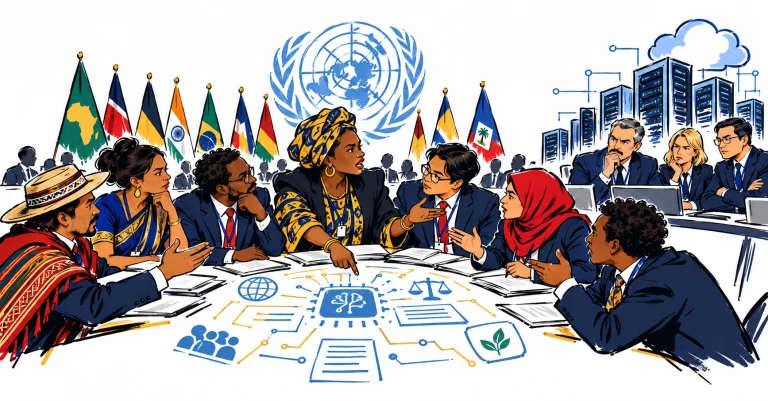
At the United Nations, governments from Africa, Asia and Latin America argued that countries expected to use AI should also help govern it. The fight over artificial intelligence is becoming a fight over who gets institutional power before the technology is fully built.
