
Part of Society & Economy / Global — examining how economic forces shape access and mobility across Black and Brown communities globally.
Nigeria’s Central Bank moved this week to tighten oversight of diaspora remittances, and the decision carries more weight than it has received in most English-language coverage. At its core, this is not just a regulatory update. It is a structural shift in how one of the largest financial lifelines into the country is managed.
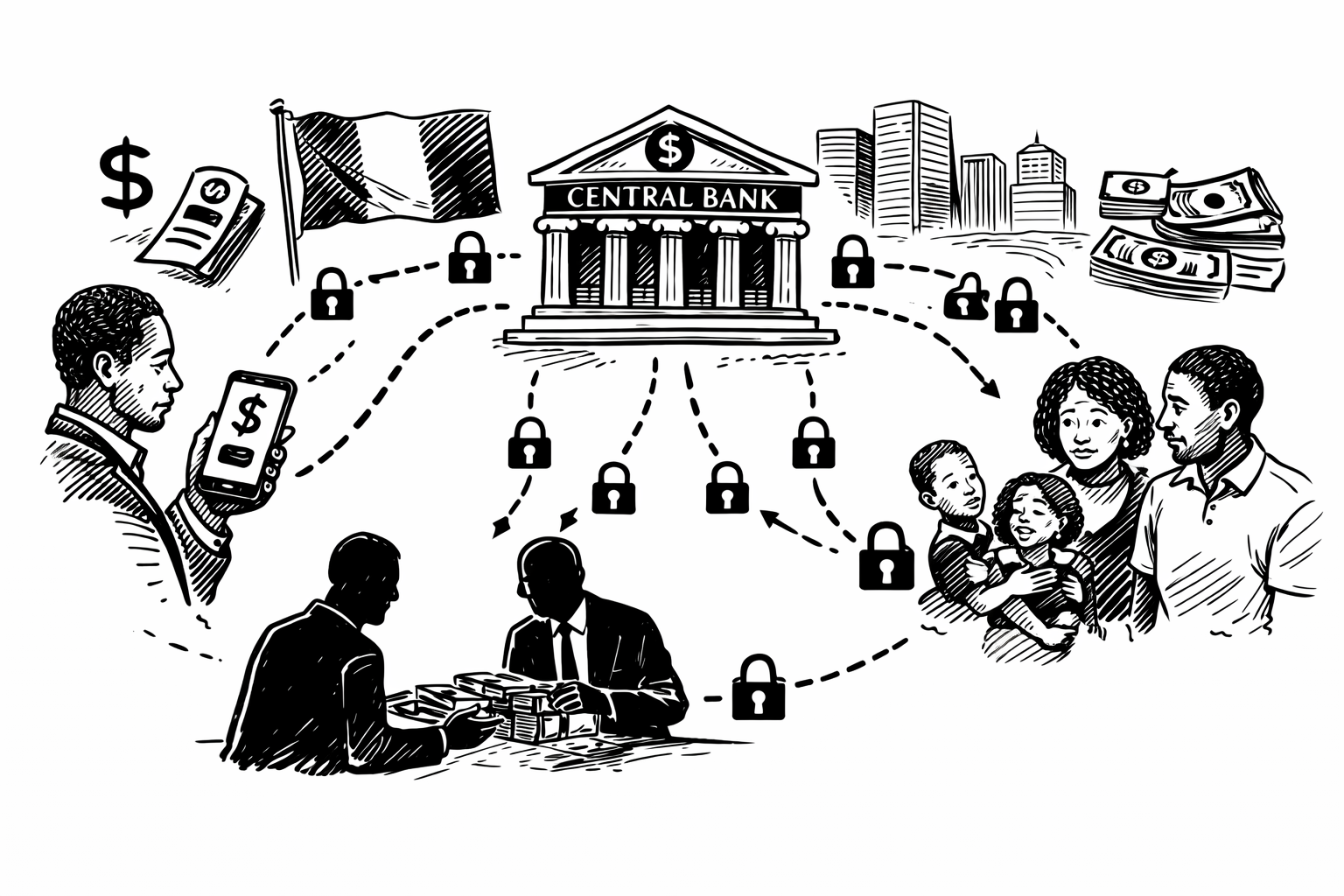
The Central Bank of Nigeria has directed all International Money Transfer Operators to route diaspora inflows through designated naira settlement accounts within the formal banking system. The change affects an estimated $600 million per month in remittance flows, bringing a system that has historically operated across a mix of formal institutions, fintech platforms, and informal channels more directly under regulatory visibility. Framed as an accountability measure, the directive reflects an effort to standardize and track flows that have long moved with limited institutional oversight.
The timing is notable because it coincides with a broader recalibration of Nigeria’s economic narrative. While Western coverage often centers instability, recent indicators point to a more complex trajectory. FTSE Russell upgraded Nigeria’s equity market from its Watch List to Frontier Market status, signaling renewed investor confidence. GDP growth reached 3.98% in Q3 2025, driven largely by the services sector, and projections for West Africa suggest 4.2% growth in 2026, supported by domestic demand and ongoing policy reforms. Inflation pressures have begun to ease, the naira has shown signs of stabilization, and monetary policy has shifted toward rate cuts. Institutional confidence is returning, even as everyday economic conditions remain uneven.
Within that context, the remittance directive reads less as an isolated policy and more as part of a broader strategy. Nigeria is positioning diaspora inflows as a formal economic lever rather than a loosely tracked stream of personal transfers. Remittances to Sub-Saharan Africa reached approximately $54 billion in 2023, a figure that exceeds foreign direct investment and development aid in many cases. Nigeria, as the region’s largest recipient, sits at the center of that flow. The Central Bank’s move suggests an intention to not only measure these funds more precisely, but eventually integrate them into a more coordinated financial framework.
That ambition, however, introduces a tension that remains unresolved. Greater oversight can improve transparency and strengthen macroeconomic planning, but it can also introduce friction at the point of use. For families who rely on remittances for rent, school fees, and daily expenses, even small delays, added costs, or conversion inefficiencies can carry real consequences. The policy signals long-term intent, but its success will ultimately be judged at the level of lived experience.
For diaspora communities, particularly in cities like Houston, New York, and London, the implications are immediate and tangible. These remittance flows are not abstract capital streams. They are expressions of obligation, care, and continuity across borders. In Houston especially, where Nigerian and broader West African communities are deeply embedded in the city’s economic and cultural fabric, this shift touches the infrastructure of everyday life. The question is not just how money moves, but how reliably it continues to do so for the families who depend on it.