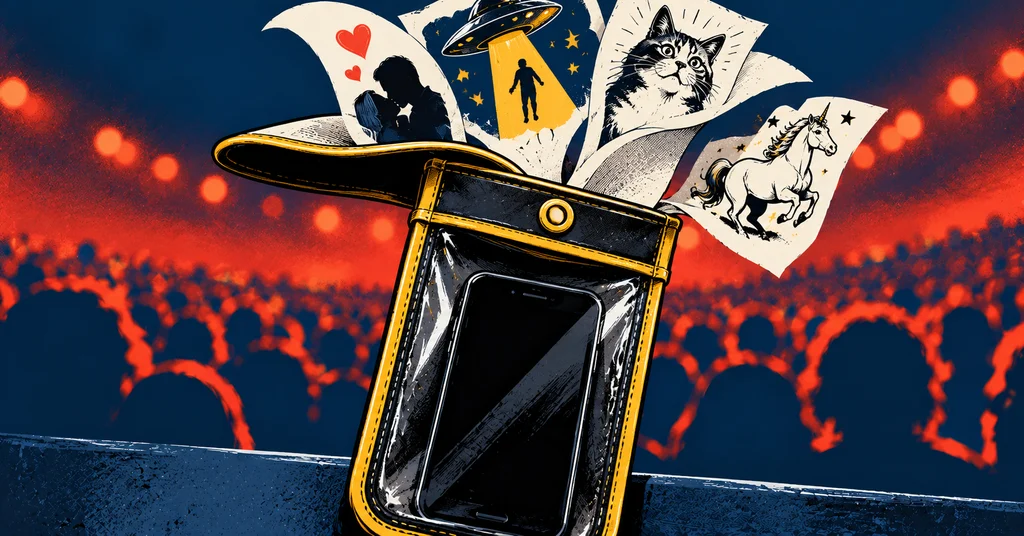
With cameras locked away, concertgoers are inventing increasingly ridiculous stories about what happens onstage. The jokes reveal how much control phones have gained over the way we experience and remember live entertainment.
Apparently, conservative commentator Candace Owens showed up at a Phoebe Bridgers concert in Washington, D.C., and read from Stone Butch Blues, a novel about gender identity and queer experience. At another show, opening act Alex G supposedly pulled a fan onstage for a romantic serenade straight out of Justin Bieber’s early career. Neither incident has been verified, and that’s precisely why people are laughing. Bridgers doesn’t allow phones at her concerts, so fans have discovered they can make up almost anything about what happened.
The joke has become an unexpected part of the singer’s comeback. In an October 27 NPR report, music journalist Isabella Gomez Sarmiento documented the increasingly absurd memes circulating around Bridgers’ arena tour. One Instagram video makes the Owens claim, while another post imagines Alex G recreating Bieber’s famous concert routine. The humor depends on a shared understanding: nobody has footage to prove what happened, and everyone knows the stories are ridiculous.
The Phone-Free Concert
Bridgers returned this year with Lost Weekend, her first solo album since 2020’s Punisher. Her new arena tour requires attendees to secure phones, smartwatches and recording devices inside locked Yondr pouches. People keep their devices but cannot use them during the performance. Anyone who needs to access a phone must visit a designated unlocking area.
The policy gives Bridgers greater control over how her performances circulate outside the venue. A private exchange with the audience cannot immediately become a viral clip stripped of context. An emotional moment doesn’t automatically turn into somebody else’s TikTok content. During her September concert in Chicago, Bridgers explained that processing her father’s death had been difficult under constant public attention, according to a Chicago Sun-Times review. She wanted space to perform without cameras recording every reaction.
That request changes the relationship between artists and audiences. Concertgoers normally decide which moments to record, edit and distribute. Those recordings can help artists reach new listeners, but they also allow strangers to circulate intimate performances without the artist controlling how they’re presented. Bridgers has reclaimed some of that authority, even if doing so means disappointing fans who want personal recordings of an expensive night out.
When Nobody Can Produce the Receipts
The memes expose another habit we’ve developed around entertainment. People increasingly expect experiences to come with proof. Concert clips establish which songs were performed, who appeared onstage and whether something unexpected happened. A fan’s account carries considerably more weight when accompanied by a video. Remove the cameras, and that system stops working.
The audience becomes responsible for telling the story again. Some people describe the music, others sketch scenes from memory, and a growing number invent outrageous moments for entertainment. The absence of footage makes those accounts difficult to verify, but it also creates room for the kind of storytelling that existed before nearly every public experience became searchable.
There’s a trade-off. Fans lose the ability to preserve their favorite performances in their own recordings. They also spend less time deciding whether to film a song, checking camera angles or watching the stage through a screen. For some, that exchange is worthwhile. Others understandably want souvenirs from concerts that may cost hundreds of dollars to attend.
Who Owns the Concert Experience?
The commercial relationship between musicians and audiences has changed considerably. Fans purchase tickets, but their phones also turn them into unpaid promoters, distributing concert footage across platforms that benefit from the attention. Artists gain publicity, while social media companies collect engagement from material they did not pay to produce. Audiences supply the labor of documenting and sharing the event.
A phone-free policy interrupts that arrangement. Bridgers controls the live performance, audiences retain their personal memories, and social platforms receive fewer recordings to circulate. The fans, however, have found another way to participate online through jokes that require no actual footage.
Restricting recording hasn’t eliminated the desire to share a concert. It has changed what people create afterward. As more performers consider phone restrictions, they’ll have to weigh promotional exposure against control over their work. Fans will make their own calculations about whether an undocumented concert is worth attending.
The next concert trend may belong to artists who can convince audiences that the experience itself is valuable enough without providing a recording to take home. The success of phone-free shows could ultimately depend on whether audiences begin to value the memories they make over the videos they bring home.