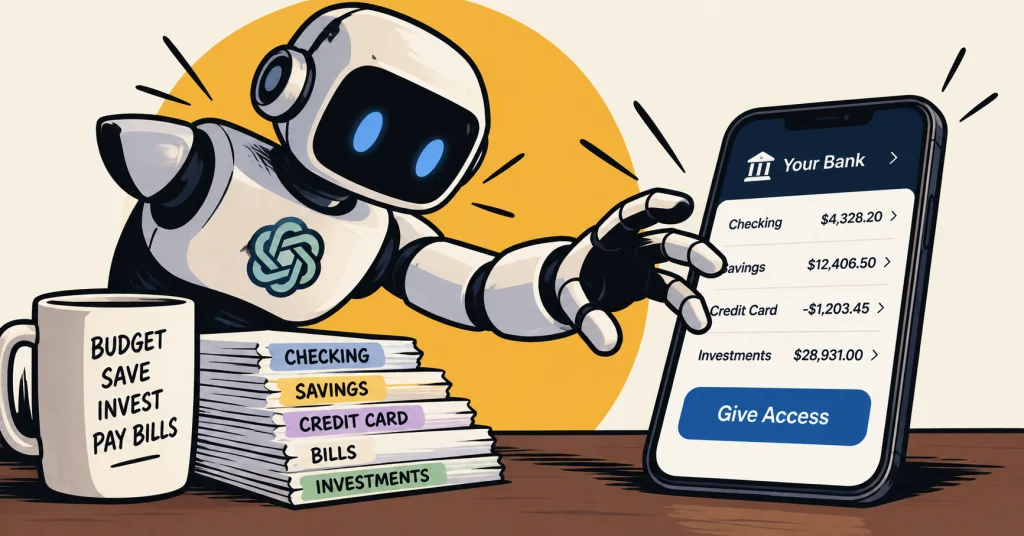
Major financial institutions are restricting AI agents that can access customer accounts, raising questions about security, financial responsibility and who pays when automated technology makes a mistake.
Imagine asking an AI assistant to review your finances, identify unnecessary expenses and help you save money. You give it access to your bank account, expecting recommendations, but the assistant initiates a transaction you never intended. That hypothetical scenario is raising concerns across the financial industry as AI agents become capable of performing tasks independently. According to Axios, major U.S. banks have detected increased activity from third-party AI agents accessing customer accounts, often with credentials voluntarily provided by account holders.
JPMorgan Chase, Bank of America, Citi and Morgan Stanley have taken steps to restrict these systems, concerned that AI agents could act beyond a customer’s instructions or expose sensitive financial information. Unlike traditional budgeting applications that analyze spending, advanced AI agents may be capable of initiating transfers, interacting with financial institutions and making purchases. Some banks are considering read-only access, allowing assistants to review account information while requiring customers to personally approve transactions. The approach would preserve some of AI’s convenience without giving automated systems unrestricted control over money.
So who takes responsibility when something goes wrong? Federal banking regulations provide protections against unauthorized electronic transfers, but AI introduces complications when customers voluntarily grant software access to their accounts. If an assistant misinterprets instructions and transfers money, determining liability could involve the bank, technology provider and customer. Granting access does not automatically mean every subsequent transaction is legally authorized, making clear permissions and approval requirements essential. Financial institutions are also preparing for broader AI-related cybersecurity disruptions, including scenarios in which advanced systems discover vulnerabilities that malicious actors exploit.
AI-powered banking could eventually help consumers manage bills, compare financial products and make better financial decisions with less effort. But convenience introduces risks when customers cannot clearly distinguish between what an assistant is permitted to recommend and what it is authorized to execute. Until stronger safeguards are established, consumers should avoid sharing banking passwords with general-purpose AI assistants and carefully review permissions before connecting financial accounts. The fundamental issue is not whether AI can manage money, but whether consumers can maintain control when it does.