OPINION | ACCESS & ECONOMIC MOBILITY
The latest Census figures offer encouraging news, but nearly 8 million Black Americans still live below the poverty line. At what point do we stop celebrating small improvements and confront how much inequality remains?
On paper, the latest poverty numbers are good news for Black America. After rising two years in a row, the share of Black Americans living in poverty fell from 18.4% in 2024 to 17.3% in 2025, according to the Census Bureau. That’s real movement in the right direction, and it deserves to be acknowledged. But it’s hard to celebrate without looking at what’s still behind it. More than 7.9 million Black Americans live below the poverty line. Black Americans are 2.2 times as likely to be poor as non-Hispanic White Americans. And nearly one in four Black children is growing up in poverty.
So what exactly are we celebrating?
The question isn’t meant to dismiss progress. When a family climbs out of poverty, the difference can be enormous: a car that starts, a steadier home, enough food, fewer impossible choices about which bill to skip. But there’s a danger in letting one good annual number become a comforting national story. Progress deserves recognition. It shouldn’t become a reason to lower our expectations. Even this year’s improvement leaves the Black poverty rate above where it stood in 2022, when it hit a record low of 17.1%.
The national picture makes the gap harder to ignore. The overall poverty rate fell to 10.2% in 2025, leaving about 34.5 million Americans below the line. The official child poverty rate fell to a historic low of 13.4%. Yet 24.1% of Black children lived in poverty, compared with 8.5% of non-Hispanic White children, making Black children nearly three times as likely to be poor. These children didn’t make choices about jobs, savings or education. They were born into circumstances they didn’t create, and those circumstances can shape where they live, which schools they attend and how much stress fills their homes long before they choose a career.
None of this means children who grow up poor can’t succeed, or that income decides anyone’s future. But we should refuse to accept a country where a child’s race still predicts so much about their odds of hardship. We tell kids that hard work, education and determination will decide how far they go. Those things matter. So do the resources around them before they have any say in their own lives.
The Census Bureau’s Supplemental Poverty Measure, which counts government benefits, taxes and the cost of living where people actually live, adds an important lesson. By that measure, Black poverty was 20.1% in 2025. In 2021, when pandemic-era aid was reaching millions of households, it was 11.3%. The rise since then followed the end of those programs, along with other economic shifts. Reasonable people can disagree about how long those programs should have lasted and what they cost. But the numbers show something that gets lost whenever poverty turns into a debate about individual effort: policy can move these outcomes, and fast.
The poverty line also tells us less than we think. It measures whether a household’s income falls below a threshold, not whether that household is stable. A family can earn just enough to cross the line and still be one emergency away from losing everything. As we’ve reported, a third of lower-income Americans say they feel stuck about money, and living paycheck to paycheck isn’t a budgeting failure. It’s how the system works for millions of people. And the ground is shifting under Black workers right now, as government job cuts mean Black women are falling first from one of the most reliable ladders into the middle class.
For Black Americans, the conversation has to include wealth, not just income. Income pays this month’s bills. Wealth absorbs the shock of a job loss, makes investment possible and passes from one generation to the next. A family can earn more each year and still have little savings, little home equity and a lot of debt. That’s the gap programs like Evanston’s reparations effort tried to address, and it’s why a falling poverty rate can’t tell us whether the foundation is getting stronger. Can more Black families buy homes without overextending? Can parents save for retirement and still help their kids through school? Does a layoff become an inconvenience or a catastrophe? Those questions deserve a place next to the annual poverty figures.
We can welcome progress without confusing it with equality. What should worry us is how comfortable we’ve become with enormous gaps. When nearly one in four Black children lives in poverty, that number shouldn’t read like just another annual statistic. The goal was never only to shrink the number of Black Americans counted as poor. It was to grow the number who can build secure lives, with real opportunities for themselves and their children.
The poverty rate is falling. That matters.
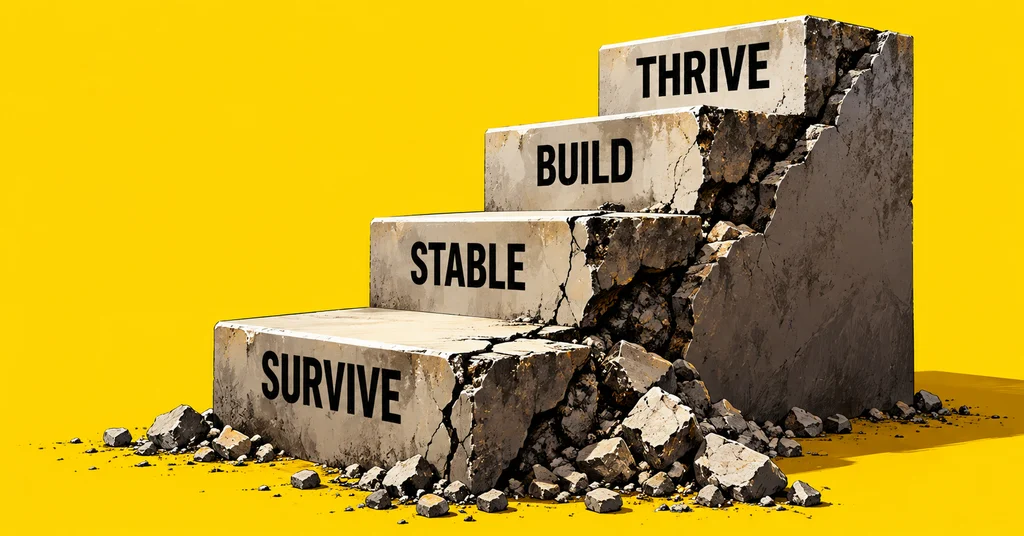
But the distance between surviving and thriving is still far too wide to mistake movement for arrival.