The news tells you what happened. We explain what changed.

Explore all past issues, only on Beehiiv.
Examining who gets opportunity, who faces barriers, and how communities navigate both.
City Signals
The waterfront’s future should include clear protections for workers, small businesses and public access throughout construction.
By Social Storytellers Collective News Desk · October 5, 2026
City Signals
Nearly 1,000 acres south of the city are being transformed as suburban Houston continues pushing outward.
By Social Storytellers Collective News Desk · October 5, 2026
City Signals
Houston wanted federal money for violent crime, homelessness and domestic violence. Questions about immigration enforcement ultimately…
By Brandon Crenshaw · October 5, 2026
Access
The administration has directed more than $600 million in additional money to HBCUs. That does not…
By Leena Alridge · October 5, 2026
Access
HomeRise once stood as a model of supportive housing. After receiving about $240 million in public…
By Social Storytellers Collective News Desk · October 5, 2026
Access
Five Texas community colleges can now use federal Pell aid for short-term workforce programs. The change…
By Social Storytellers Collective News Desk · October 5, 2026
Access
More than 300 women walked through Bengaluru after dark as part of a broader campaign challenging…
By Leena Alridge · October 5, 2026
Access
What a Kroger closure in Houston reveals about how access is being quietly reshaped — not…
By Will Davison Jr. · October 5, 2026
Access
The same social platforms that can expose someone are being flooded with false identities to protect…
By Leena Alridge · October 4, 2026
Access
The proposed 1040 would ask every filer about citizenship or work authorization. The IRS already knows…
By Social Storytellers Collective News Desk · October 4, 2026
Access
The question has moved back into public view after Los Angeles Times columnist Gustavo Arellano argued…
By Bryson Davis · October 4, 2026
Access
Coffee shops, bookstores, libraries and book clubs are doing something the internet cannot quite replicate: giving…
By Social Storytellers Collective News Desk · October 3, 2026
Scammers allegedly used a lookalike email domain to impersonate a legitimate vendor and redirect a real city payment. The case shows how payment fraud can exploit routine administrative trust without breaching an organization’s internal systems.
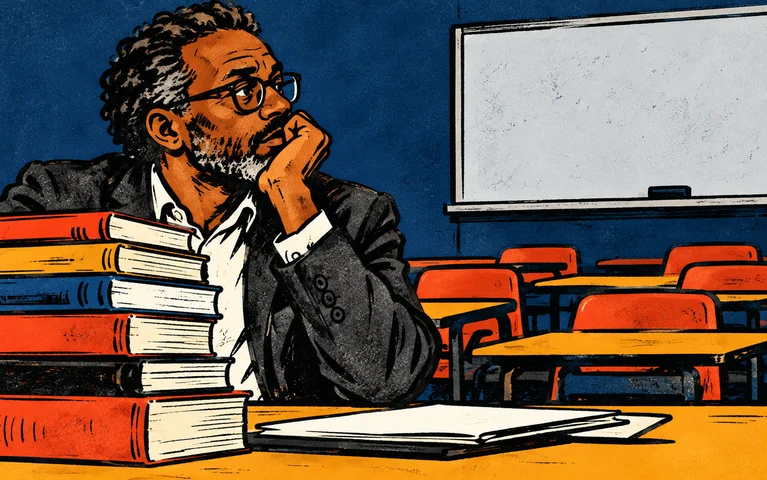
Michel DeGraff remains employed at MIT but has been removed from its linguistics section and says he is spending a third consecutive fall semester without a class.

Christian did not leave New York City because he stopped loving it. He left because remaining there increasingly required him to accept conditions that no longer made financial sense. He lived on West 118th Street near Riverside Drive in Harlem, a prime Manhattan location where access to Riverside Park, transit, restaurants and the broader energy of the city helped justify compromises inside the apartment. He was paying about $3,500 a month for a one-bedroom in a pre-war building, where the appliances were old, the elevator was frequently out of order and what was technically an elevator building regularly became a walk-up. Mice became enough of a problem that he plugged openings around the oven and air-conditioning unit to keep them from entering the apartment. None of those conditions stopped his landlord from raising the rent three separate times during his tenancy. For a while, the location made those compromises easier to rationalize because much of the value of living in New York existed outside his front door. Eventually, however, the price of staying overtook the value of the experience, and moving became less of a lifestyle choice than a financial necessity.

New York City is moving toward banning horse-drawn carriage rides in Central Park by 2028, potentially ending a tourist tradition that has operated in the city for more than 150 years. The latest push followed the death of 18-year-old Romanch Mahajan, an Indian tourist who was fatally injured after a carriage horse bolted in Central Park this summer. Animal-welfare advocates and city leaders argue that horse-drawn carriages no longer belong in a crowded modern park where pedestrians, cyclists, vehicles and tourists compete for space. The carriage industry and its union say a ban would eliminate the livelihoods of workers, many of them immigrants, and argue that stronger safety rules would be preferable to eliminating the trade. The proposed legislation includes a transition plan for affected workers and requirements governing what happens to the horses after the industry closes. New York has debated this question for years, but the argument is now larger than whether carriage rides are charming or outdated: it is about what happens when a city’s cultural traditions collide with changing standards for safety, labor and animal welfare.
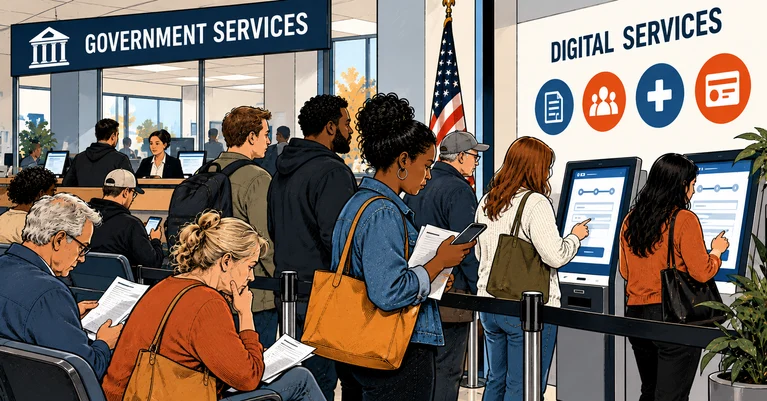
A 2026 Pew Research Center survey found that 54% of adults in households earning under $30,000 had home broadband, compared with 94% among adults in households earning at least $100,000. This 40-point gap is a measurable access constraint, not proof that any particular applicant was rejected. The person who needs a public benefit most urgently may also be the person least equipped to navigate a digital application. Imagine a worker whose hours have been cut and who must upload identity documents, retrieve a code sent to an old phone number and complete an application before a deadline. Each step may seem minor to a system designer. Together, they can determine whether a resident receives help on time. This is the central tension in digital government: convenience for the institution does not always translate into access for the public.

The federal government can count broadband connections. It has a harder time counting whether people can actually afford to keep them. In 2024, the U.S. Census Bureau estimated that 123.9 million of the nation’s 132.7 million households had an internet subscription, while roughly 6.0 million households reported no internet access at home and another 2.8 million had access without a paid subscription. Those figures show how close the country is to treating connectivity as ordinary infrastructure — and how many households still sit outside that assumption. Census data makes the gap visible, but it does not explain why some households remain disconnected even when service exists nearby.
An approximately €31 million agreement over alleged exploitation at a Milan construction site highlights the challenges of protecting migrant workers on government-commissioned projects.
A Georgia elementary school is testing whether better access to food can improve attendance — and the early numbers are significant.

A D.C. settlement turns unequal Prime delivery in two predominantly Black ZIP codes into a broader question about what standardized subscriptions really guarantee.
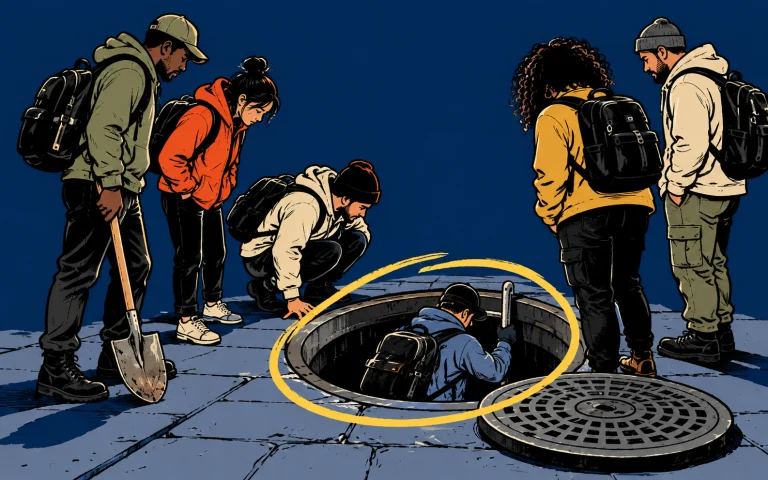
Groups have repeatedly been seen entering and emerging from New York City manholes, sometimes carrying or leaving behind shovels and other tools. Police say there is no evidence of a terror plot, but repeated unauthorized access to underground infrastructure deserves more than a shrug.
Projected voucher allocations of $766 million exceed the state formula's $737 million for Miami-Dade public and charter schools, even as those schools serve far more students.
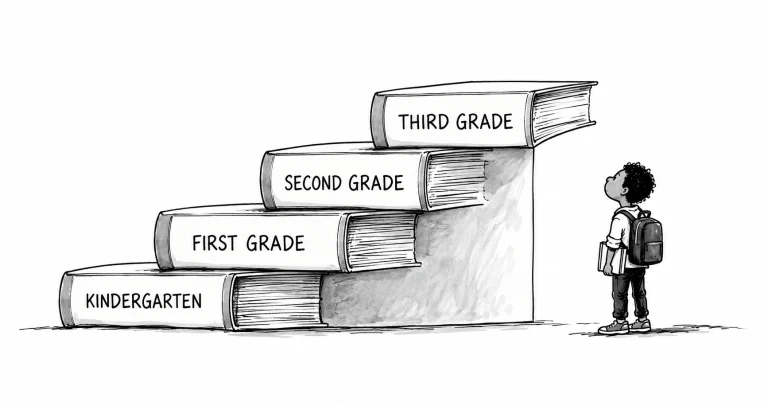
The state's latest reading results expose a stubborn early-literacy gap even as policymakers expand curriculum requirements and tutoring options.
