The news tells you what happened. We explain what changed.

Explore all past issues, only on Beehiiv.
Examining who gets opportunity, who faces barriers, and how communities navigate both.
City Signals
Scammers allegedly used a lookalike email domain to impersonate a legitimate vendor and redirect a real…
By Brandon Crenshaw · October 14, 2026
Access
Michel DeGraff remains employed at MIT but has been removed from its linguistics section and says…
By Will Davison Jr. · October 14, 2026
City Signals
Christian did not leave New York City because he stopped loving it. He left because remaining…
By Will Davison Jr. · October 14, 2026
City Signals
New York City is moving toward banning horse-drawn carriage rides in Central Park by 2028, potentially ending…
By Social Storytellers Collective News Desk · October 14, 2026
Access
A 2026 Pew Research Center survey found that 54% of adults in households earning under $30,000…
By Brandon Crenshaw · October 14, 2026
Access
The federal government can count broadband connections. It has a harder time counting whether people can…
By Social Storytellers Collective News Desk · October 14, 2026
Access
An approximately €31 million agreement over alleged exploitation at a Milan construction site highlights the challenges…
By Bryson Davis · October 14, 2026
Access
A Georgia elementary school is testing whether better access to food can improve attendance — and…
By Social Storytellers Collective News Desk · October 13, 2026
Access
A D.C. settlement turns unequal Prime delivery in two predominantly Black ZIP codes into a broader…
By Social Storytellers Collective News Desk · October 13, 2026
City Signals
Groups have repeatedly been seen entering and emerging from New York City manholes, sometimes carrying or…
By Brandon Crenshaw · October 13, 2026
Access
Projected voucher allocations of $766 million exceed the state formula's $737 million for Miami-Dade public and…
By Social Storytellers Collective News Desk · October 12, 2026
Access
The state's latest reading results expose a stubborn early-literacy gap even as policymakers expand curriculum requirements…
By Social Storytellers Collective News Desk · October 12, 2026
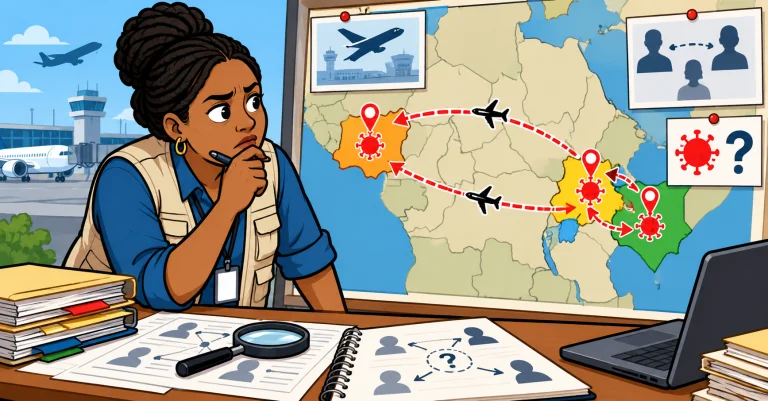
Two travelers passed through Uganda's Entebbe International Airport on the same day in early October. Both would become part of an expanding Ebola investigation, one in Kenya and the other in Nigeria. African health authorities are now examining whether their journeys intersected in a way that could help explain how the virus reached West Africa. The possibility remains unconfirmed, but the investigation has exposed a difficult problem for disease-control systems: a virus can move between countries faster than health authorities can establish where an infection occurred.

An apartment showing in Queens ended before it began when a real estate agent allegedly sent a racist message to prospective tenants. Now a Black couple is suing, raising questions about the decisions renters never see being made behind closed doors.

France's student-led demonstrations have turned violent in places, yet coverage has kept their grievances in view. That raises an old question about American journalism: whether race shapes which protests are explained and which are simply described as disorder.

For a market trader, a familiar selling location is more than a place to arrange merchandise. It is where returning customers know to find them, where goods are delivered and where daily sales generate the money needed to restock inventory and support a household. When that space disappears, even temporarily, the consequences can begin long before a new building takes its place. Traders in Accra's Madina Market are confronting that uncertainty as local authorities demolish an aging section of the commercial complex to make room for a modern facility.
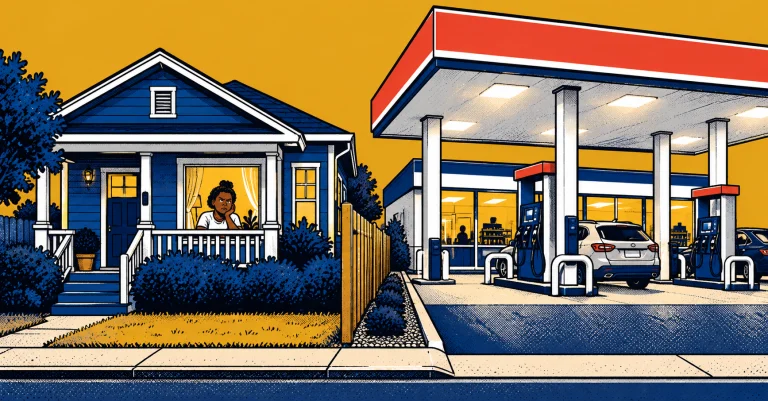
For drivers, a new gas station is a convenience. For its owner, it’s an investment. For the family next door, it can mean more cars pulling in and out, bright lights, delivery trucks, noise and worries about fuel emissions. Houston has no conventional zoning to keep homes and businesses apart the way many U.S. cities do, and those competing interests are now at the center of a proposal to limit where gas stations can go.
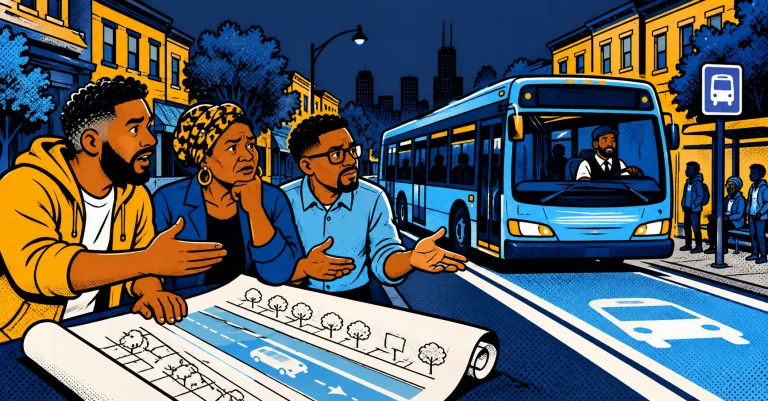
Boston wants to speed up buses on one of its busiest transit corridors. The plan has become so contentious that the City Council has voted to subpoena the head of the Massachusetts Bay Transportation Authority. What started as a $163 million transportation project is now a fight over community input, government accountability and the future of transit through historically Black neighborhoods.
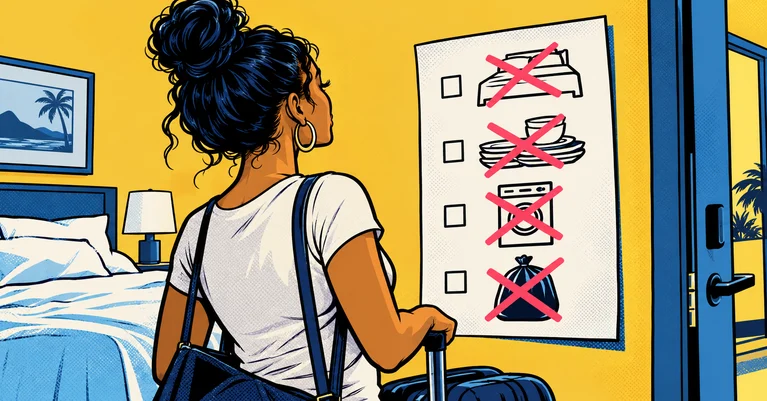
Airbnb’s new rules stop hosts from requiring guests to strip beds, wash dishes or haul out trash. As someone who rents homes with family several times a year, I think there’s a difference between unreasonable demands and basic courtesy.
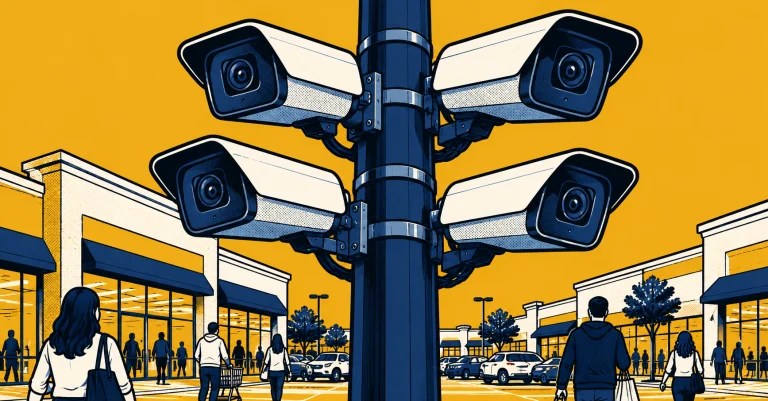
Ulta Beauty, Lowe's and Home Depot are facing scrutiny over license plate surveillance technology. Retailers say the cameras help prevent theft, but customers and privacy advocates want to know what happens to the information collected.

A lopsided City Council vote will retire one of Central Park’s best-known attractions by 2028. Animal welfare advocates are celebrating, but carriage workers say the city is erasing their livelihoods without guaranteeing compensation.
UNEP’s Emissions Gap Report 2026 says emissions must fall 18% by 2030 and 45% by 2035 to return warming to 1.5°C by 2100. Current pledges cut far less, leaving the world on track for about 2.6°C.

Labor authorities in the Dominican Republic inspected 101 Chinese-owned commercial establishments and reported that 91 dismissed employees before they completed three months of service. The findings reveal how job protections can be undermined when employers organize employment around avoiding legal obligations.
Thanksgiving and Christmas airfares are at their highest in a decade, and the TSA is warning that festive clothing can trigger extra screening. Getting home for the holidays now takes more money, more planning and a little less sparkle.
