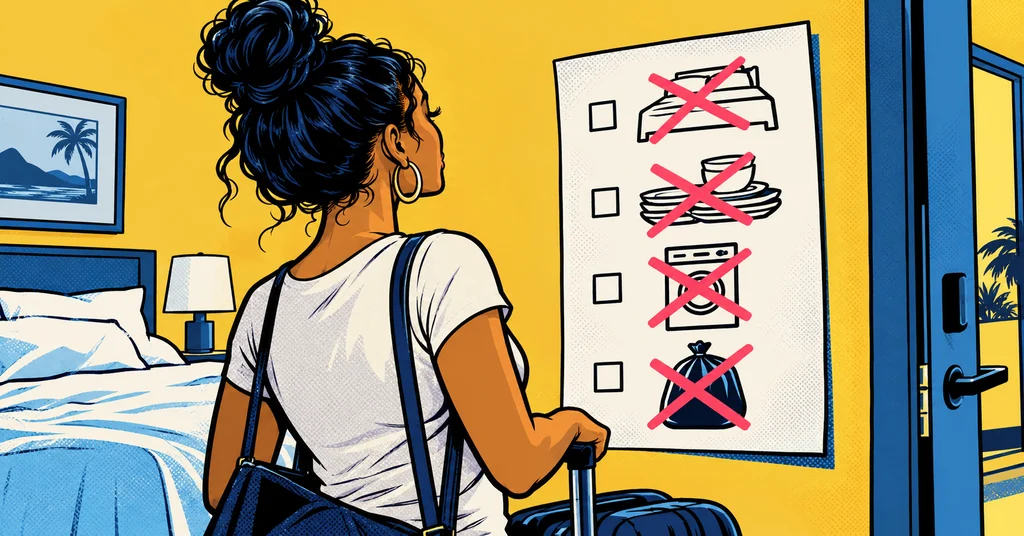
Airbnb is putting an end to the dreaded vacation rental checkout list, or at least the most demanding parts of it. Under rules the company announced Oct. 20, hosts can generally no longer require guests to strip beds, wash and put away dishes, start laundry or take trash out of the property, TechCrunch reported. The change applies to reservations booked on or after Nov. 20, and it answers years of complaints from travelers who say they should not have to clean a rental after paying a cleaning fee.
Hosts can still ask for lighter help, such as collecting used towels, leaving dirty dishes in the sink or sorting trash and recycling into indoor bins, according to FTN News. Checkout instructions now sit with the other house rules shown before booking, and hosts cannot add new requirements after a reservation is made. In effect, the policy draws a line between leaving a home in reasonable shape and doing work normally handled by a paid cleaner.
Plenty of travelers will welcome the change, and I understand why. It stings to pay hundreds of dollars in fees and then find a checklist that reads like a housekeeping assignment. But I see it a little differently. I use Airbnb about three times a year, usually when my family gathers for events outside the Atlanta area, and we have stripped beds, collected towels, loaded dishwashers and taken out trash without thinking much of it. My honest reaction to some of the outrage is that people are being a little precious, because not every request to help ready a home for the next guest is an unreasonable demand. Sometimes it is just courtesy.
A Recent Family Stay Put This Into Perspective
Two weeks ago, my family rented a large Airbnb outside New York City. We are scattered across the country, so when an event brings us together, a house lets us spend time with one another in a way separate hotel rooms cannot. We can cook, watch television, sit around talking and enjoy the ordinary moments that make family gatherings worth the trip.
Our hosts had a few checkout requests. They wanted the dirty towels in the laundry room, the trash in the bins behind the house, the dishwasher loaded and running and the beds stripped. We did all of it, gathered our things and left, and none of it felt like a burden.
I never really connected those tasks with the cleaning fee. I understood that the fee covered getting the property ready for the next guests, but I did not see stripping a bed or gathering towels as something that cheapened our stay. We had rented an entire house, slept in several bedrooms and shared its kitchen, so spending a few minutes helping put it back in order seemed fair.
I do some of the same things in hotels. I routinely pull my linens, collect used towels and try to make the room easier for housekeeping to clean, and nobody has ever asked me to. I do it because somebody else has to walk into that room after I leave, and I see no reason to make that person’s job harder than it needs to be.
But I Have Also Seen the Other Side
One Airbnb stay in Philadelphia tested my patience with checkout instructions. My family had gathered for a loved one’s funeral, so it was not a vacation or a celebration. We spent our downtime watching movies, eating meals and being together, with no parties and no extraordinary messes.
Yet the departure checklist was long. I remember my mother vacuuming and my sister sweeping near the door as we got ready to leave, and looking back, the scene feels absurd. We had come together in grief, and now family members were doing what looked like part of the cleaning crew’s job.
That stay is exactly why I understand Airbnb’s decision. Asking someone to gather towels is one thing, but expecting paying guests to vacuum and sweep before they leave is something else, and if a host charges a cleaning fee, the regular cleaning should be done by the people being paid to do it. That fee does not entitle anyone to leave a home in disarray. If we spill something or make an unusual mess, we should clean it up, but a family eating meals, sleeping in beds and spending time together is using a vacation rental the way it was meant to be used.
Turning Over a Property Takes Real Work
What gets lost in some of this conversation is the work of getting a rental ready for the next guest. Hosts and cleaning crews may have only a few hours between checkout and check-in, and a large home with several bedrooms, multiple bathrooms and a busy kitchen takes real coordination to turn over. Hunting down linens and towels in every room and working through a sink full of dishes can eat into time that would otherwise go to cleaning and sanitizing the house before another family arrives that afternoon.
That is also the business hosts chose. Their cleaning fees should reflect what it actually costs to prepare their properties, and guests should not be asked to make up the difference with unpaid housework. Some hosts have pushed back hard, with one longtime host telling Airbnb’s community forum that the rules give guests “complete freedom to be lazy while the hosts bear the risk,” according to TechCrunch. I would not go that far, but I also do not see why a few modest gestures should be treated as an insult to the customer.
In some ways, Airbnb’s policy is a reasonable compromise. It stops hosts from requiring the heavier work while still letting them ask for small things. The irony for me is that I will keep doing voluntarily some of the very things hosts can no longer require, and I do not see anything wrong with that.
I Still Prefer Hotels, but Not Because of Chores
Even though I use Airbnb regularly for family gatherings, I generally prefer hotels. The added security, established service and predictable experience give me a level of reassurance I value when I travel, and hotels do not hand you a departure checklist. You check out and go on with your day, though I still try to leave the room in decent shape.
Hotels cannot always match what a large rental offers, though. When my family gathers, a shared living room and a kitchen where we can eat together make an Airbnb worth it, and that comes with a different relationship to the place. We are not in separate rooms along a hotel corridor but living together in a house for a few days, and treating that house with consideration is part of being a good guest, the same way we owe something to the people we travel with.
None of this means hosts should be free to pile on checkout demands. Philadelphia showed me how fast an ordinary list can become excessive, but our stay outside New York reminded me that most of these requests take very little effort. Airbnb has every reason to set clearer expectations and protect guests from unreasonable demands, and I support that. What I do not support is the idea that gathering towels or leaving a kitchen in order somehow ruins a vacation, especially as travel keeps getting more expensive and guests are right to scrutinize every fee.
I will probably keep stripping my bed when I travel, whether I am in a hotel or an Airbnb, and I will keep gathering my towels and leaving the space ready for whoever cleans it next. It takes a few minutes, and the workers who follow me have a job to do. Paying for a place to stay should mean we are not responsible for professionally cleaning it. It should not mean we have abandoned the basic courtesy of making someone else’s work a little easier.