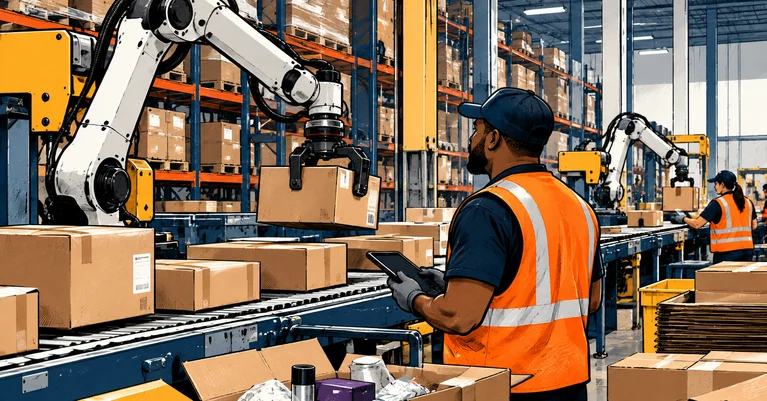
Walmart is discovering that warehouse automation does not happen simply because a company buys enough robots. A Wall Street Journal investigation published October 9 describes repeated technical and financial obstacles in the retailer's effort to automate roughly 200 U.S. supply-chain buildings. The machines can struggle with cardboard boxes, oversized goods and the routine act of unpacking items for individual shipments. The stakes extend beyond engineering: Walmart's distribution network supports thousands of stores and employs more than 140,000 warehouse workers, according to the Journal. A system meant to reduce handling time is now forcing the retailer to redesign packaging, maintenance routines and jobs around what machines can actually do.
Following its reported $1.28 billion acquisition by Bending Spoons, Airtable faces a major workforce reduction as its new owner prioritizes smaller teams, artificial intelligence and product efficiency.
New Pew Research Center data shows sharply different voting preferences among White evangelicals, Black Protestants, Hispanic Catholics and religiously unaffiliated Americans. But even Trump's strongest religious supporters are less approving than they were at the beginning of his second term.
People keep disappearing beneath New York City's streets through manholes, sometimes carrying tools and emerging at different locations. Police say there is no evidence linking the incidents to terrorism, and some individuals may be searching for valuables. But the repeated entries raise a different concern: how easily can unauthorized people access the infrastructure beneath a major city?
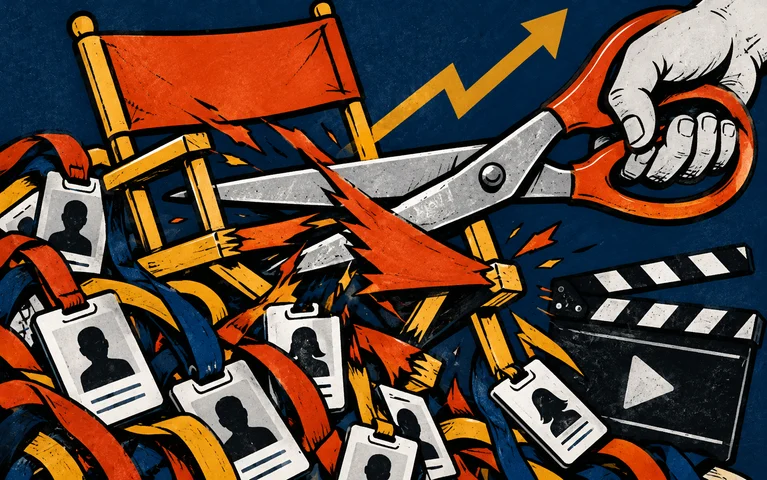
One day after reports pointed to about 800 potential job cuts, Netflix confirmed it is eliminating roughly 1,000 positions as it tries to produce more growth with a smaller workforce.
Facebook’s new AI-powered recommendation controls give users a more direct voice in their feeds. But choosing what interests you is not the same as controlling how a platform distributes information.
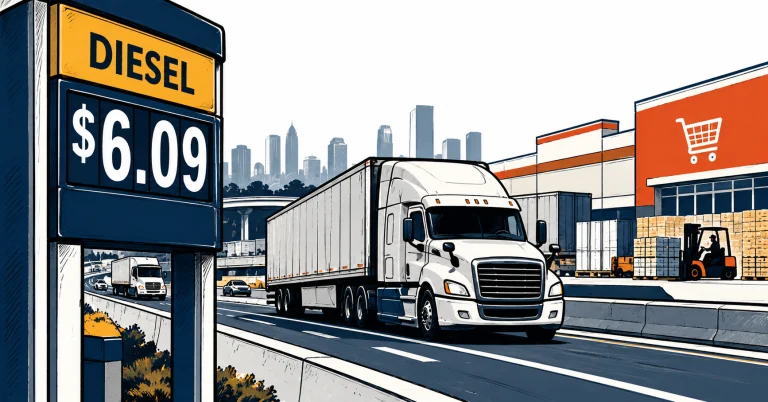
As retailers adjust to higher freight costs, the consequences could extend from distribution centers to store shelves, exposing another source of pressure on household budgets.
An Essence essay calls for unity across the Black diaspora. But solidarity cannot require descendants of American slavery to surrender their distinct historical claims.
White-collar America is producing more while employing fewer people, a shift that could change one of the basic assumptions workers have made about economic growth. An analysis by Gad Levanon, chief economist at the Burning Glass Institute, found that employment across finance, insurance, information and professional and business services has fallen roughly 2% since the end of 2022, while real output from those same industries has increased approximately 16%. For roughly two decades before that point, employment and output largely moved together, with stronger business activity generally creating demand for additional workers. That relationship has now separated enough for Levanon to describe the trend as evidence that something unusual is happening inside the professional economy. Business Insider subsequently highlighted the analysis as an explanation for why many white-collar workers are encountering a job market that feels dramatically weaker than corporate activity would suggest. Demand for what these businesses produce has not disappeared, but companies increasingly appear capable of satisfying that demand without expanding payrolls at the same rate. For workers, that means a growing company or industry can no longer be assumed to be a growing source of jobs.
Getty Images is preparing to leave the public markets through a restructuring that will place the company entirely in the hands of the Getty family and Koch Equity Development, the investment arm backed by Charles Koch. The transaction includes up to $533 million in new equity, while holders of Getty's unsecured bonds have agreed to retire $270 million in outstanding notes and secured lenders will reduce interest obligations and extend maturities. Getty plans to complete the transaction through an expedited prepackaged Chapter 11 process involving certain U.S. entities, with the restructuring expected to conclude by the end of 2026. Once the process is complete, affiliates of the Getty family and Koch Equity Development will own 100% of the reorganized company. Getty says operations, employees, contributors, customers and vendors are expected to continue normally during the process. The structure makes this less a traditional buyout than an effort to repair Getty's balance sheet while giving its new owners more room to reposition the business outside the scrutiny and short-term expectations of public markets.
The through line this morning is that headline strength and underlying stability are separating. Banks are still profitable, stocks remain near records and AI investment continues to attract enormous capital, but the structure underneath those gains is becoming more fragile. High rates, expensive housing, geopolitical pressure, imported AI hardware, public resistance to data centers and the prospect of harder political oversight are all starting to converge. The economy is not collapsing, but more institutions are being forced to answer a harder question: who absorbs the cost when growth depends on systems that are becoming more expensive, more concentrated and more contested?