The South African jurist moved from apartheid-era legal barriers to international courts. Her peace prize recognizes both a life’s work and the institutions that give it reach.
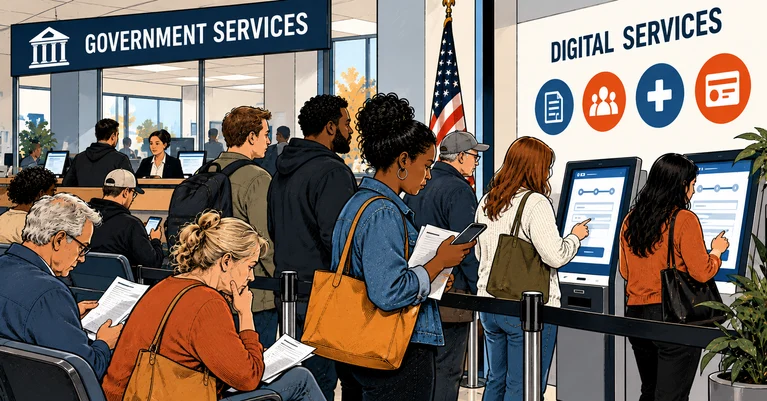
A 2026 Pew Research Center survey found that 54% of adults in households earning under $30,000 had home broadband, compared with 94% among adults in households earning at least $100,000. This 40-point gap is a measurable access constraint, not proof that any particular applicant was rejected. The person who needs a public benefit most urgently may also be the person least equipped to navigate a digital application. Imagine a worker whose hours have been cut and who must upload identity documents, retrieve a code sent to an old phone number and complete an application before a deadline. Each step may seem minor to a system designer. Together, they can determine whether a resident receives help on time. This is the central tension in digital government: convenience for the institution does not always translate into access for the public.
Pew’s latest electorate data shows the 2026 voting pool is not just more diverse. Its growth is being driven by younger U.S.-born Hispanic voters and naturalized Asian Americans — two trends that could reshape political competition well beyond this midterm.
Americans living in cities, suburbs and rural communities participate in civic life at broadly similar rates, but the kinds of participation they choose are not the same. A September 28 Pew Research Center analysis found that 23% of urban adults were classified as “Connectors,” compared with 34% of suburban adults and 30% of rural residents. Connectors volunteer, donate and participate in organizations more often than they engage in political action. Cities, meanwhile, had a higher share of “Spectators,” people who follow the news but participate less in other public activities. The data complicate an assumption that living among more people necessarily means being more connected to them.
Millions of employees also support someone who needs care. Workplace rules determine how much of that responsibility they can carry without losing income.
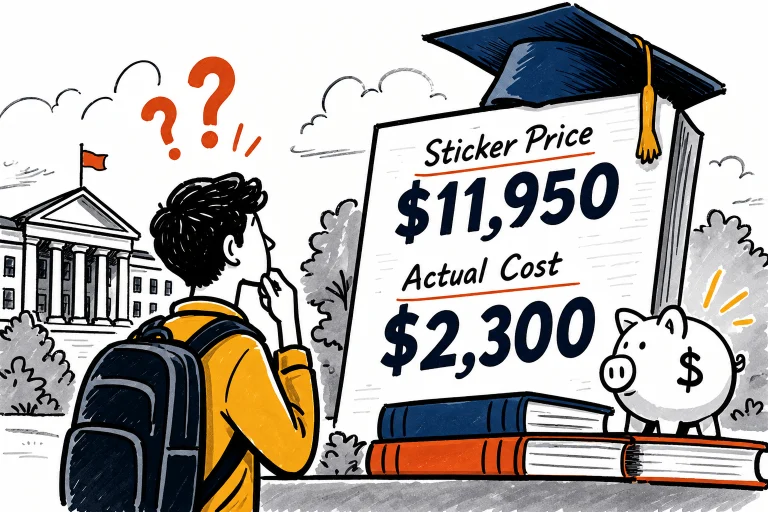
The average published tuition and fees at a public four-year university reached $11,950 for in-state students in 2025–26, according to the College Board. Yet its estimate of what first-time, full-time students in that sector actually pay for tuition and fees after grant aid is much lower: $2,300. Both figures are useful, and neither tells the whole story. The first is the advertised price; the second is an estimated average after grants, not a guaranteed offer to any individual family. The gap helps explain why college affordability has become as much an information problem as a financing problem. Students may reject a school based on its sticker price before learning whether its actual cost would be manageable.
The United States is preparing to take more ownership stakes in African companies and infrastructure projects, adding a new dimension to its competition for critical minerals and digital networks. In an October 9 interview with Reuters, Vibhuti Jain, the U.S. International Development Finance Corporation’s regional managing director for Africa, said the agency intends to deploy equity more often where projects are strategically significant. DFC already has more than $14 billion in investment commitments across Africa, including more than $3 billion in critical minerals and related projects. The announcement is a statement of direction, not proof that every proposed investment has been approved or completed. It nevertheless signals a change in how Washington wants to participate in African industries.
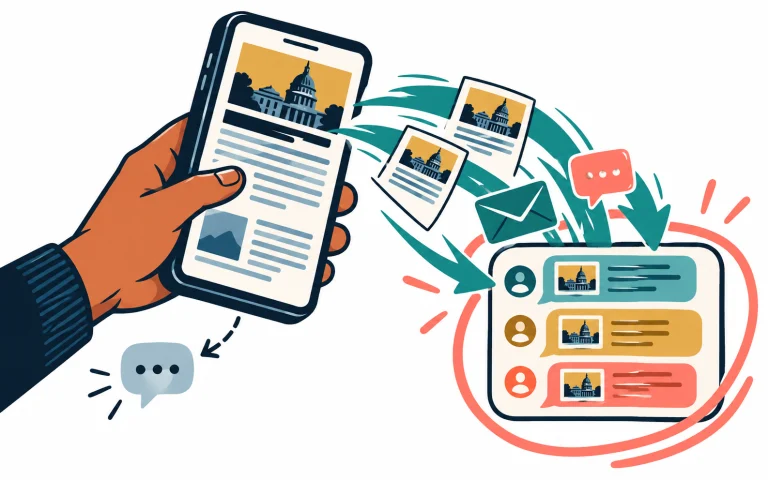
New Pew-Knight data shows private messages and quiet engagement now matter more than public comments. That changes what news organizations should consider an engaged audience.
The federal government can count broadband connections. It has a harder time counting whether people can actually afford to keep them. In 2024, the U.S. Census Bureau estimated that 123.9 million of the nation’s 132.7 million households had an internet subscription, while roughly 6.0 million households reported no internet access at home and another 2.8 million had access without a paid subscription. Those figures show how close the country is to treating connectivity as ordinary infrastructure — and how many households still sit outside that assumption. Census data makes the gap visible, but it does not explain why some households remain disconnected even when service exists nearby.
An October survey finds housing anxiety rising as mortgage rates climb. The pressure extends beyond prospective buyers into the broader debate over household affordability.
An approximately €31 million agreement over alleged exploitation at a Milan construction site highlights the challenges of protecting migrant workers on government-commissioned projects.