Neutral Screening, Racialized Outcomes: How Algorithms Reproduce Housing Segregation
Algorithmic rental screening removes human bias from decisions. It reproduces historical discrimination automatically instead.
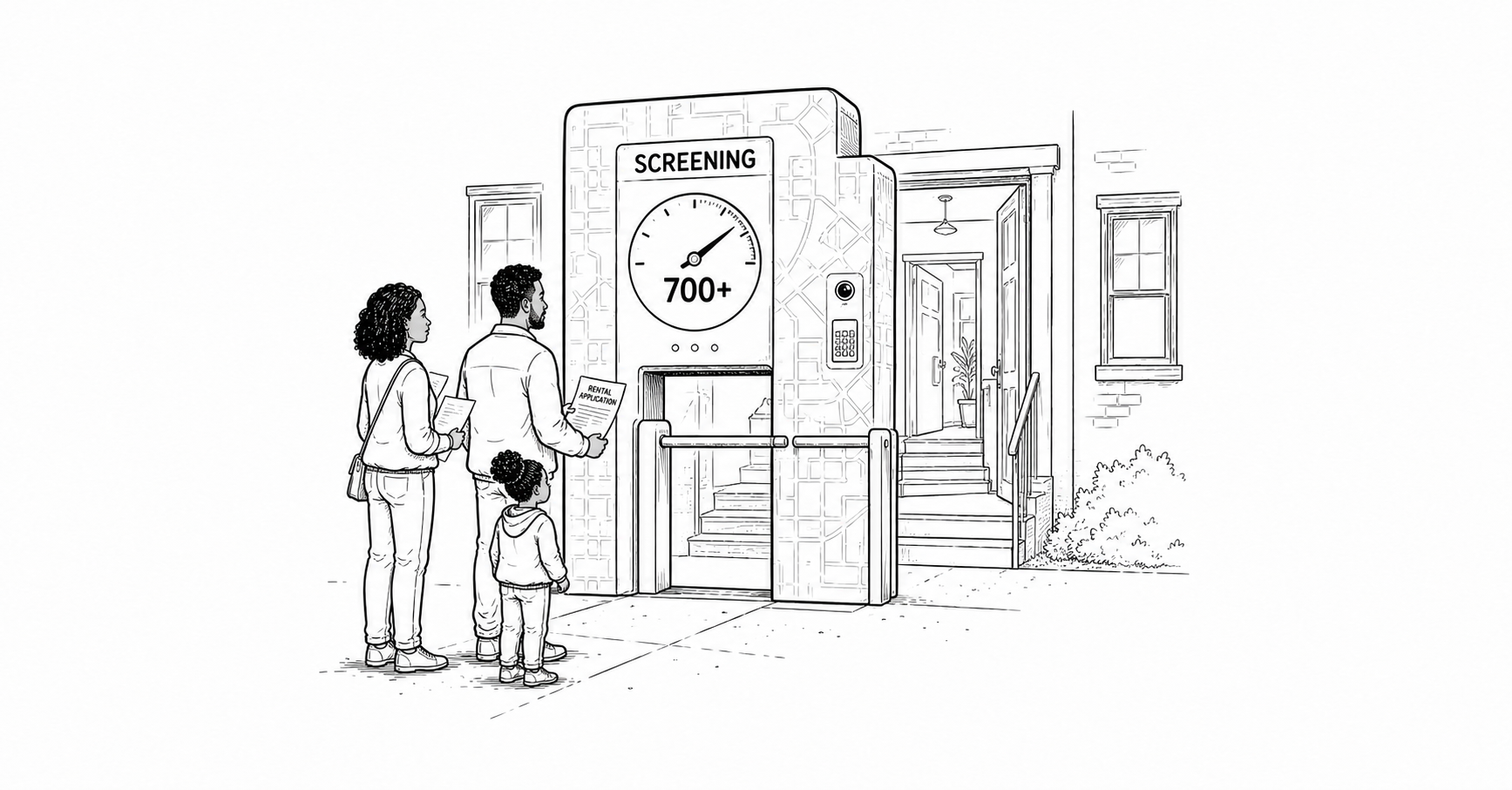
Rental platforms increasingly use algorithmic screening to evaluate tenant applicants. The systems are marketed as objective—they remove human bias, apply criteria uniformly, and make decisions based on validated risk metrics. A landlord requires a credit score of 700 or higher. No mention of race. No discriminatory intent. No human judgment involved. The criterion applies uniformly to all applicants.
Yet 41 percent of Black Americans have credit scores below 620. Only 16 percent of white Americans do. The gap in credit score distribution is not natural. It is the direct result of generations of credit discrimination, redlining, and systemic exclusion from credit markets. When a neutral screening criterion is applied to a racialized distribution of outcomes, the result is racialized exclusion.
The mechanism is straightforward. A Black applicant rejected for a credit score of 580 is not discriminated against in the legal sense. The credit score is a valid predictor of default risk. The landlord is making a sound business decision based on objective data. That the credit score gap itself is a product of historical racialized exclusion doesn’t invalidate the screening criterion on its face. The algorithm is not breaking the law. It is perpetuating the law’s historical outcome.
Landlords using algorithmic screening believe they’ve removed bias from the process. They have not. Algorithms encode historical patterns. If credit scores correlate with race due to historical discrimination, an algorithm using credit scores will reproduce that discrimination automatically. The algorithm launders discrimination, making it appear objective and data-driven rather than recognizing it as the perpetuation of systemic exclusion. The system becomes harder to challenge because bias is now claimed to be statistical rather than intentional.
A Black family searching for apartments in a mixed-income neighborhood in 2026 was rejected by 12 of 15 properties based on credit scores. Their credit score was 580 due to a medical debt from an emergency room visit five years earlier. They had perfect rental payment history since that time. But the neutral criterion disqualified them from apartments they could afford in neighborhoods where they wanted to live. Meanwhile, white families with credit score issues had higher scores due to greater access to credit products and lower exposure to predatory lending. The screening system produced a racialized outcome without anyone making a racist decision.
You can partially address this by changing the screening. Eliminate credit score requirements and more Black renters qualify. But the underlying problem is the credit score distribution itself—the racialized history expressed numerically. Fixing the screening criterion doesn’t fix the historical exclusion that produced the gap. The inequality in the distribution precedes the algorithm. The algorithm amplifies it.
Segregation persists without racist intent when the tools producing it are invisible. Nobody has to choose discrimination. The rental market reproduces segregation automatically. The mechanism stays hidden inside what appears to be objective, data-driven decision-making. The tenants rejected see a credit score. They don’t see the historical discrimination embedded in that number. The neighborhoods stay segregated. The system stays in place. The next generation inherits the geography their ancestors couldn’t access.