
The India-UAE Tech Alliance Is Already Looking Beyond Silicon Valley. Here’s Why That Matters.

In May 2026, the UAE-India Business Council announced a strategic partnership targeting artificial intelligence infrastructure development and digital investment. The bilateral tech alliance aims to develop 8 exaflops of compute capacity alongside a 2 gigawatt data center buildout. Feasibility studies are scheduled to wrap up by mid-2026. The India-UAE Startup Corridor targets identifying 50 promising startups from both nations over the next five years, supported by a 150 million dollar fund to develop future unicorns. When two countries announce AI infrastructure partnerships at this scale, they are not simply coordinating on technology policy. They are signaling independence from Western-led tech infrastructure.
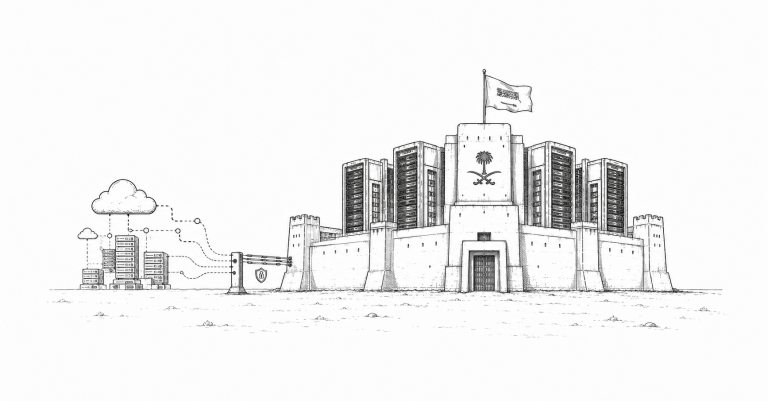
The India-UAE partnership has roots in broader geopolitical recalibration. India has historically relied on U.S. tech companies for cloud services and AI infrastructure. That dependency has become politically complicated as India pursues strategic autonomy from U.S. foreign policy influence. Building shared compute capacity with the UAE creates an alternative to both U.S. providers and Chinese infrastructure. It keeps data and compute within the Global South. It allows both countries to develop AI services without routing data through either Washington or Beijing.
The startup corridor is the proof point. By identifying and funding startups from both ecosystems, India and the UAE are building a tech industry that does not need to graduate to Silicon Valley for scale. Young companies can raise capital regionally. They can access compute infrastructure regionally. They can eventually scale globally without ever becoming dependent on U.S. or Chinese venture capital. This is capacity building. It is also competition with Silicon Valley for the next generation of AI companies.
What makes this different from previous South Asian tech initiatives is the UAE’s role as financial and infrastructure hub. The UAE has sovereign wealth funds, free trade zones, and regulatory flexibility that India lacks. The UAE can move fast. It can offer incentives that India’s more bureaucratic system cannot match. By partnering with the UAE, India gains access to capital and speed. The UAE gains access to India’s talent pool and customer base. Together, they are building something that neither could build alone, and they are doing it in a way that creates an alternative to Western tech dependency.
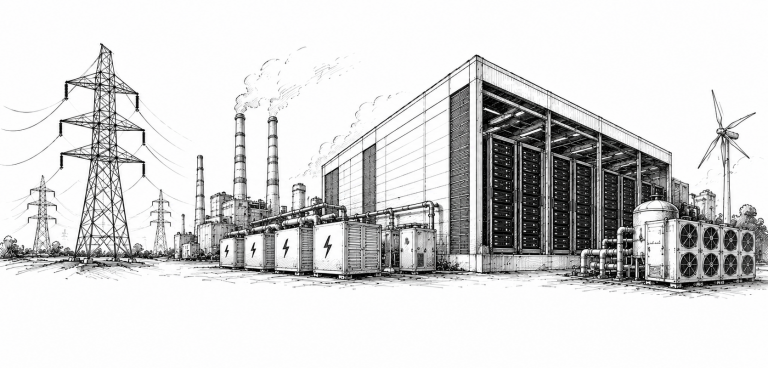
The 8 exaflops of compute capacity is not trivial. For context, the largest supercomputers in the world operate in the 500 petaflop range. Eight exaflops is sixteen times larger. That is sufficient to run frontier AI models at scale. That is sufficient for an independent AI industry. The 2 gigawatt datacenter is the physical infrastructure to house it. Both are ambitious. Both signal serious commitment.
The message to Silicon Valley and Washington is clear: the Global South is not waiting for permission to build autonomous tech infrastructure. It is doing it anyway. India and the UAE are not alone. This is part of a broader pattern where countries are building regional alternatives to U.S.-dominated tech infrastructure. It is happening in Europe through the EU AI Act and sovereign cloud initiatives. It is happening in Asia through India-UAE partnerships and Chinese alternatives. It is happening in Latin America through regional fintech and data infrastructure plays.
When Indian startups can raise capital from the India-UAE fund, they do not need to take venture money from San Francisco. When companies can host data in the UAE-India datacenters, they do not need AWS or Azure. When AI models can run on regional compute, they do not need to depend on OpenAI or Google Cloud. The infrastructure is the foundation. Everything else builds on top of it.
U.S. tech companies will still operate in these markets. But they will do so with less leverage and on less favorable terms. They will do so alongside regional competitors who built infrastructure first. They will do so in regulatory environments where local governments have alternative options if U.S. companies do not comply.
The India-UAE partnership is not anti-American. It is pro-autonomy. It is a signal that the age of American tech platform dominance is ending. It is not being replaced by Chinese dominance. It is being replaced by regional fragmentation where multiple infrastructure providers operate in different regions under different rules. The U.S. will remain a major player in that world. It will not be the only player. That shift is happening because countries like India and the UAE decided they did not want to be dependent on any single external power for their digital future.