
Progress Reversed: How Corporate DEI Rollbacks Dismantled Women’s Leadership Pipeline
Women’s advancement into C-suite roles stopped. Companies eliminated the programs that built it.

For 11 consecutive years, women held approximately 29 percent of C-suite positions at Fortune 500 companies. The number barely moved. But movement happened below the ceiling. From 2015 to 2024, women made incremental progress into senior leadership—not because of changing attitudes, but because companies implemented specific mechanisms: executive coaching programs, sponsorship activation initiatives, pipeline development, and accountability measures tied to executive compensation.
That progress reversed in 2026. White men secured the majority of new board appointments for the first time in nearly a decade. The reversal followed a coordinated shift: companies reduced or eliminated diversity, equity, and inclusion initiatives, citing cost-cutting or performance realignment. The executive coaching programs disappeared. The women’s advancement committees were dissolved. The mentorship networks connecting entry-level women with senior women leaders were cut.
The mechanism driving progress was not benevolence. It was enforced accountability. Companies invested in developing women into leadership roles because lawsuits established liability, regulatory pressure created exposure, and reputational damage from visible discrimination made the investment rational. Remove the enforcement and the investment stops.
Sponsorship determines who reaches senior leadership. Only 31 percent of entry-level women have a sponsor compared to 45 percent of men. Sponsorship is active advocacy—senior leaders opening doors to high-visibility projects, informal networks, and succession planning conversations. Without sponsorship, advancement requires exceptional performance at each level, and exceptional performance alone may still be insufficient. Mentorship offers advice. Sponsorship opens doors. Women with fewer sponsors never access the high-visibility projects that build track records for promotion. They are not considered for stretch assignments. They are not included in succession planning. They do not join the informal networks where opportunities surface.
Why do women have fewer sponsors? Senior leaders making promotion decisions remain predominantly male, and men tend to sponsor people who remind them of themselves. Informal mentoring relationships develop in settings—golf clubs, bars after work, casual hallway conversations—where women may not be equally present. Some senior men avoid one-on-one mentoring relationships with women due to concerns about perception or liability. The result is a system where women lack the advocacy essential for advancement.
Companies that invested in executive coaching for women created a countermeasure to this mechanism. A company that ran this program in 2025 identified a pipeline of women prepared for C-suite roles. The women received coaching, were flagged as high-potential, and were being developed. In 2026, the company eliminated the program as part of operational efficiency. The executive coach was terminated. The women in the pipeline lost access to the coaching that was preparing them for senior roles. Three women identified as high-potential leaders found that investment stopped.
The business case for women’s leadership is data-driven. Companies in the top quartile for gender diversity on leadership teams are 27 percent more likely to outperform financially than those in the bottom quartile. This performance advantage holds across industries and accounting methodologies. Gender-diverse teams produce better innovation—cognitive diversity improves creative problem-solving. They make better decisions—diverse perspectives challenge assumptions and reduce groupthink. They understand markets better—teams that reflect customer demographics understand customer needs more accurately. The correlation between women’s representation in leadership and financial outperformance is consistent and well-documented.
Yet companies are choosing short-term political compliance over documented long-term financial advantage. The companies most aggressively dismantling women’s development programs are simultaneously dismantling competitive advantage they spent a decade building. A company that removes executive coaching for women loses the edge that program provided. A company that dissolves women’s advancement committees loses the accountability mechanism that produced measurable progress.
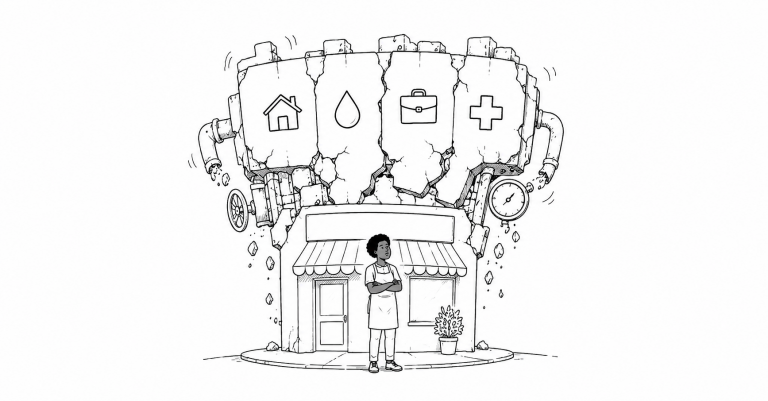
The ceiling for women in corporate leadership is concrete, not glass. It was erected in the 1980s and 1990s. Women made slow progress from 2015 to 2024 not because attitudes shifted but because deliberate programs with measurable outcomes shifted the system. Progress is not inevitable and not natural. Progress requires resources, tracking, and accountability. When those resources disappear, so does progress.
The signal being sent to young women entering the workforce in 2026 is explicit: advancement for women in corporate America is discretionary. It is removable when political winds shift. Pathways to power narrow when they become politically controversial. Opportunity is contingent on political mood.
What happens when women observe that corporate advancement is politically contingent? Some will still pursue corporate careers, betting they can succeed despite narrowed pathways. Others will pursue alternative paths—starting companies, joining industries with different structures, moving to markets with different incentives. The economy loses talent. The corporations that dismantled diversity programs lose the people they invested in developing. The pattern reproduces itself: power and opportunity concentrate among those already holding them. The next labor shortage may already be taking shape in the companies that just eliminated the programs that were preparing women to lead.