Atlanta Is Adding 19,000 Jobs This Year. It Is Also Delivering the Fewest Housing Units in a Decade.
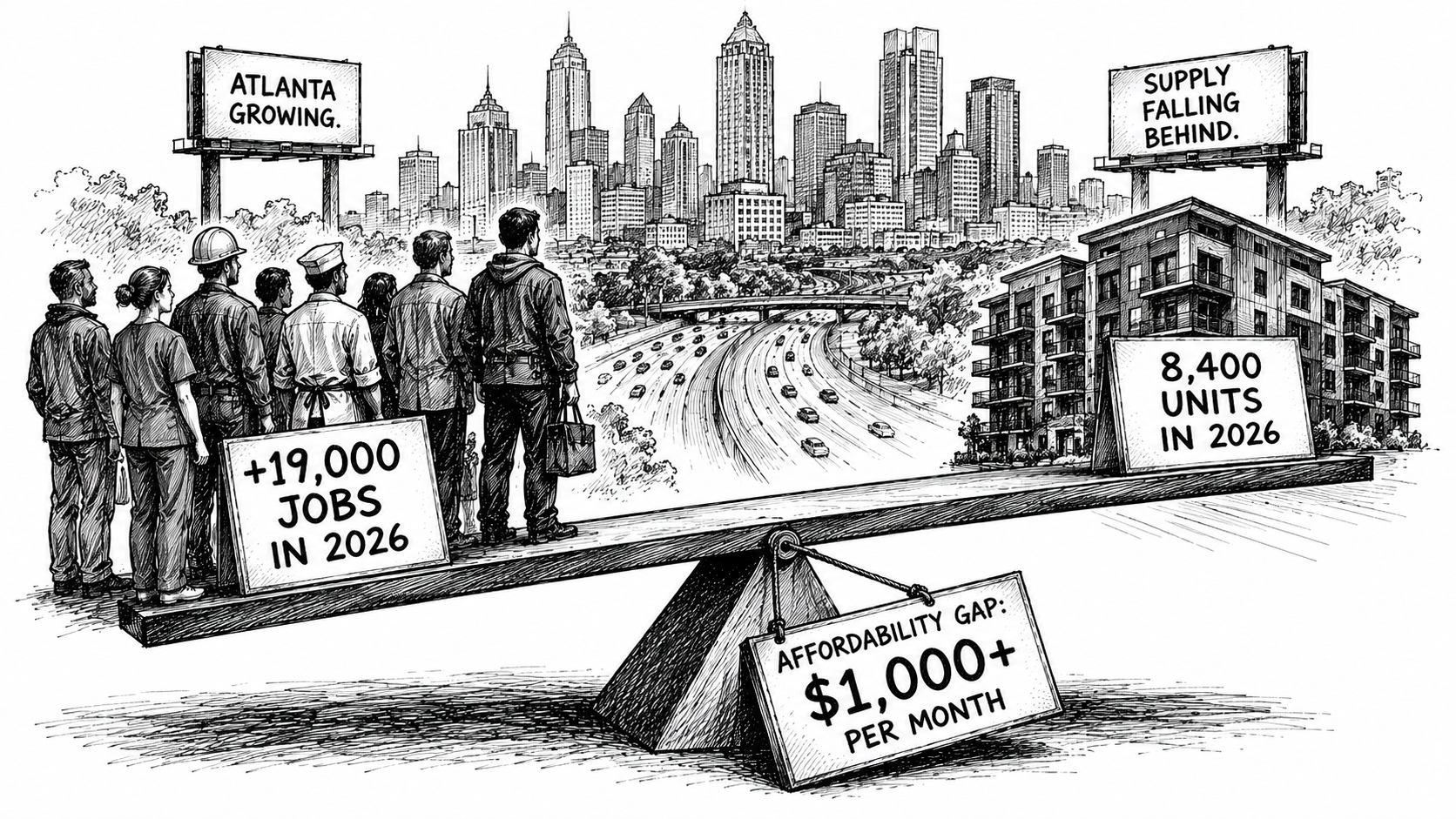
Metro Atlanta is projected to add 19,000 jobs in 2026 — the fourth-highest total among major U.S. metros, according to CBRE’s 2026 market analysis. Housing supply is moving in the opposite direction: only 8,400 units are projected to be delivered this year, the slowest residential development pace in more than a decade, per Urbanize Atlanta reporting. Nearly every major rental market in the metro entered 2026 with an affordability gap of more than $1,000 per month — the difference between what the market charges and what a household at the area median income can pay without being cost-burdened.
The mechanism producing this gap is not a construction slowdown in isolation. Atlanta’s development pipeline has been responding to investor returns in specific submarkets — Midtown, Buckhead, Old Fourth Ward — where land costs and rental demand support luxury and upper-middle income projects. The workforce that the 19,000 new jobs will employ operates in the professional services, logistics, healthcare, and hospitality sectors that anchor Atlanta’s growth. A meaningful share of those workers cannot qualify for or afford the units the market is currently producing.
The $1,000 affordability gap functions as a filter. Workers who earn enough to pay market-rate rents compete for the housing that exists. Workers who cannot — the healthcare aides, the logistics warehouse workers, the restaurant staff, the hotel employees whose labor supports the sectors growing fastest — pay cost burdens that leave less for transportation, childcare, and savings, or move to counties where housing is cheaper and commute times are longer. Neither outcome is efficient for the metro’s growth model, and neither appears in the job addition headline.
Atlanta’s reputation as the capital of Black economic aspiration makes this structural tension particularly visible. The metro has attracted significant Black professional migration for decades on the basis of its combination of economic opportunity, cultural infrastructure, and political representation. The housing production numbers for 2026 sit alongside an older and more durable statistic: the median wealth of a white household in Atlanta is $238,355; the median wealth of a Black household is $5,180. The new jobs being added this year land inside a wealth structure that has not changed at scale, and in a housing market that is producing supply at its slowest pace in a generation.
A metro that adds 19,000 jobs and 8,400 units is not in balance. The shortage is not a gap that the market will close on its own timeline, because the market is producing the units that generate the returns developers need, not the units the workforce needs to remain housed within commuting distance of where it works. Atlanta will add the jobs. The workers filling those jobs will solve their housing problem individually — or they will commute from farther away, or they will leave eventually for a market that is cheaper. The metro’s growth will continue. The workers sustaining it will pay the cost the growth model does not account for.