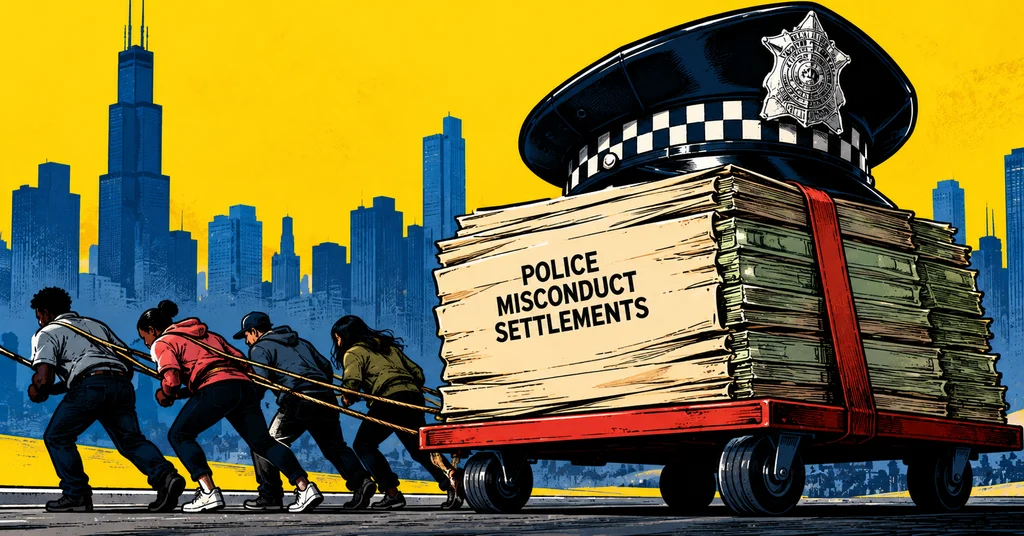
The city is turning legal settlements into long-term debt, adding another financial burden to a budget already under pressure.
Chicago is preparing to borrow $481 million to cover police misconduct settlements, and the interest alone could cost taxpayers another $190 million on the first $350 million borrowed. According to Heather Cherone’s October 26 reporting for WTTW News, city financial officials defended the proposal during hearings on Mayor Brandon Johnson’s $17.6 billion budget. The administration wants to borrow $350 million in 2027 and another $131 million in 2028. Chicago faces an estimated $882 million budget shortfall, and borrowing would reduce the amount officials need to cover immediately. But the settlements would still have to be paid, along with interest accumulated over several years.
Much of the liability comes from lawsuits alleging wrongful convictions, improper police pursuits and other misconduct. Chicago has already spent hundreds of millions resolving such cases, including claims involving former detective Reynaldo Guevara, whose investigations resulted in wrongful-conviction allegations. The city argues that financing these obligations will prevent settlement payments from consuming money needed for public services. That’s a legitimate budget concern, particularly when Chicago is also managing rising pension obligations and personnel expenses. Borrowing, however, changes the payment schedule rather than the underlying cost. Residents will be paying for past misconduct long after the cases themselves have been resolved.
The arrangement exposes a problem in how governments account for institutional failure. When police misconduct produces a settlement, the financial consequences are generally paid through public funds rather than directly by the officers or supervisors responsible. Borrowing extends that obligation to future budgets, including budgets that must also support libraries, housing assistance, transportation and neighborhood services. The city is effectively financing the consequences of past policing failures with revenue collected from residents who had no role in those decisions. Meanwhile, borrowing for operating expenses can concern credit-rating agencies, potentially making other city financing more expensive. A liability that begins inside one department can eventually affect the cost of running the entire government.
Chicago’s proposed borrowing could give officials breathing room during the current budget cycle, but repeated reliance on debt would make misconduct settlements a continuing expense rather than an exceptional one. The city already faces projected budget gaps approaching $1 billion in subsequent years. Without a sustained reduction in misconduct-related liabilities, future administrations may have to choose between paying old settlement debt and funding current services. Chicago is putting a price on police misconduct years after the harm occurred, and that price will increasingly be paid by people who never had a say in how the department operated.