Wages Grew 3.5%. Prices Grew More. The May Numbers Confirm What Workers Already Know.
Real wages fell for the second straight month, and the gap between paychecks and prices just hit its widest point since the inflation shock of 2022.
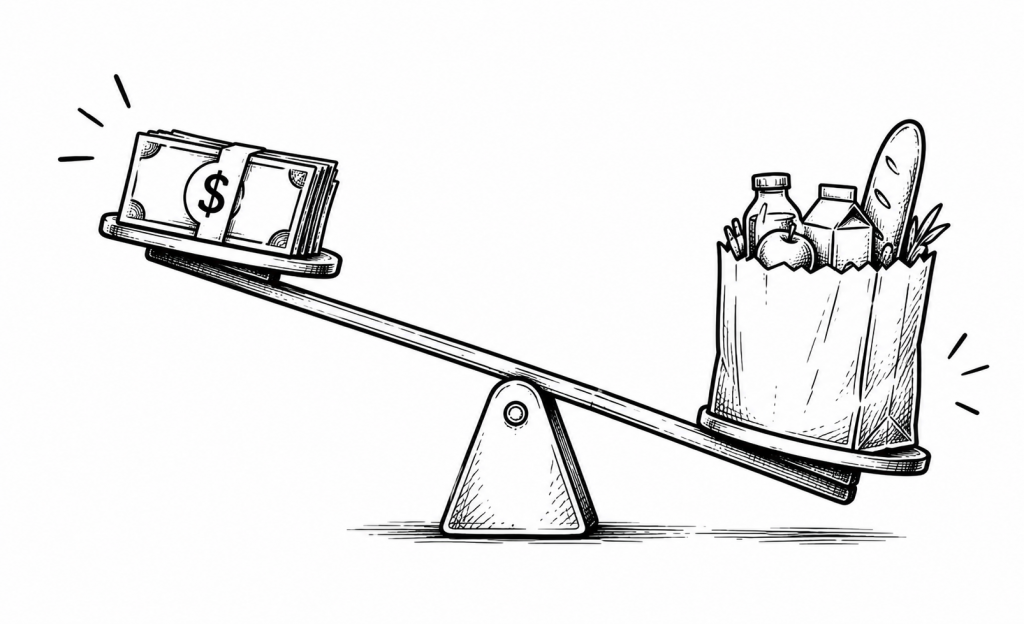
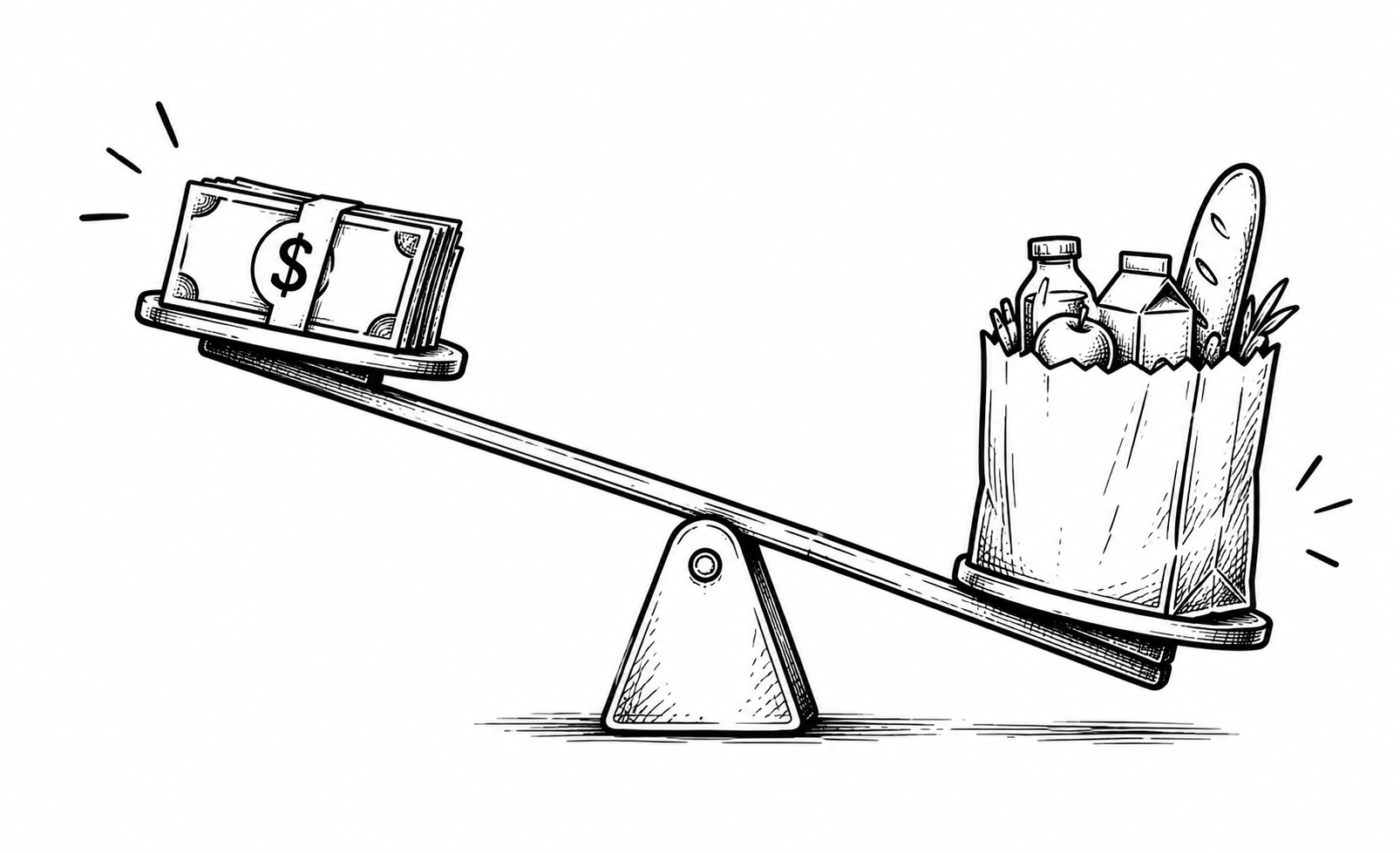
Average hourly earnings rose 3.4% over the year ending in May, while the Consumer Price Index rose 4.2% over the same period, the Bureau of Labor Statistics reported. That 0.8 percentage point gap means real wages — what a paycheck actually buys after accounting for price increases — fell for the second consecutive month, the steepest decline since the 2022 inflation spike, when wage growth lagged prices by as much as 4.3 points. RSM chief economist Joe Brusuelas described the broader pattern as a “split screen economy”: strong by the headline numbers, weaker once you look at what a typical paycheck can actually buy. The unemployment rate held at 4.3% in May, nearly identical to the inflation rate — a gap that has historically narrowed right before periods of broader economic stress.
The headline labor market numbers haven’t been the problem. Job growth has continued, unemployment has stayed low, and average hourly earnings are still rising in nominal terms every month. What’s changed is that prices are rising faster than those gains, which means a worker getting a 3.4% raise is still losing ground in what that raise can purchase. That distinction — nominal growth versus real growth — is the gap between an economy that looks healthy in a press release and one that feels worse to the people living inside it. Pew Research Center’s analysis of the same data found the answer to “have wages kept up with inflation” depends heavily on which workers you’re measuring and which inflation index you use, but the clearest recent trend point — wage growth trailing inflation in every month since April — held regardless of the methodology.
The erosion isn’t distributed evenly. USAFacts found real wage growth varied by as much as 7.2 percentage points across states over the year ending in April, with Virginia posting the strongest real gains at 5.1% while South Dakota saw the steepest real decline, at negative 2.1%. Production and nonsupervisory workers — roughly 80% of the private nonfarm workforce — have tracked close to their pre-pandemic earnings trend when measured against CPI, but workers who haven’t changed jobs recently are seeing meaningfully smaller gains than those who have: BLS data shows job-switchers picking up 5 to 8% nominal raises, compared to 3 to 4% for workers who stayed in place. In a labor market where real wages are falling for people who hold steady, switching jobs has become one of the few reliable ways to actually keep pace with prices — which quietly shifts bargaining leverage toward workers willing to leave, and away from the loyalty employers have historically counted on retaining for free.
The mechanism underneath both numbers is the same one driving this week’s other stories on automation and management restructuring: companies are managing labor costs as a controllable line item while treating price increases as an external force they pass through to consumers rather than absorb. A 3.4% raise looks generous in a press release. It only becomes a real increase in living standards if prices grow more slowly — and for two straight months, they haven’t. Workers experience that gap not as an abstraction but as the same paycheck buying less at the grocery store, which is precisely the condition driving the consumer behavior already showing up elsewhere in this economy: more selective spending, more private-label substitution, and less cushion for anyone who isn’t actively negotiating a raise or changing jobs to get one.
— SSC Economy Desk | Social Storytellers Collective
Free, daily structural analysis like this lands in your inbox every weekday morning. Subscribe: https://246481934.hs-sites-na2.com/newsletter