Caitlin Clark’s Signature Shoe Turns Women’s Basketball Into Sneaker Infrastructure
Nike waited almost four years to give its most marketable athlete her own shoe. The delay tells you more than the launch does.

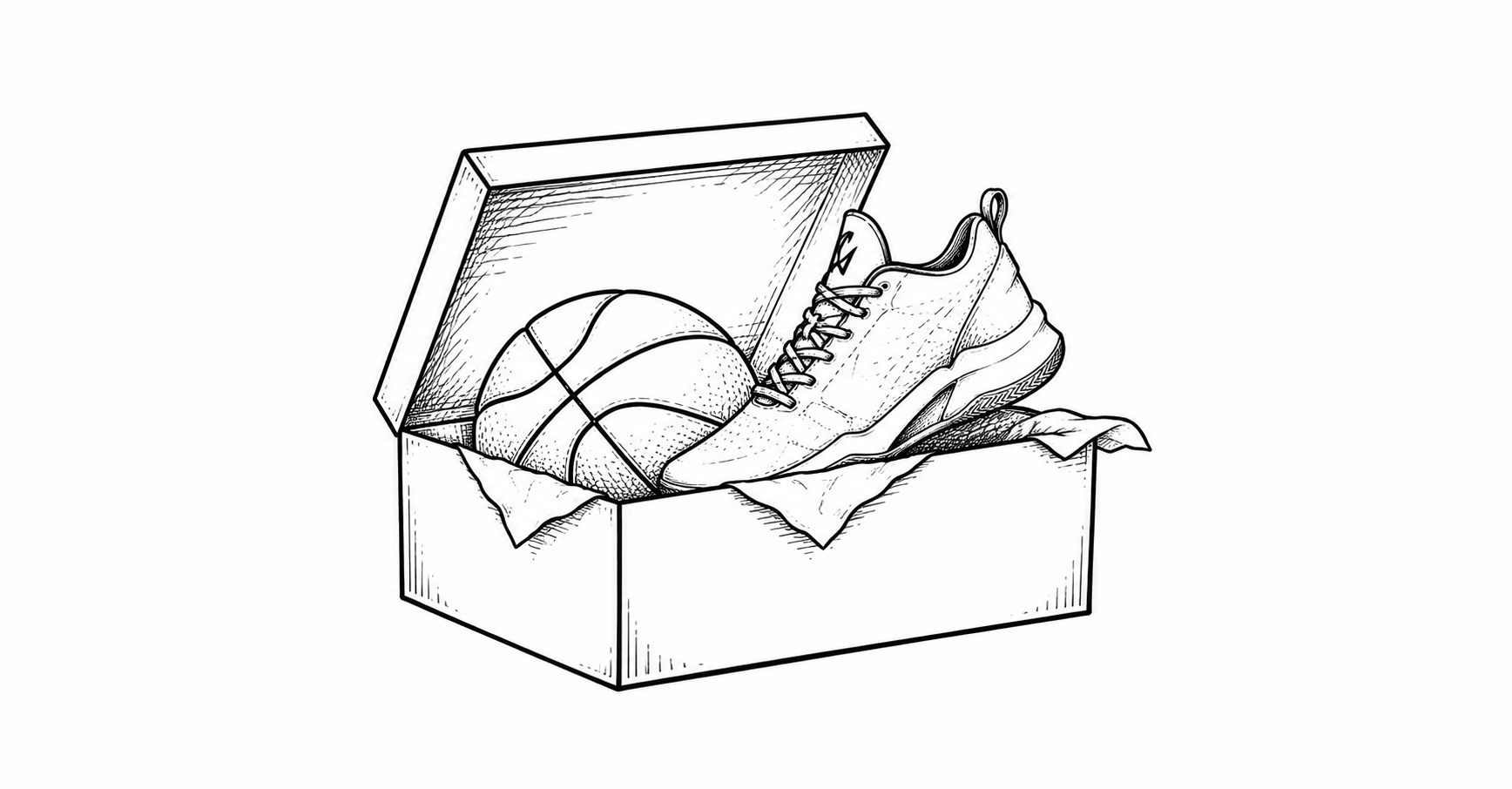
Nike unveiled the Caitlin 1 on June 17, Caitlin Clark’s first signature basketball shoe, set to launch October 1 at $140 in adult sizes. The announcement followed a deliberate weeks-long tease — Clark changed her Instagram identity, wore a bracelet reading “10-01-26,” and confirmed on the New Heights podcast that “the technology we’re putting into my shoe isn’t anything Nike has ever put into a basketball shoe before.” Clark becomes the fifth active WNBA player with a signature shoe from a major brand, joining Angel Reese at Reebok, Breanna Stewart at Puma, and Sabrina Ionescu and A’ja Wilson at Nike. The shoe arrives nearly four years after Clark signed an eight-year, $28 million deal with Nike in April 2024 — and across five competitive seasons in which she became the WNBA’s most marketable athlete without a signature product to sell.
ESPN’s Dan Wetzel documented just how minimal Nike’s promotional investment in Clark had been before this week: a single national commercial, sparse social media activity — three posts across Nike’s accounts in all of 2026 before the shoe announcement — and no signature product of any kind, while Clark was independently driving sales for Gatorade, Panini America trading cards, Stanley tumblers, and Wilson Sporting Goods, whose Clark-branded basketball line the company called its most successful launch “since Michael Jordan.” Sonny Vaccaro, the retired Nike executive who signed Michael Jordan in 1984 and built the company’s entire star-athlete marketing playbook, called Nike’s handling of Clark “one of the biggest failures I’ve ever seen.” The timeline comparison is stark: LeBron James got his signature shoe by Christmas of his rookie year, seven months after Nike won a bidding war for him as a high schooler. Clark waited four years and five seasons.
The reason for the gap is visible in Nike’s own numbers: the company currently carries eight signature shoes for NBA players and just two for the entire WNBA, despite Clark’s audience and merchandise sales rivaling or exceeding many of those NBA athletes individually. That ratio isn’t an accident of timing. It reflects a marketing infrastructure built for decades around men’s basketball stars, where the institutional muscle memory, retail relationships, and internal champions for signature-shoe deals already existed before women’s basketball’s recent commercial surge made the business case undeniable. Nike had the demand sitting in front of it — verified by Clark’s performance across every other brand partnership she held — and still took four years to build the internal case for a product the market had already proven it wanted.
What changes now isn’t just Clark’s shoe deal. It’s what the deal signals about how fast the rest of the system can move once a single signature product proves the category works at scale. WNBA analysts reacted to the Caitlin 1 announcement by immediately calling for Nike to revisit its catalog of earlier women’s basketball signature shoes — Lisa Leslie’s 1998 Nike Total Air 9, designed with Chanel-inspired detailing, among them — treating Clark’s launch as a forcing function for a broader reassessment of a product category Nike had let go dormant. Whether that pressure produces actual retail decisions or just renewed nostalgia is the open question, but the mechanism is the same one driving Caitlin 1 itself: a market that already existed, waiting on an institution to act like it believed the demand was real.
Power in this story sits with whichever institution controls the timeline of investment, not with the athlete whose performance and marketability already justified it years earlier. Clark generated the commercial proof across five seasons and multiple unrelated brand partnerships. Nike controlled when that proof translated into an actual product. The Caitlin 1’s launch will likely sell out its first colorways within minutes, based on resale market anticipation already building on StockX and GOAT — which means the company is about to capture significant revenue from a demand curve it spent four years declining to act on. The next test isn’t whether the shoe sells. It’s whether Nike, and the rest of the sneaker industry building signature deals around women’s basketball, treats this as proof the category deserves faster, earlier investment going forward, or as a one-off correction for a single athlete too big to keep ignoring.
— SSC Culture Desk | Social Storytellers Collective
Free, daily structural analysis like this lands in your inbox every weekday morning. Subscribe: https://246481934.hs-sites-na2.com/newsletter