When Alternatives Become Institutions: What Patreon’s Layoffs Reveal About How Platforms Reproduce Corporate Logic
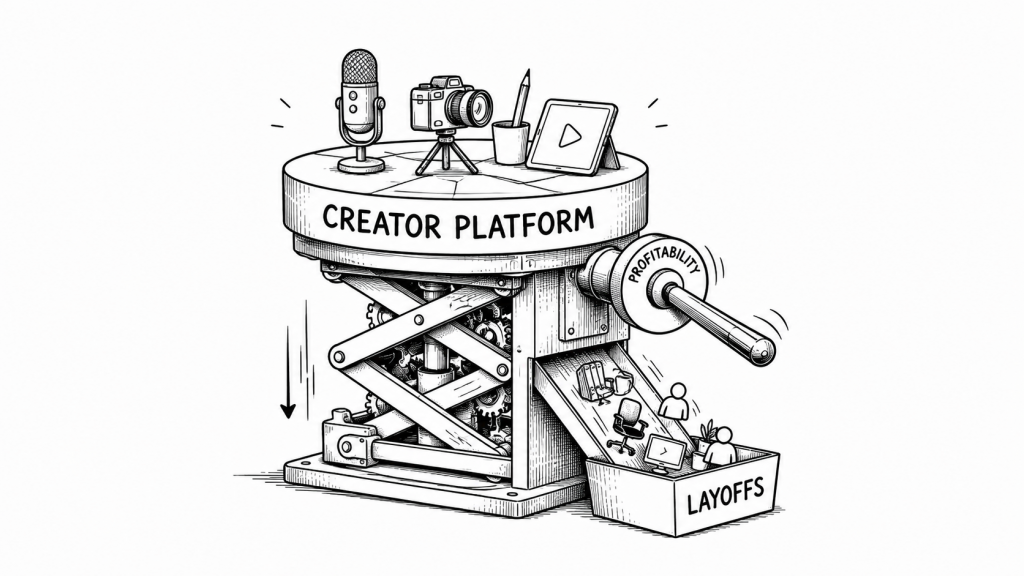
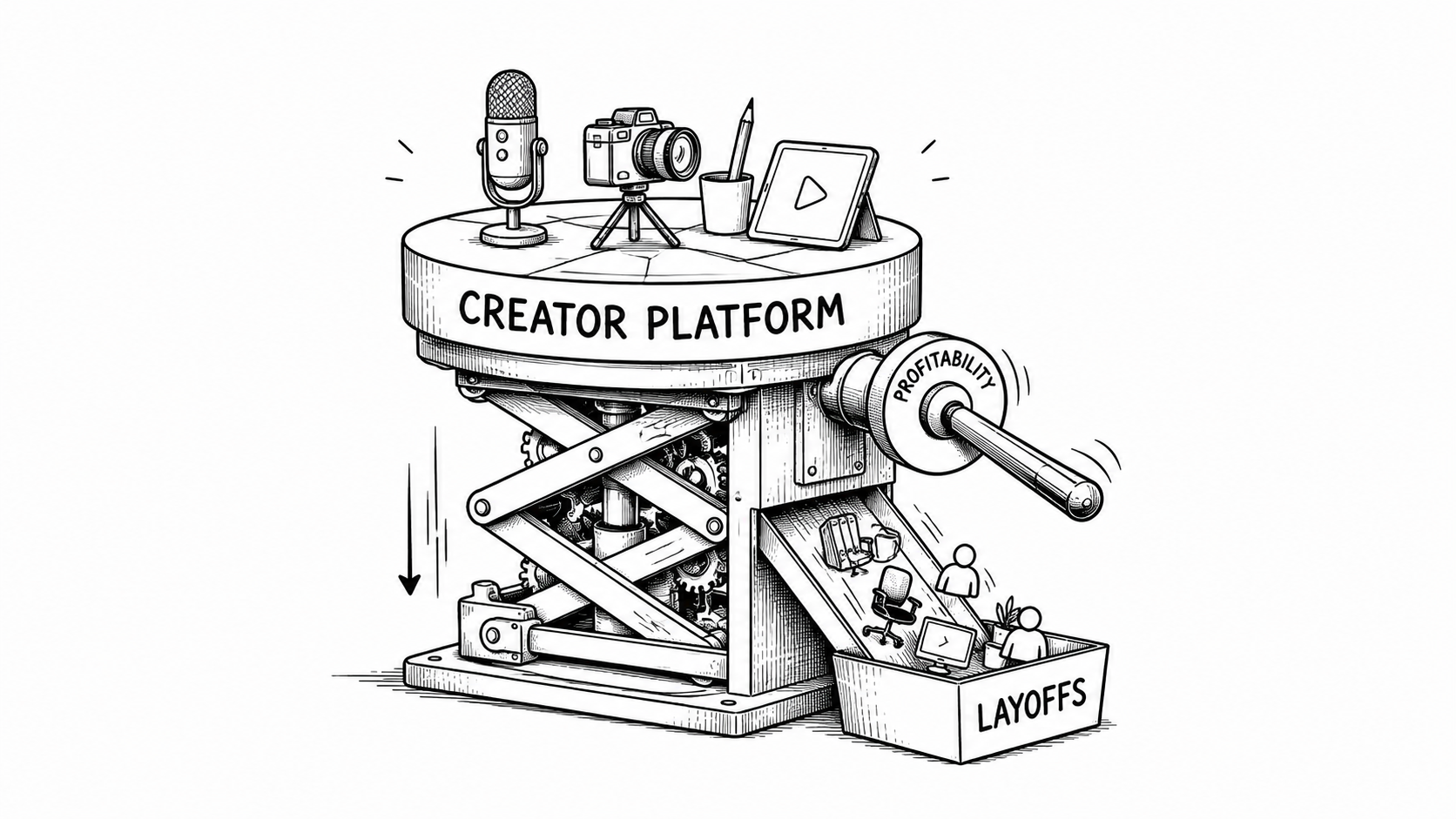
Patreon announced layoffs affecting roughly 20% of its workforce this week, framed as restructuring for operational efficiency. The creator-focused platform that was built as an alternative to traditional media gatekeeping is now making the same institutional choice traditional gatekeepers have always made: cut operational costs to improve profitability metrics.
The timing matters. Patreon was founded in 2013 with a specific mission: give creators direct relationships with supporters without corporate intermediaries extracting value. The platform positioned itself as fundamentally different from YouTube, Spotify, traditional publishing—all systems where corporations controlled distribution and took substantial cuts. Patreon would be the alternative. Creators would own the relationship. The platform would support creator independence, not constrain it.
For a decade, that narrative held. But something shifted when Patreon needed to grow. The company raised venture capital. That funding came with expectations: achieve profitability, reach scale, prepare for an exit or IPO. These are not malicious requirements. They’re how VC-funded companies operate. But they’re also incompatible with the original mission of supporting creator independence at the expense of growth metrics.
Here’s the mechanism: When a platform accepts VC funding, it accepts an obligation to generate returns for investors. That obligation produces pressure to optimize for profitability. Profitability requires efficiency. Efficiency means cutting costs. Cutting costs means reducing the support infrastructure that made the platform different from the gatekeepers it was supposed to replace. Patreon is not being cruel or deliberately abandoning creators. It’s following the structural logic embedded in how it was funded.
The creators using Patreon built their livelihoods around the promise that this platform was different. They chose Patreonover YouTube and Spotify because the platform claimed to prioritize creator independence over shareholder returns. That claim was only viable when the platform itself wasn’t operating under shareholder pressure. The moment Patreonaccepted VC funding, the contradiction became structural. The company now has two conflicting obligations: to creators (support independence) and to investors (maximize returns). When those obligations conflict—and they inevitably do—the investor obligation wins. It always does in VC-funded companies.
This is what happens to every alternative platform that accepts institutional funding. The alternative becomes the institution. It begins making the same choices the institutions it was supposed to replace have always made: prioritize capital accumulation over the stated mission. Patreon’s layoffs aren’t a betrayal of the platform’s values. They’re the inevitable outcome of accepting funding from people whose values are fundamentally misaligned with creator independence.
The creator economy was supposed to be the escape route from corporate gatekeeping. Instead, it produced new gatekeepers with the same structural pressures as the old ones. Patreon didn’t decide to abandon creators. The funding structure decided for them. And now other platforms watching Patreon’s pivot know what happens when they take VC money: eventually, you make the same institutional choices the people you were supposed to replace were always making.