Global Food Prices Declined in June. The Relief Is Already Conditional.
The numbers moved in the right direction. The conditions that produced them are not durable, and the forecasters saying so are the same ones who just reported the improvement.
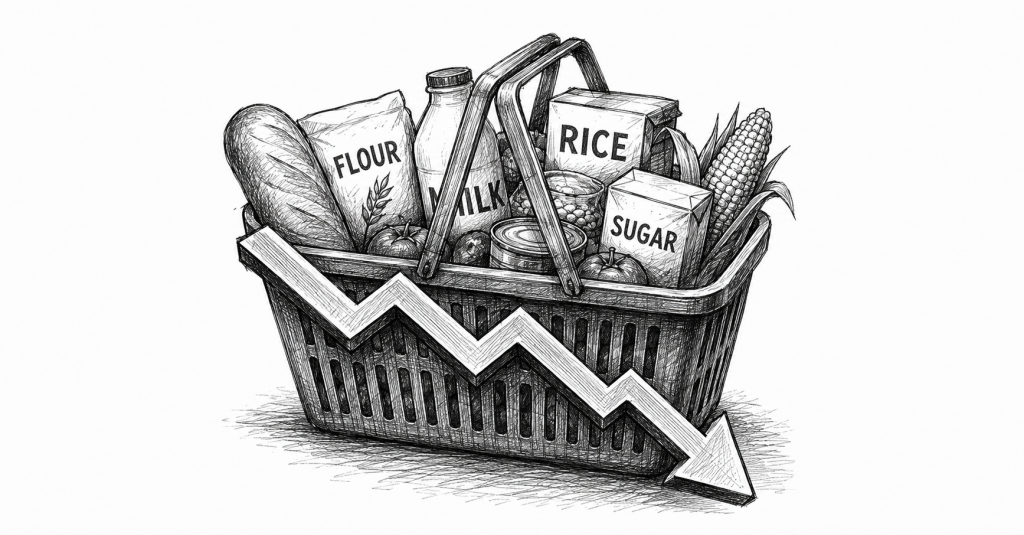
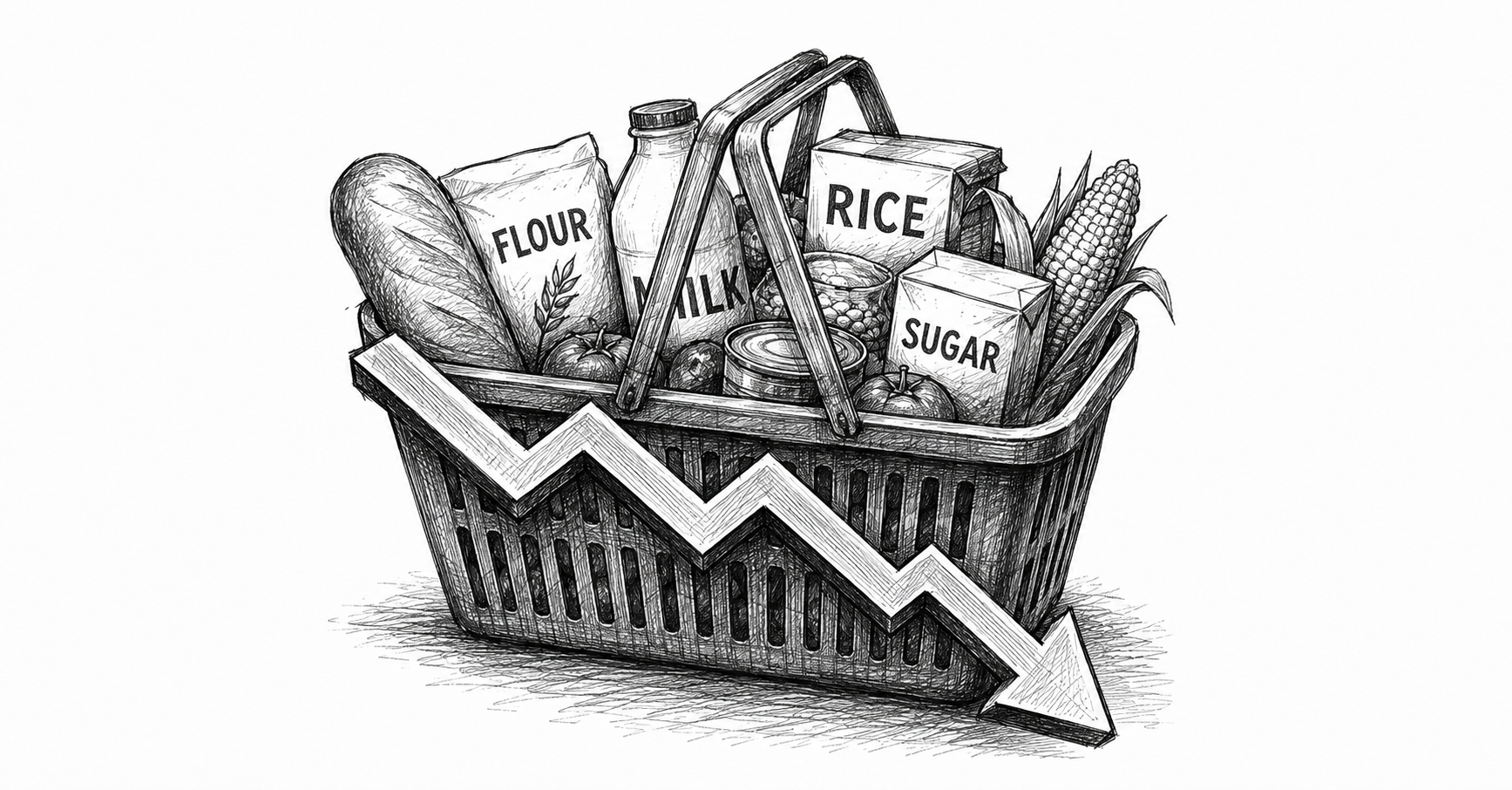
The United Nations Food and Agriculture Organization released its June food price index showing a broad-based decline in global food commodity prices last month. Cereal prices dropped 3.5% month-over-month. Dairy prices fell 1.5%. Sugar prices were down 5.7%. The aggregate index moved lower across nearly every major category — a headline that, in the current inflationary environment, qualifies as genuinely good news for the hundreds of millions of households worldwide whose food security is directly tied to commodity price movements at the global level.
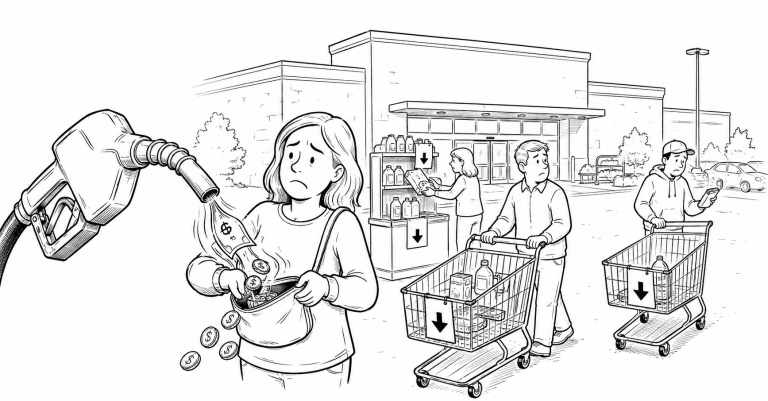
The driver behind the decline was not a harvest surplus or a demand contraction. It was a geopolitical development: an interim peace agreement between the United States and Iran restored trade flows through the Strait of Hormuz, the narrow waterway through which roughly 20% of the world’s oil and a significant share of global commodity shipping transits. When the Strait was threatened, supply chain uncertainty drove food prices higher not because food itself was scarce, but because the logistics of moving it became unpredictable. When that threat eased, prices followed.
That distinction matters. A price decline driven by restored logistics is not the same as a price decline driven by improved production fundamentals. The former is reversible as quickly as the political conditions that created it. The latter reflects a durable shift in the supply-demand balance that takes seasons to develop and seasons to unwind. What happened in June was the former — which is worth understanding clearly before reading it as a structural improvement in global food security.
The forward pressure is already visible. Bloomberg is reporting that the El Niño weather pattern now poses a significant risk to crops in key producing regions — the same regions whose output underpins the cereal and sugar prices that just declined. El Niño cycles characteristically reduce rainfall in parts of Southeast Asia, Australia, and southern Africawhile increasing drought risk in Central America and parts of South America — a geographic pattern that hits staple crop production across multiple continents simultaneously. The FAO itself has flagged El Niño as a threat to further destabilize global food security even as it reported the June decline.
The structural context is a food system that has spent the last four years absorbing sequential shocks — the COVID-19pandemic’s supply chain disruptions, Russia’s invasion of Ukraine cutting off one of the world’s largest wheat and sunflower oil export corridors, the subsequent fertilizer price spike, drought cycles across major growing regions, and now geopolitical risk at one of the world’s most critical maritime chokepoints. Each of those shocks demonstrated the same underlying vulnerability: a globally integrated food supply chain optimized for efficiency rather than resilience, where disruption in one node propagates price pressure to every node connected to it.
The June decline is real and the households that spend the highest share of income on food will feel it. But the conditions that produced it — a fragile interim agreement over the Strait of Hormuz and a weather pattern that forecasters are already flagging as a coming risk — make June’s numbers a floor to monitor rather than a ceiling to count on. The food price story for the second half of 2026 will be written by what El Niño actually does to harvest yields in the regions it hits hardest, and by whether the Strait of Hormuz remains open to the trade flows that just drove prices lower.
Both of those questions are open. Neither has a reassuring default answer.