San Francisco’s AI Boom Is Rebuilding the Office Market Before It Fixes the Housing Market
Commercial real estate is converting vacancy into an automation corridor before the city expands the housing capacity that makes recovery livable.
Laura Waxmann reported for the San Francisco Chronicle on June 26 that Amazon Robotics is nearing a roughly 250,000-square-foot lease at 650 Townsend Street in San Francisco’s Showplace Square, joining a growing cluster of AI and robotics companies moving into spaces left exposed by the post-pandemic office correction.
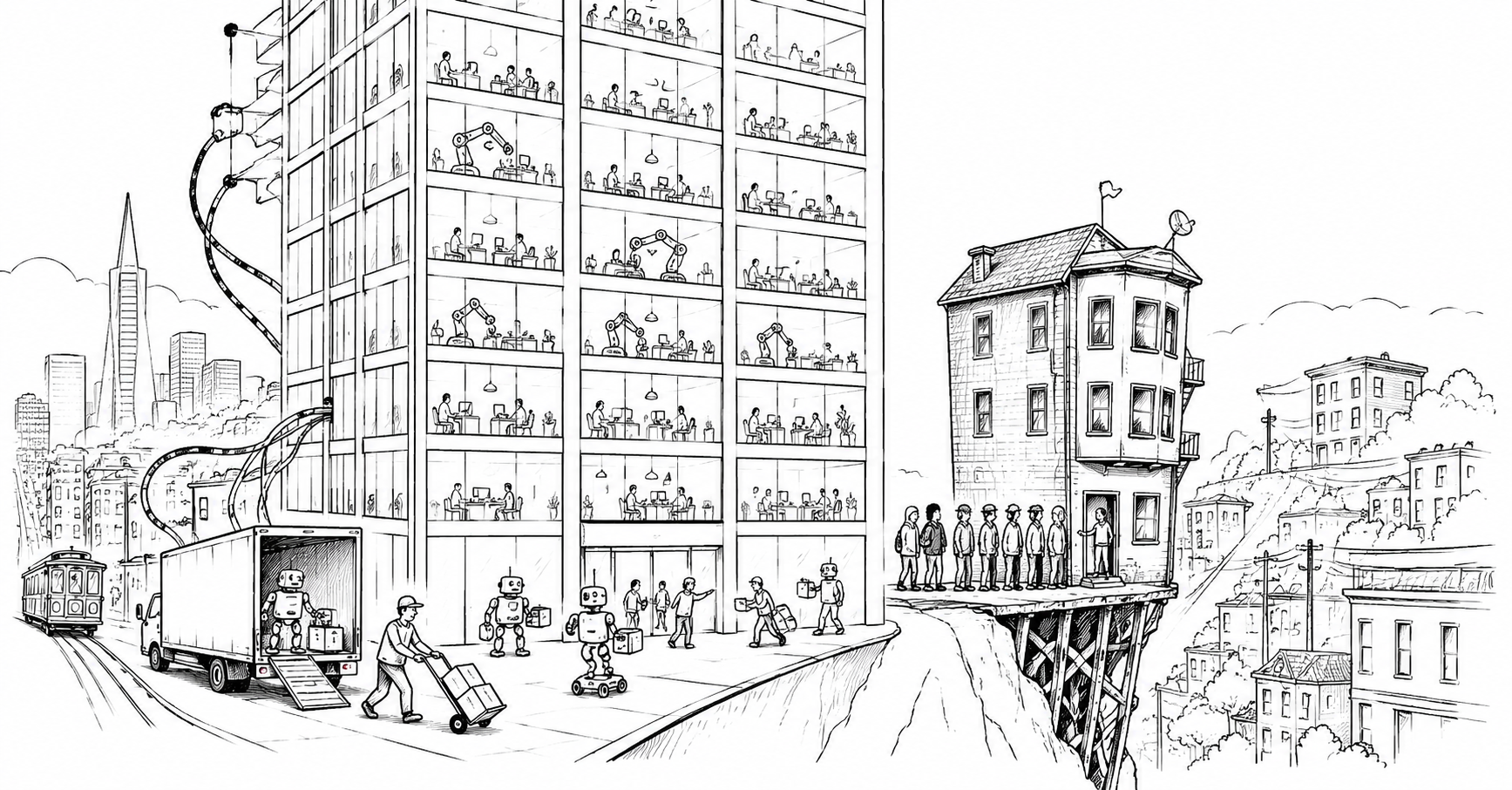
Commercial real estate moves faster than civic repair. San Francisco can fill a 250,000-square-foot building with a robotics firm before it adds 250 units to the housing supply. That asymmetry is not new to this city, but the AI cycle has tightened it. Vacant office space has a clear market mechanism: a large company with capital and expansion plans absorbs it quickly. Housing in San Francisco has the opposite mechanism: entrenched opposition, long timelines, and a political structure that has treated constraint as stability.
The office recovery also reinforces what a separate Chronicle report this week documented: median asking rent for a one-bedroom apartment in San Francisco rose nearly 17% in one year. The two numbers belong together. Commercial occupancy drives employment growth. Employment growth drives housing demand. Housing demand in a constrained supply system drives rent. The commercial recovery being celebrated as proof that the city is back is producing the residential pressure that makes the city harder to live in.
Amazon Robotics deepens the irony. The company developing warehouse and fulfillment automation is expanding into San Francisco office space at the same moment the city’s service workers, building trades, and logistics employees are absorbing the housing cost of the boom around them. A robotics company does not bring broad employment density to a neighborhood. It brings high-wage technical work, capital, and the surrounding rent pressure that high-wage employment creates without necessarily creating the jobs that would allow lower-income residents to stay.
Landlords who held San Francisco real estate through the post-pandemic correction are now watching values recover on the commercial side first. That is the intended function of the market. The broader civic claim — that the recovery benefits the city — depends on what follows the commercial rebound. If it is more housing, the recovery can spread. If it is higher rents into a constrained supply, the recovery narrows to the firms and property holders positioned to capture it.
San Francisco has done this before. The last technology boom rebuilt the office market, raised commercial values, drove residential costs to levels that displaced long-term residents, and eventually produced a correction when the market cycle turned. The AI cycle is running the same sequence with different company names. Whether it ends differently depends on whether the city makes different decisions about housing supply while the commercial market is still ascending.