Apple Built a Different AI for China. The Global Product Is Starting to Split.
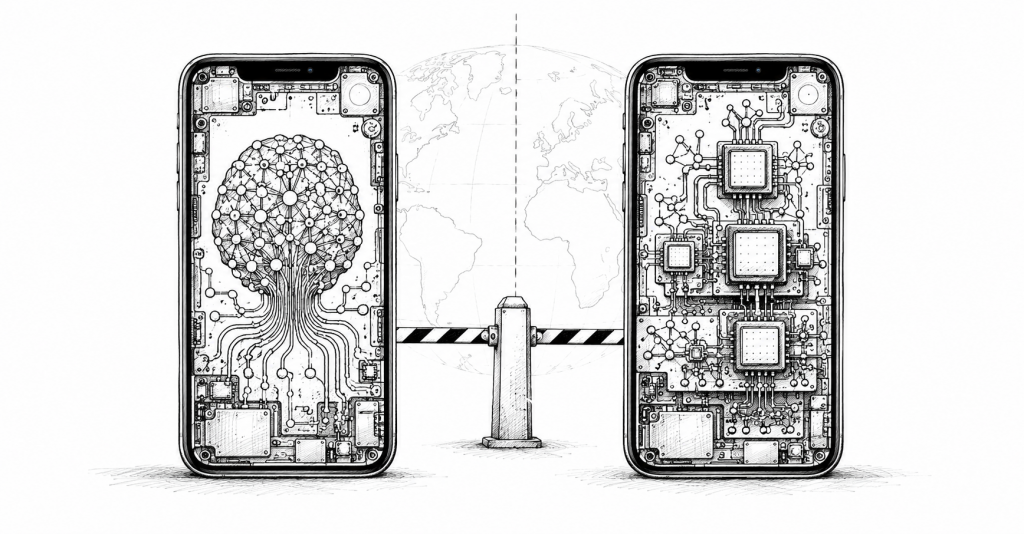
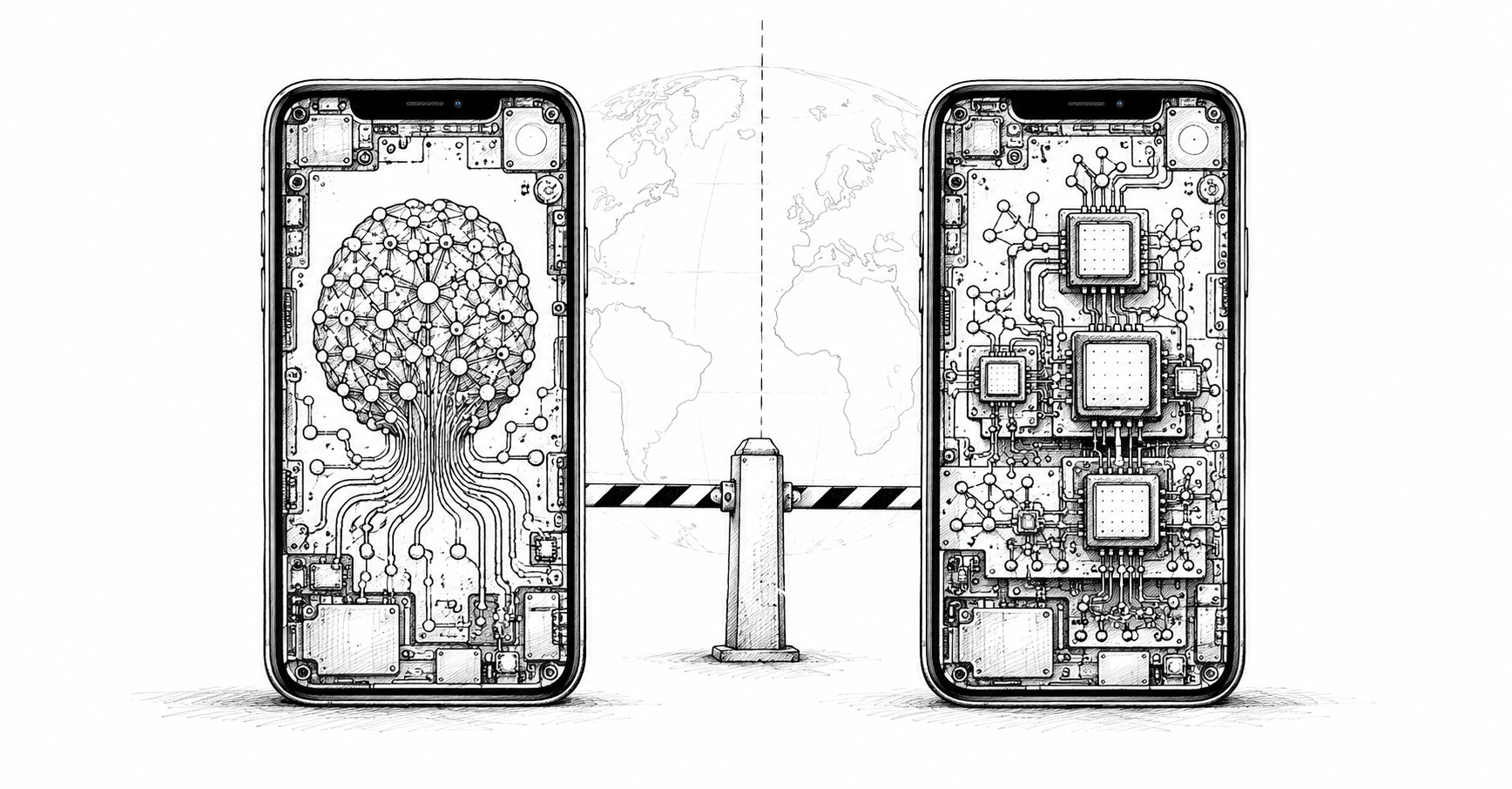
The same iPhone can now carry a different intelligence stack depending on which government regulates it.
Reuters reported Friday that Apple has trained a large language model specifically for China with support from Alibaba. The China-specific system is part of a broader Apple Intelligence configuration expected to reach the country in the coming months. Alibaba’s Qwen will also be incorporated into Apple Intelligence there, with technology from Baidu involved as well. Apple is not simply translating an American AI product for Chinese users—it is assembling a different AI architecture for them.
The internet’s fragmentation used to be easiest to see at the application layer. A service worked in one country and was blocked in another. Apple’s China strategy moves the border deeper into the product: the hardware may look the same, but the intelligence operating inside it increasingly depends on where the device is sold.
China does not allow Apple to reproduce the AI arrangement available elsewhere. U.S. systems including OpenAI’s ChatGPT and Anthropic’s Claude are not available there, and generative AI services must clear Chinese regulatory requirements before reaching consumers. Last month, China’s Cyberspace Administration registered Apple’s generative AI service. Reuters reported that Apple would become the first foreign company approved by Beijing to offer a proprietary AI model in the country.
Apple has trained its own China-specific model with Alibaba’s help while also incorporating Qwen and other Chinese technology into the local version of Apple Intelligence. The exact division of labor among those systems remains unclear. But regulation is no longer merely determining whether a technology company can enter a market—it is determining what the technology itself becomes once it gets there.
For decades, multinational technology companies built enormous businesses around the premise that one core product could scale almost everywhere, with language, pricing and compliance adapted around the edges. If governments impose different rules on models, training data, content, providers and deployment, then companies may increasingly need jurisdiction-specific intelligence rather than jurisdiction-specific packaging.
China’s smartphone market remains intensely competitive, and AI is moving into the operating system itself. Omdia reported that Huawei held 23% of mainland China’s smartphone market in the second quarter of 2026, while Apple ranked second with 19%, shipping 12.4 million phones. Apple reached record second-quarter shipment and market-share levels, but Huawei maintained the lead as Chinese manufacturers continued investing heavily in AI-native devices and agentic operating systems.
Apple cannot treat the absence of Apple Intelligence in China as a regulatory inconvenience indefinitely. Chinese rivals are developing AI directly into the device experience while Apple has been trying to move its own system through Beijing’s approval process. The lack of Apple Intelligence has been cited as a drag on Apple’s competitiveness in the market. The company has decided that preserving access to China is valuable enough to justify building an AI stack specifically capable of operating within China’s rules.
Technology companies have localized products and formed domestic partnerships for years. What changed is the layer being localized. When the model determines how a device writes, summarizes, searches, recommends, interprets and eventually acts on a user’s behalf, differences between models become differences between products.
Two people can now buy devices bearing the same logo and receive materially different versions of intelligence because they live under different regulatory systems. Governments increasingly want authority over how AI systems are trained, what they can produce and which companies can operate them. Companies that once exported one digital product around the world may have to decide how many versions of intelligence they are willing to build.
The global internet did not split all at once. First countries separated platforms, data and content. Now they are beginning to separate the intelligence underneath them.