Las Vegas Housing Is Cooling While the City Bets on Technology Relocation as Its Next Economic Engine
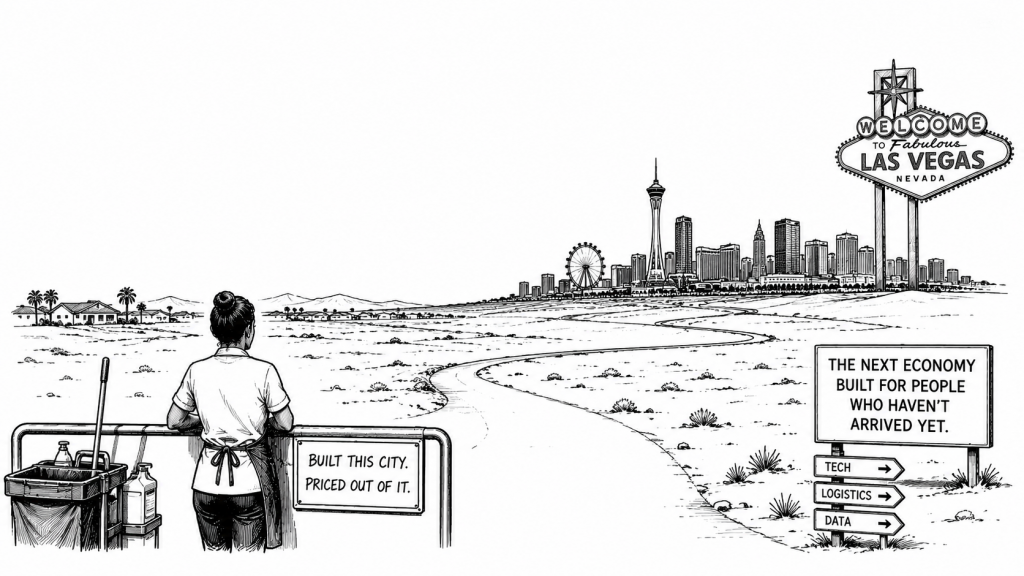
Las Vegas housing is cooling. Class A apartment communities and newer residential inventory are showing flat-to-declining pricing after steep appreciation in 2021 and 2022, according to data from the 702 Housing market report and Fortune’s city-by-city housing analysis from April 2026. The investors and out-of-state buyers who drove that run-up are pulling back. On the surface, that looks like relief for a market that priced out a large share of the city’s resident workforce.
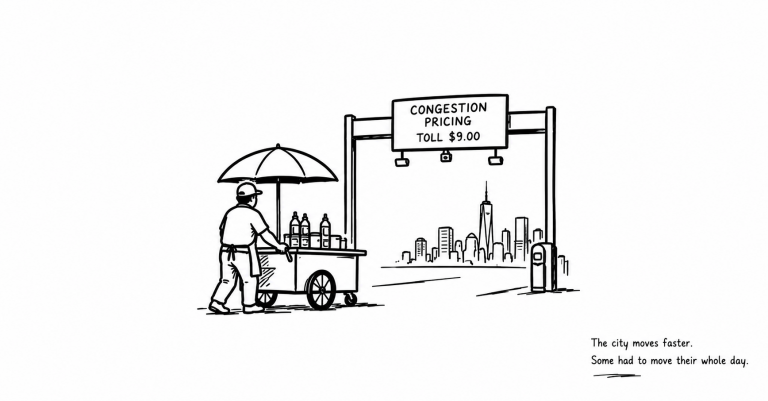
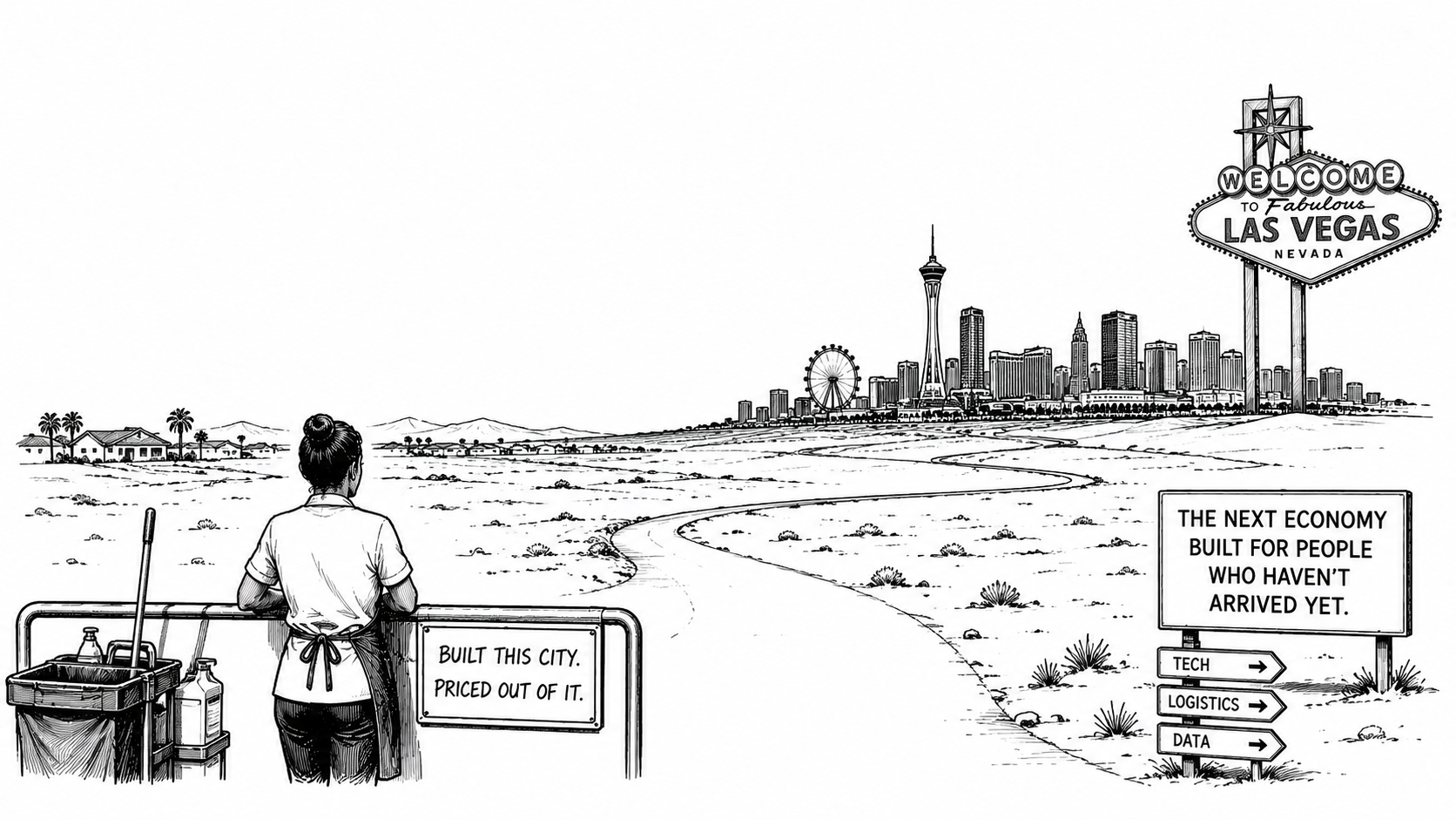
The relief is narrower than it appears. Housing that cools because speculative buyers exit does not become affordable because incomes rose to meet it. Las Vegas median prices remain significantly above 2019 baselines. The hospitality workers, gaming floor staff, hotel housekeepers, and food service employees who were displaced from Las Vegas neighborhoods during the boom — who moved to Henderson, North Las Vegas, Pahrump, or out of the region entirely — are not returning to a market that has corrected back to where they started. They are looking at a market that has come down from a speculative peak to a still-elevated floor.
Meanwhile, the city’s economic development strategy is betting on something different from hospitality recovery. Las Vegas has been actively recruiting technology company relocations and positioning the metro as a logistics and data infrastructure hub for firms looking to diversify away from higher-cost California markets. Nevada offers no corporate income tax, lower operating costs, and available land in the desert corridor between Las Vegas and Reno.
The argument to the existing Las Vegas workforce is less clear. The city’s labor market is heavily concentrated in hospitality, gaming, food service, and events — sectors that collectively shed 61,000 jobs nationally in June 2026, per the Bureau of Labor Statistics. The knowledge-economy roles that follow technology company relocations — software engineers, data analysts, product managers, cybersecurity specialists — require credentials and skills that the current Las Vegas workforce, by and large, has not been trained toward.
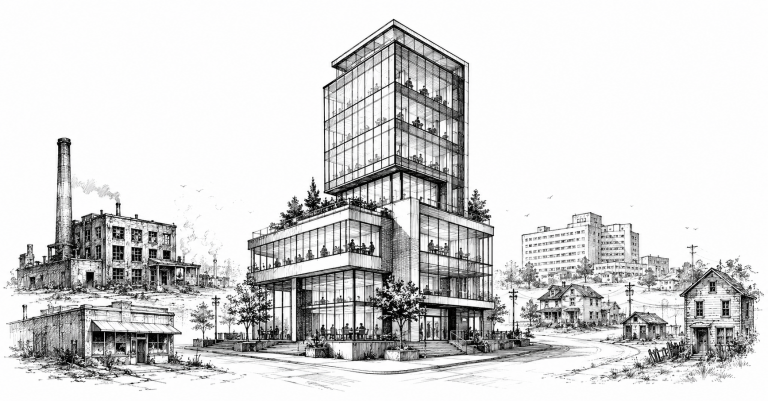
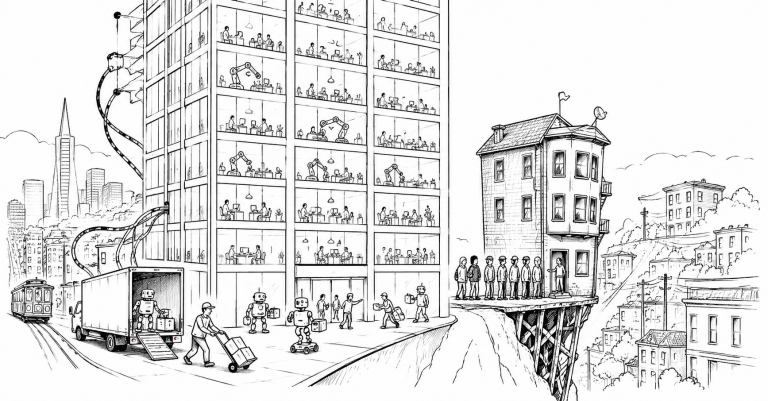
Economic diversification is a legitimate and necessary goal for a city with as much sectoral concentration as Las Vegas. Dependence on hospitality and gaming left the metro among the most economically devastated during the 2020 shutdowns. Building a broader base matters. But when the distance between an incoming industry’s job profile and the existing workforce’s preparation is large enough, the economic development wins accrue primarily to workers who haven’t arrived yet — people who will relocate to Las Vegas for the tech jobs, who will need housing, and who will compete for the inventory that has just begun to cool.
The hospitality workers who built the city the tech companies are relocating into are not in the same labor market as the employees those companies are bringing with them or recruiting. That distance is not inevitable — intentional workforce development, registered apprenticeship programs, and employer-led upskilling can close it — but none of those mechanisms are moving at the speed the relocation strategy is being pursued.
Las Vegas is changing its economic identity. Whether the workers who staffed its previous identity are in the next one depends on choices that economic development announcements do not, by themselves, make.