
Oracle’s Layoffs Show the Real Cost of the AI Infrastructure Economy

Reuters reported that Oracle ended fiscal year 2026 with roughly 141,000 employees — down from 162,000 the year before, a reduction of approximately 21,000 workers, or 13 percent of its prior-year headcount, with severance and exit costs reaching $1.84 billion. The cuts are not a retreat from investment. Oracle is simultaneously expanding into AI and cloud infrastructure, securing data center contracts with OpenAI and Meta and preparing to spend roughly $70 billion in capital expenditures this fiscal year, with $40 billion being raised through debt and equity, including a $20 billion stock issuance.
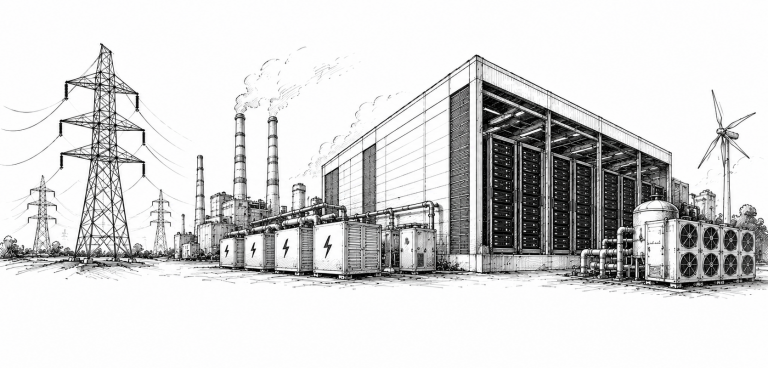
That gap — workers removed now, infrastructure investment accelerated — is the structural story inside the numbers. AI is frequently positioned as an efficiency gain, a cleaner and faster way to operate. In practice, building AI capacity requires enormous physical infrastructure: data centers, chips, energy, construction, specialized engineering labor, and significant debt financing. The efficiency arrives unevenly, and it arrives on a schedule the company controls, not the workers it has already let go.
The pattern reveals a shift in what companies believe they are building value around. The old model treated human headcount — institutional knowledge, operational teams, long-tenure employees — as core assets. The model now being deployed treats compute capacity, platform control, and scalable automation as the primary value drivers. Workers are repositioned as adjustable costs in the interval between the old model and the new one.
That interval is not a brief transition. It is the period workers and communities are currently living through. Oracle’s workforce reduction does not mean AI will not eventually produce new categories of employment. It means the people removed from Oracle’s payroll in fiscal 2026 are absorbing the cost of a capital reallocation they did not authorize, in exchange for productivity gains they may never see directly. The AI infrastructure economy is not weightless. The question is only who pays first.