Oracle Has Run Four Rounds of Layoffs in Under a Year. The Economy It’s Describing Isn’t the One Being Reported.
The headlines call it an AI pivot. The WARN Act filings call it something else.
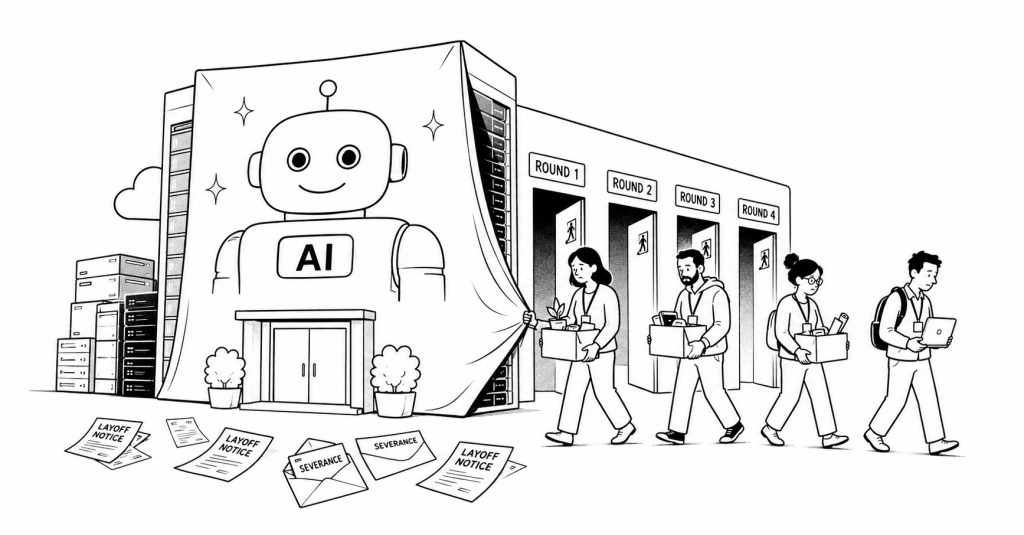
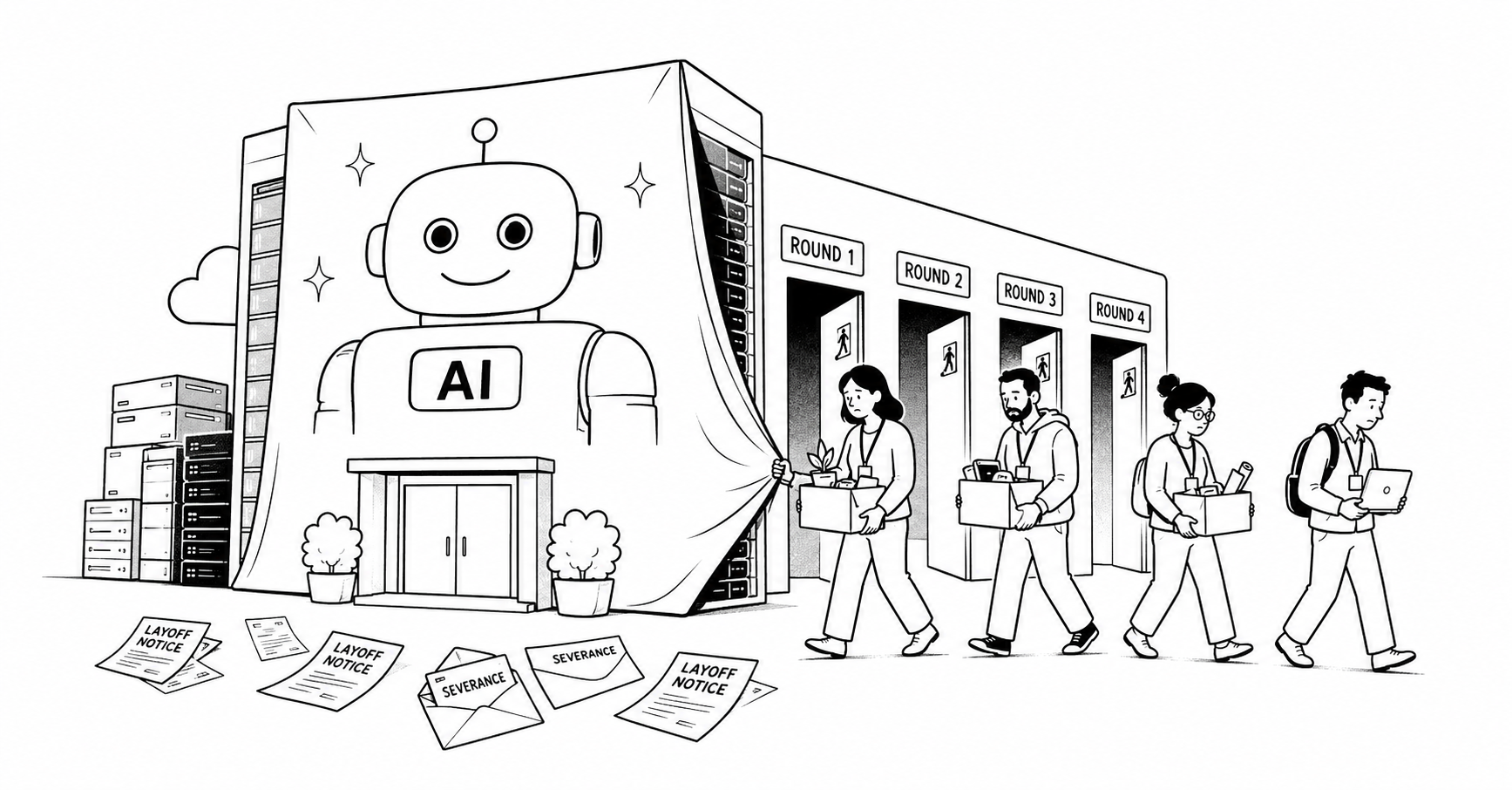
Oracle is planning another round of job cuts, this time estimated at 20,000 to 30,000 positions — the largest single reduction in a series that has now run four times in under twelve months. The affected teams span the company’s cloud infrastructure division, Fusion ERP, data center operations, technical project managers on the AI and machine learning team, and the broader OCI AI organization. Oracle has not confirmed a headcount figure publicly. The WARN Act filings, internal reports, and analyst estimates from TD Cowen tell the story the company has chosen not to tell directly.
The pattern matters as much as the number. Oracle’s previous rounds came in September 2025, February 2026, and June 2026. Each was described, when acknowledged at all, as a realignment — resources being redirected toward AI infrastructure investment, the company positioning itself for the next phase of enterprise computing. That framing is accurate in the narrow sense. Oracle is spending heavily on AI infrastructure. It is also borrowing heavily to do it, taking on billions in debt to fund the build-out while reducing the payroll that supported the previous architecture. The workers being cut are not being replaced by AI workers at the same company. They are being replaced by capital expenditure on systems that require fewer of them.
That is the distinction that keeps getting lost in the AI narrative. The argument made publicly — by Oracle, by Salesforce across its own four rounds of cuts, by the full list of major tech companies citing AI adoption as a workforce rationale in 2026 — is that AI is creating new jobs while eliminating old ones. The job creation part of that argument is forward-looking and theoretical. The elimination part is happening now and is documented in WARN Act filings, severance packages, and the LinkedIn posts of people who were on those teams.
The broader economic signal these cuts carry is not a technology story. It is a labor market story wearing a technology costume.
American households are carrying $18.8 trillion in total consumer debt. Personal consumption grew 3.2 percent in the second quarter — funded not by income growth but by home-equity drawdowns, record auto-loan originations of $211 billion, and credit-card spending that continued climbing through July. Inflation-adjusted incomes have weakened. The consumer spending number looks like resilience. The debt number underneath it looks like the mechanism people are using to maintain the appearance of resilience while the underlying architecture shifts.
The jobs being eliminated at Oracle, Salesforce, Chime, Block, and Meta are concentrated in the categories that have historically served as entry points to stable, professional careers. Cloud infrastructure operations. Technical project management. Data center roles. These are not the glamorous titles that appear in AI job-creation narratives. They are the roles that a specific population of workers trained for, built tenure around, and structured their financial lives to support. When those roles disappear at the pace of four rounds in twelve months, the workers displaced are not pivoting into AI engineering positions. They are entering a job market where the next tier of stable employment is itself under the same pressure.
Food prices remain structurally elevated from where they were in 2021 and are not returning. Housing costs — inclusive of insurance premiums that have risen 74 percent over fifteen years in states like Texas while median incomes grew 11 percent — are pricing households out of ownership and stable rental simultaneously. Gas prices fluctuate, but the base cost of moving through a car-dependent city is higher than it was five years ago and the infrastructure to change that does not exist at scale.
The vaccine confidence story is its own thread, but it connects to the same underlying dynamic: institutions that Americans once used as stable reference points — for employment, for healthcare guidance, for the cost of staying housed — are producing less certainty than they were before. When multiple systems become less reliable at the same time, the response at the household level is not optimism. It is improvisation.
Oracle’s fourth round of layoffs is not a technology story. It is a data point in a larger picture of an economy reorganizing itself around different assumptions than the ones the last generation of workers built their lives against. The reorganization is real. The replacement hasn’t arrived yet. The gap between those two things is where most people are currently living.