Recovery Time Is Becoming the Scarcest Climate Resource
Climate risk is shifting from isolated disasters to compressed sequences, making recovery time the resource households and infrastructure do not have enough of.
Texas weather reporting on Tuesday pointed to another round of severe storm risk across parts of the state, with damaging winds, heavy rainfall, frequent lightning, and heat index pressure still sitting near dangerous levels in some regions. The event itself fits a familiar summer pattern. The structure underneath it is changing.
Infrastructure was built around events. Climate stress is arriving as sequences.
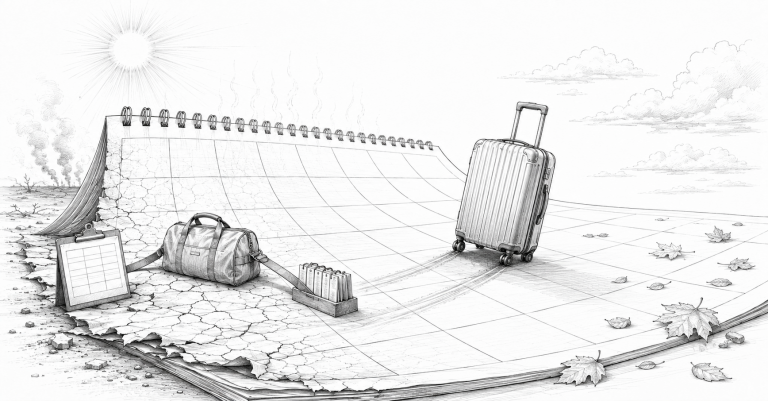
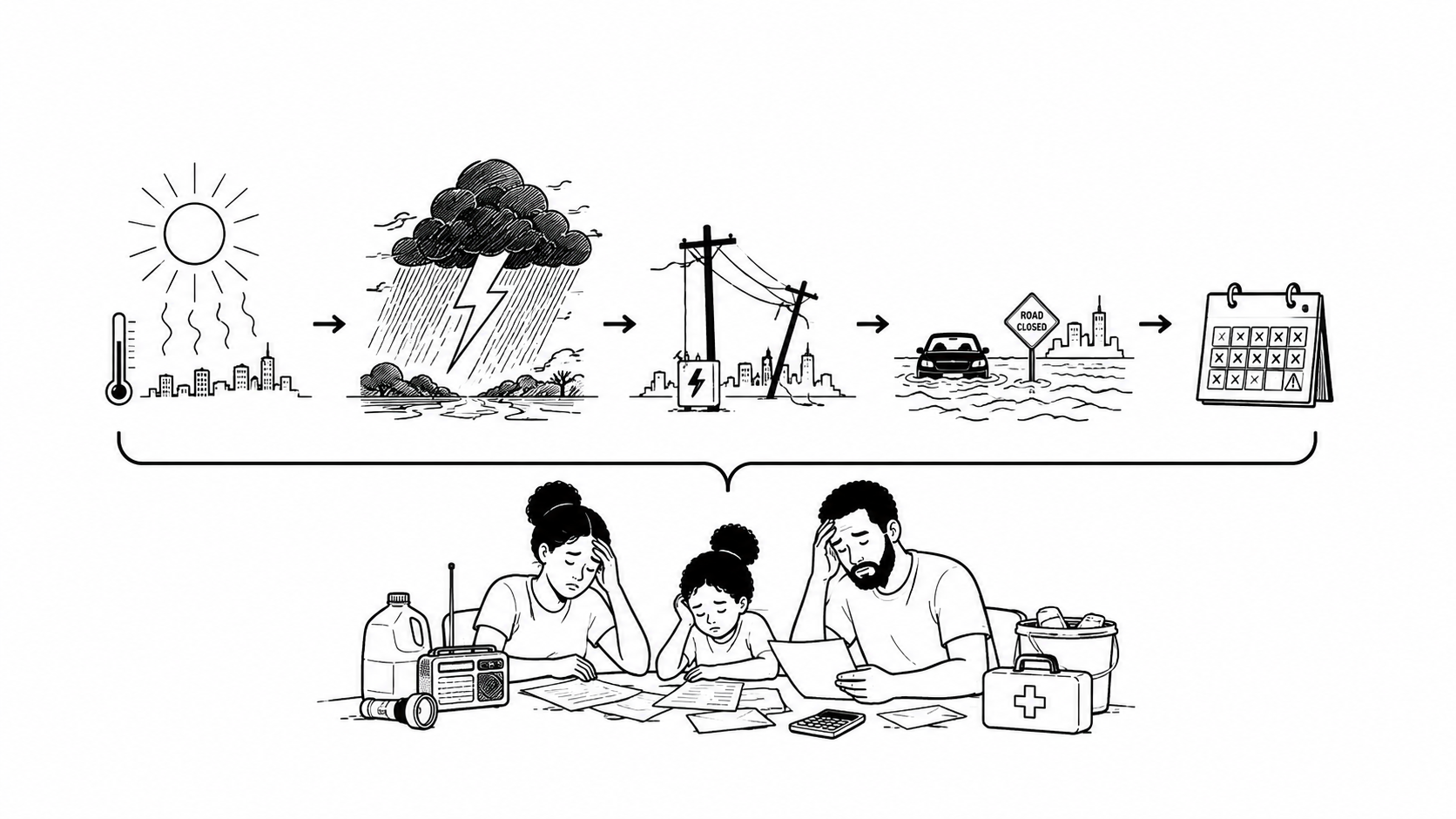
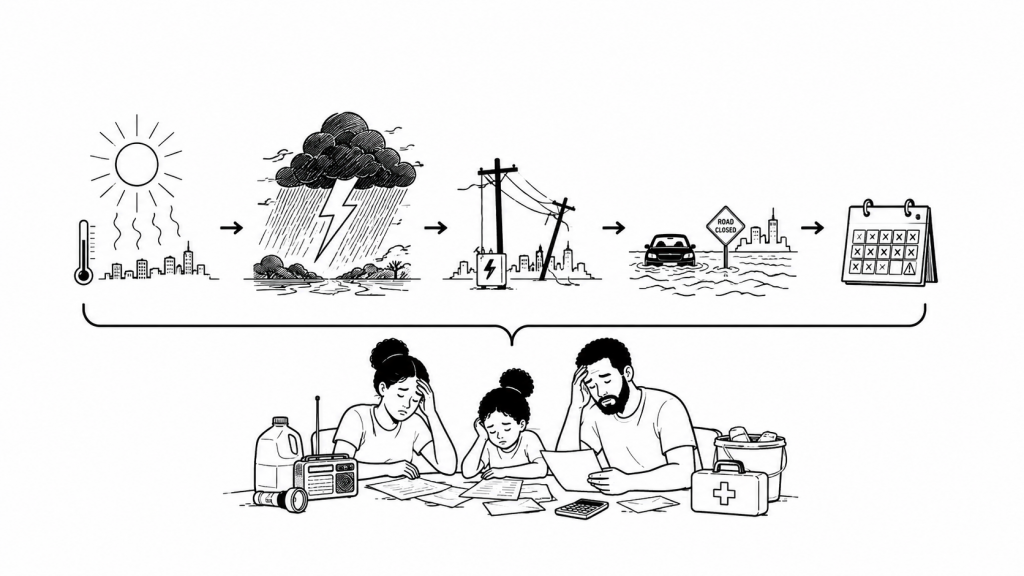
A heat wave strains the grid and the body. A storm follows with wind, rain, lightning, and commute disruption. Power failures raise the stakes of the heat that remains. Flooded roads slow work, school, deliveries, repairs, and emergency response. Then the next weather pattern arrives before households, businesses, and local governments have fully reset from the last one.
The old disaster model assumes a cycle: prepare, endure, recover, rebuild. That model weakens when the recovery period keeps shrinking. Households do not experience these events as separate categories. They experience them as one continuous drain on time, money, health, and attention.
Texas is especially exposed because its risks overlap. Heat is not separate from storms. Storms are not separate from outages. Outages are not separate from medical vulnerability, food spoilage, lost wages, transportation delays, and insurance claims. The system does not fail in one place. It passes pressure from one part of daily life to another until the household becomes the shock absorber.
Power moves away from residents when recovery becomes individualized.
A city can issue alerts. Utilities can restore service. Employers can reopen. Schools can resume. But the unpaid labor of recovery sits with households: finding childcare, replacing food, fixing cars, waiting on repairs, managing health conditions, navigating claims, and making up wages lost to closures or delays. The public system records the event. The household carries the afterlife.
That afterlife is where climate inequality widens. People with savings, flexible work, reliable transportation, backup power, and stable housing recover faster. People without those buffers are still recovering when the next warning arrives. The gap is not only exposure to weather. It is access to time.
This is why recovery time is becoming a climate resource. It determines who can return to normal and who lives permanently behind. It shapes whether a storm is an interruption or a turning point. It decides whether heat is uncomfortable or dangerous, whether an outage is inconvenient or medically risky, whether a flooded commute is a delay or a lost shift.
The next phase of climate preparedness will have to measure more than damage. It will have to measure compression: how quickly events arrive, how long recovery takes, and which households never get back to baseline before the next disruption begins.