Canada Is Treating Africa as a Diversification Strategy. Africa Is Watching That Distinction Carefully.
Ottawa’s Africa engagement is framed around Canada’s own supply chain and trade diversification needs. African governments and economists are noting the difference between a partnership and a strategic pivot.
Canada published its Africa Strategy in 2025. The document emerged from a specific domestic context: Ottawa’s recognition that its deep trade and investment dependency on the United States had become a structural vulnerability, particularly following tariff pressures and trade relationship instability under successive U.S. administrations. Africa, in Canada’s framing, became part of a diversification strategy — a set of markets and resource relationships that could reduce Canada’s exposure to U.S. economic leverage.
At the G20 summit in Johannesburg in November 2025, Prime Minister Mark Carney acknowledged Africa’s role in Canada’s strategic outlook while noting, in remarks reported by the Foreign Policy Research Institute in March 2026, that Africa does not rank among Ottawa’s short-term investment priorities. Quebec Senator Amina Gerba publicly raised questions about whether Canada treats Africa as an afterthought, pointing to the gap between Canadian rhetoric on partnership and the relatively modest scale of sustained Canadian engagement relative to China, the European Union, and the Gulf states.
What Senator Gerba named is a structural issue in how wealthy countries engage Africa that extends beyond Canadian foreign policy. The framing of Africa as a “diversification strategy” for Canada — rather than a development partnership defined on Africa’s terms and priorities — reproduces the dynamic that African governments and development economists have been identifying for decades: wealthy countries engaging the continent based on what they need from it rather than what it has said it needs from them.
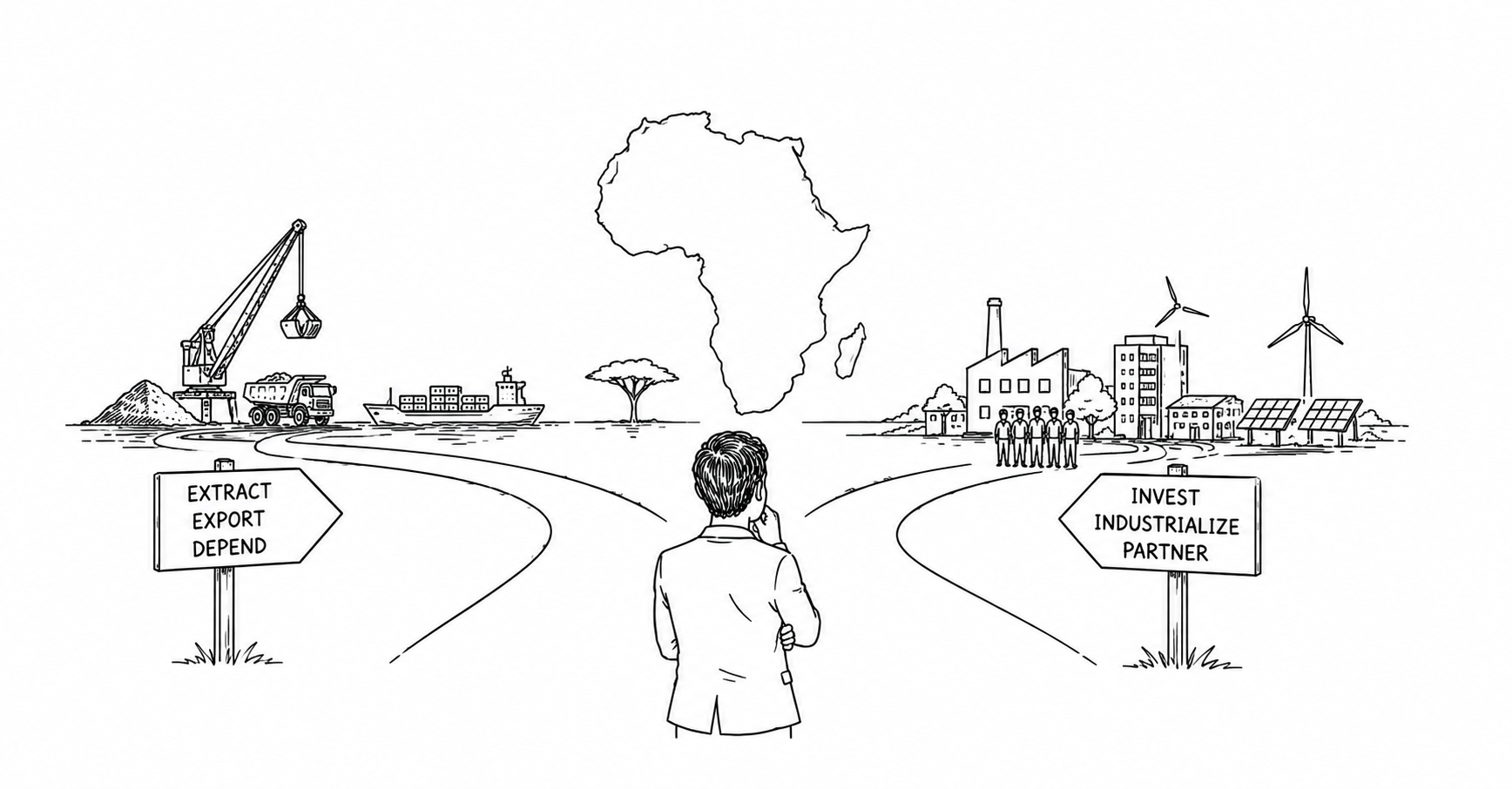
The African Development Bank projects continental GDP growth at approximately 4% in 2026. The continent is home to six of the world’s twenty fastest-growing economies. It is not a market waiting to be discovered. It has been clear about what it needs from international partners: direct investment in manufacturing and value-added industry rather than extractive resource relationships, trade terms that support African industrial development rather than commodity export dependence, and multilateral financial reform that gives African economies more voice in the institutions that set the rules for global capital flows.
Canada’s Africa Strategy, as written and as described by its own prime minister, is structured around Canadian supply chain needs and trade diversification goals. It may produce investments that are also useful to African economies. It is not a strategy designed around African priorities. The distinction matters because it determines what gets built: infrastructure to move Canadian-needed commodities out, or manufacturing capacity to produce value inside Africa for African and global markets.
African Development Bank President Akinwumi Adesina and multiple African finance ministers have made versions of this argument repeatedly in multilateral forums. The response from wealthy-country governments has been consistent: acknowledgment in principle, continuation in practice of the extractive-to-diversification framing that those governments’ domestic political and economic incentives produce.
Africa is not watching this distinction carelessly. The countries on the continent that are structuring their own trade and investment policies are doing so with a clear understanding of the difference between a partner who shows up when it needs something and a partner who shows up with a long-term commitment. Canada has an opportunity to be the second kind. Its current Africa Strategy reads more like the first.