French Teachers Are Being Made Frontline Climate Managers
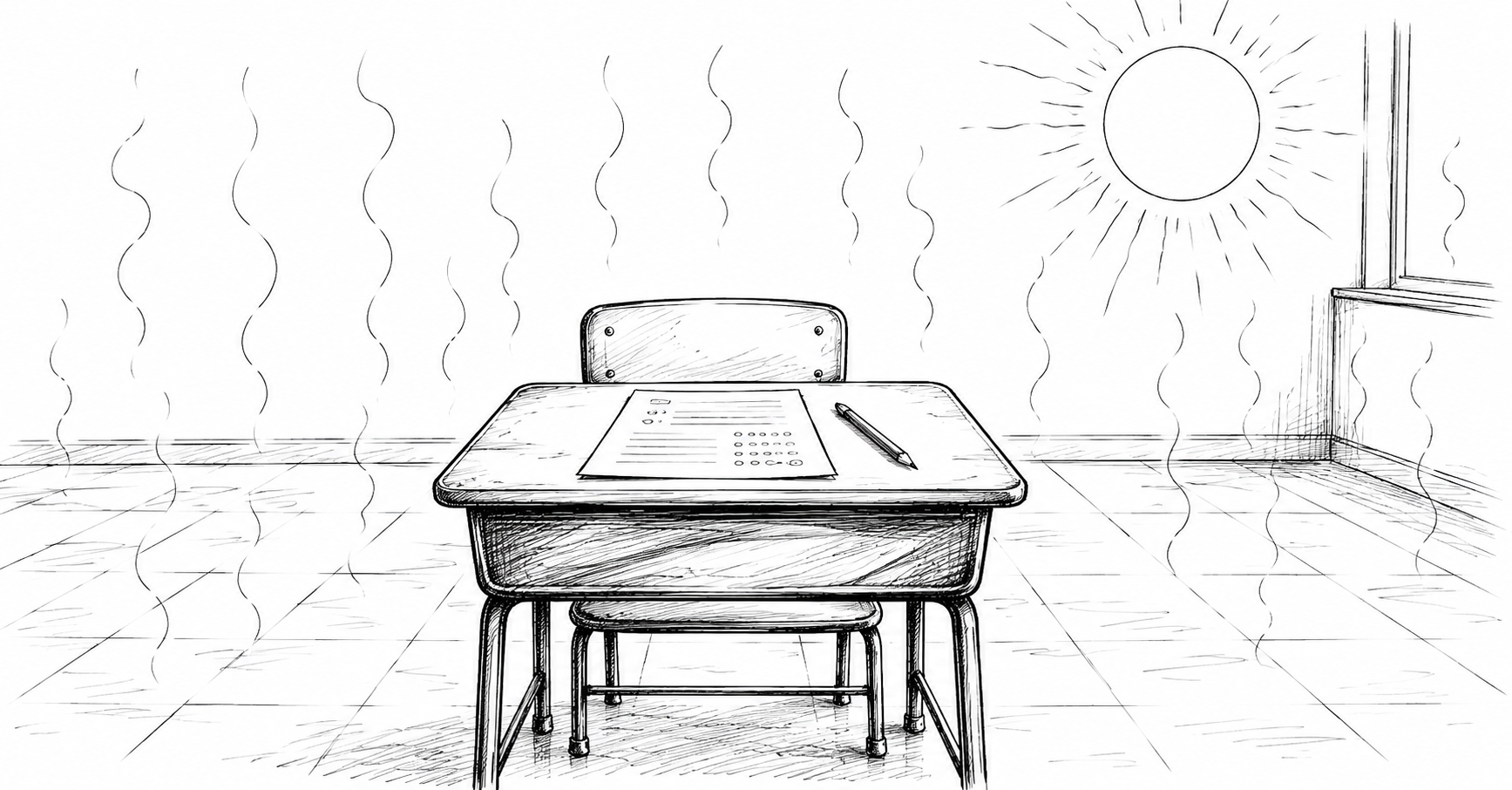
Angelique Chrisafis reported for The Guardian from Paris on June 25 that French education unions urged teachers to strike as national exams moved ahead during a severe heatwave. Authorities closed 3,500 schools, reduced hours at 10,000 more, and kept brevet exams on schedule for more than 850,000 15-year-olds, with classrooms in some places reaching up to 40 degrees Celsius.
School buildings designed for cooler summers — large windows, limited insulation, few air conditioning units, exposed playgrounds — are now being asked to function during heat that strains children, teachers, nurses, examiners, and parents at the same time. The infrastructure has not changed. The summer has.
The government tried to adapt. Education Minister Edouard Geffray said the brevet would take place in the morning, with fewer students per room, water distribution, pauses, and flexible rules for students who needed to cool down. He also said that from next summer, all national exams would be held in the morning rather than the afternoon. Those adjustments are real. They are also the government improvising around infrastructure that no longer fits the climate.
Teachers are being asked to maintain classes, monitor students for heat distress, manage hydration, adjust routines, and preserve exam integrity in rooms that may be physically unsafe. That is labor, even when the job description still calls it education. Several unions said the lack of preparation put the health of staff and students at risk — framing heat adaptation not as an inconvenience but as a workplace safety failure.
Students are absorbing a second layer of pressure. Exams determine academic placement and future pathways. When teenagers take those exams in extreme heat, performance becomes tied to building quality and neighborhood conditions. Chrisafis reported that some students said they could not revise in homes that were also heat traps, while officials argued that some children might be safer in schools if their homes were even hotter. Education policy, housing quality, and climate adaptation are now operating inside the same problem.
Power moves from institutions to individuals when infrastructure fails. Teachers cool children with improvised methods. Students try to concentrate through heat stress. Staff carry the practical and emotional burden of a system that has not been retrofitted fast enough to match the summers it is now being asked to manage.
France’s exam conflict is a preview for other countries with older school buildings and hotter summers. The next education equity fight will include ventilation, shade, insulation, cooling access, exam calendars, and worker safety. Schools that cannot adapt will turn climate conditions into another mechanism shaping which students’ outcomes are determined by the buildings around them.