
End of Day Closing Note | Monday, June 22, 2026
The Algorithm Has to Show Its Work
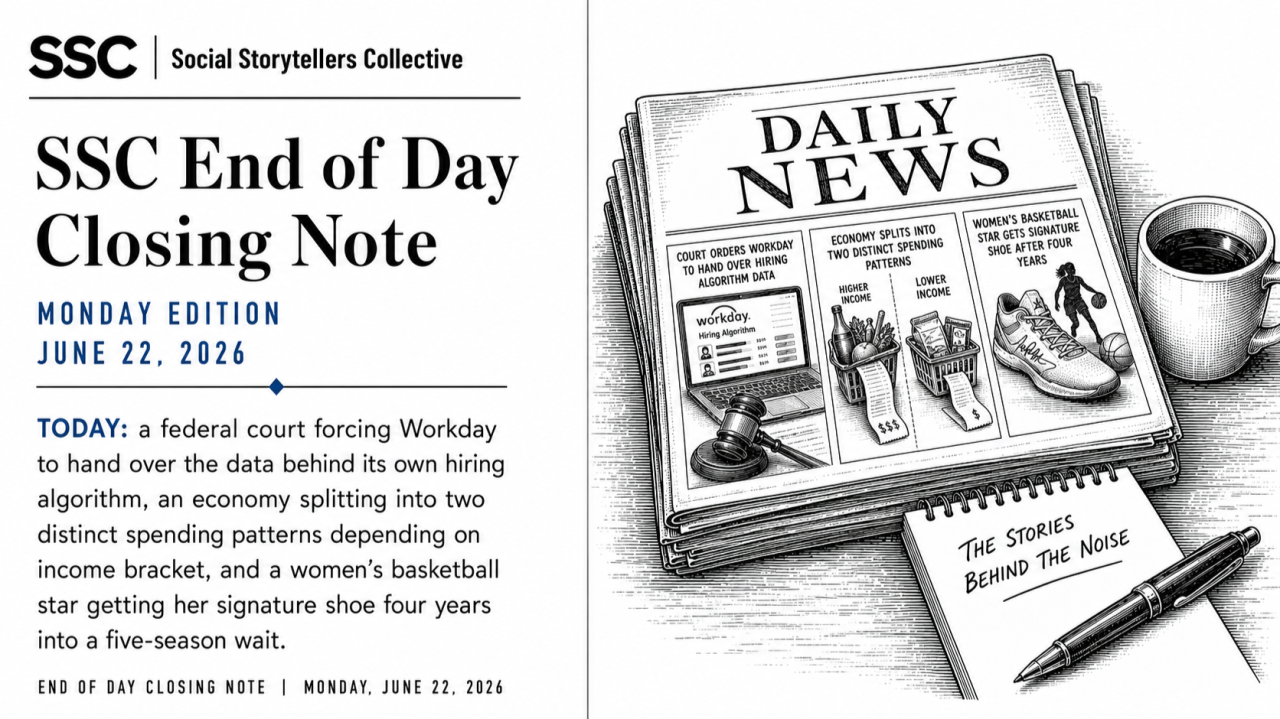
Today: a federal court forcing Workday to hand over the data behind its own hiring algorithm, an economy splitting into two distinct spending patterns depending on income bracket, a women’s basketball star getting her signature shoe four years into a five-season wait, a wage report confirming what paychecks already felt like, a city testing whether reparations can be delivered as housing instead of cash, California writing the first state playbook for AI labor displacement, and two breaking items — a federal layoff tracker and a pending Supreme Court ruling on Fed independence.
For years, companies that build hiring software have made a specific argument: the algorithm doesn’t decide who gets hired, it just helps. That distinction — assistant versus decision-maker — has functioned as a kind of legal shield, the same one Workday is now being asked to actually prove in court. A federal judge ordered the company on May 29 to turn over its AI bias-testing data and applicant records, the first real test of whether that shield holds up once a court can see what’s underneath it. That’s the throughline running through today’s edition: institutions making decisions about people — who gets hired, who gets housing, who gets a shoe deal, who gets credit for an economy that’s growing — and the gap between what they say is happening and what the underlying data actually shows.
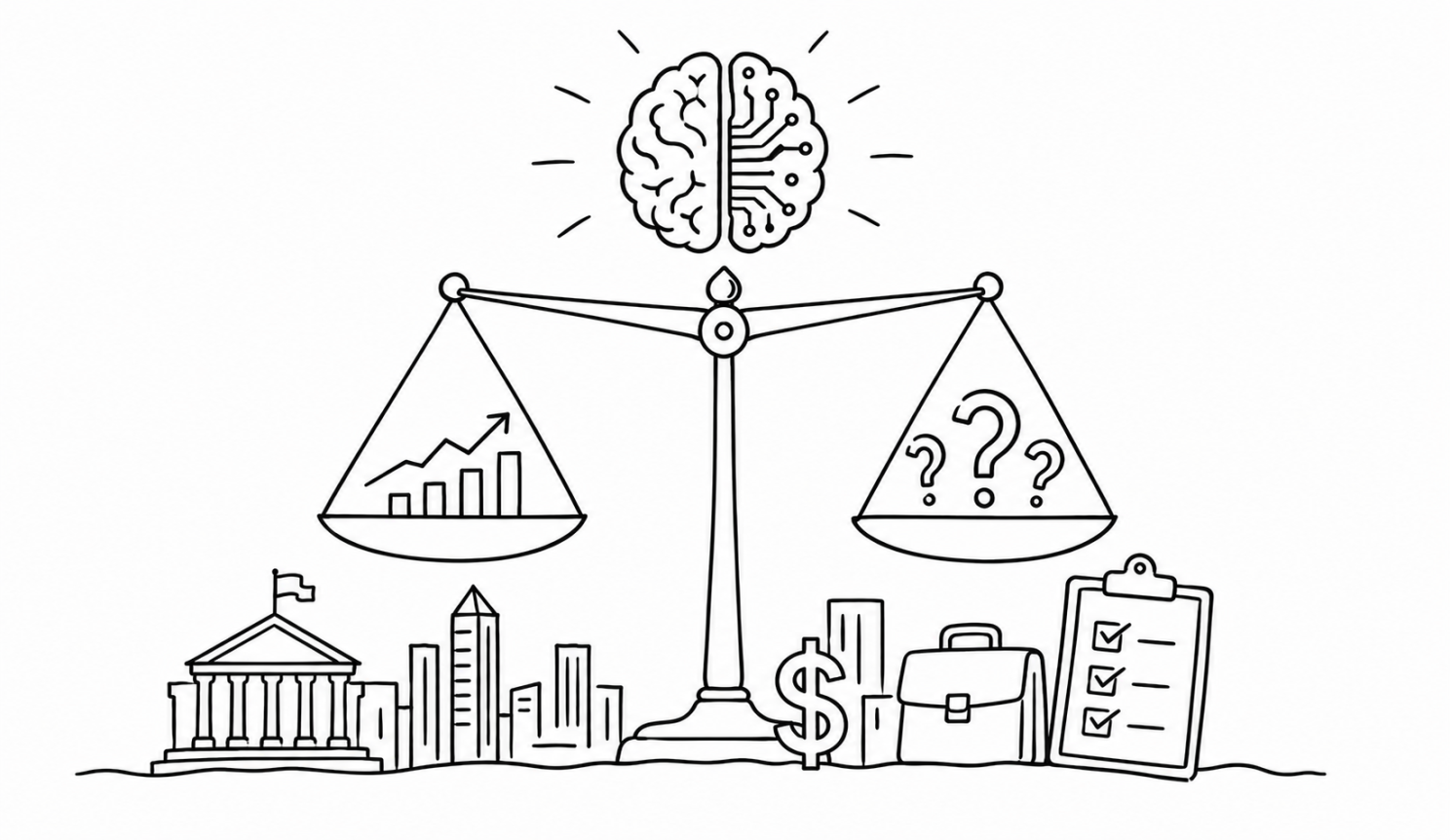
Workday‘s AI Hiring Lawsuit Keeps Moving: A federal judge ordered Workday on May 29 to turn over AI bias-testing data and applicant records as part of discovery in Mobley v. Workday, the closely watched class action alleging the company’s hiring algorithms discriminate against older, Black, and disabled job applicants. The case has already cleared two major legal hurdles other AI-hiring lawsuits haven’t: in 2024, the court ruled Workday could be directly liable under federal civil rights law as an “agent” of the employers using its software, not merely a neutral tool. In 2025, the court granted preliminary collective certification under the Age Discrimination in Employment Act. More than 11,500 employers use Workday’s platform, including over 60% of the Fortune 500. Read the full breakdown.
The discovery order forces a level of transparency AI hiring vendors have mostly avoided. Workday’s defense has rested on the claim that its software implements criteria employers set, rather than making independent decisions about who advances. The court already rejected that framing once, finding the software “participating in the decision-making process by recommending some candidates to move forward and rejecting others.” The order now requires Workday to produce the actual scoring data that would show whether the algorithm deprioritized older applicants, and by how much — and the lead plaintiff, Derek Mobley, is an applicant over 40 who is also Black, meaning the case tests both age and race-based disparate impact simultaneously.
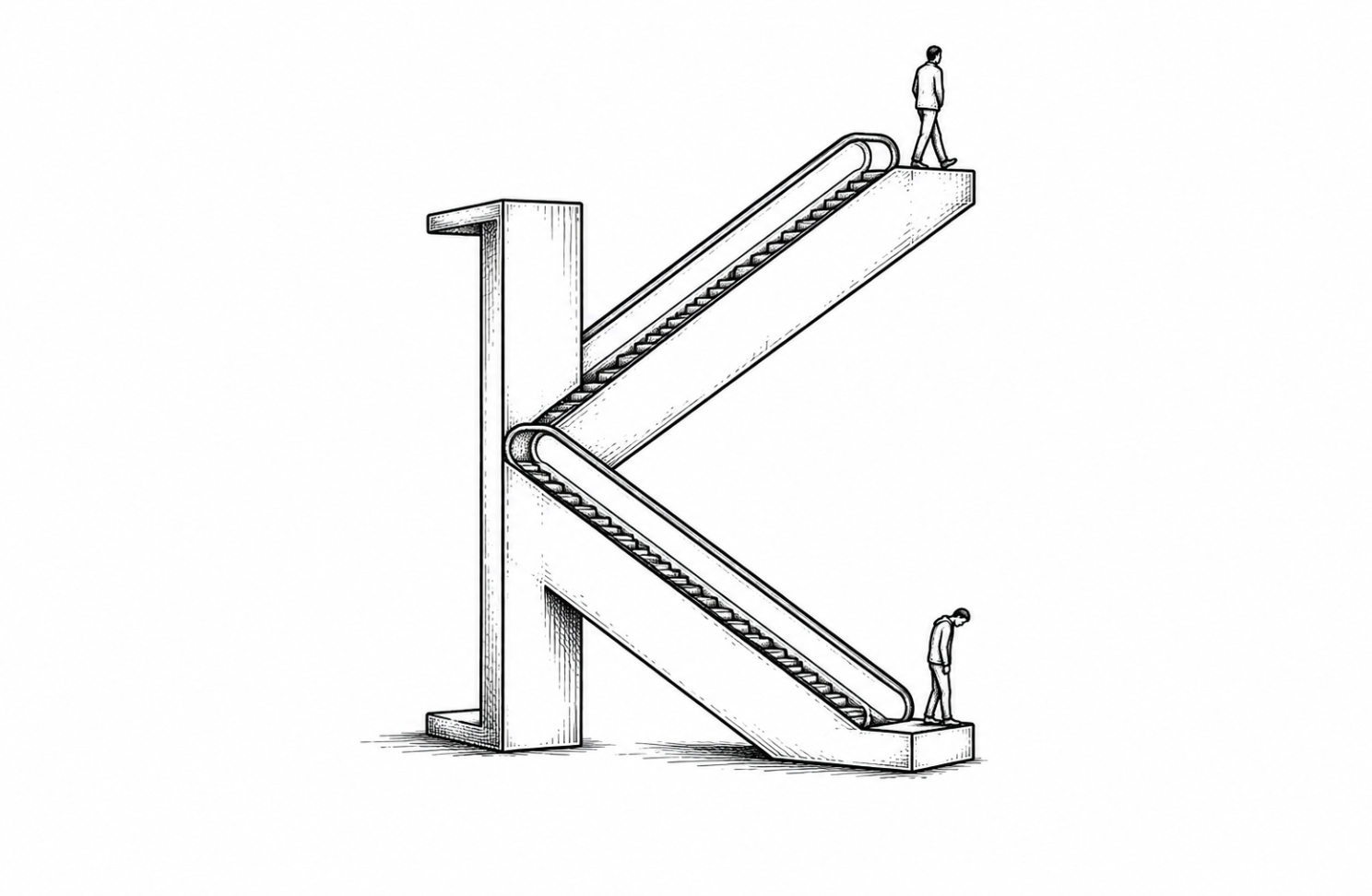
Consumer spending remains resilient in aggregate, but the divergence underneath that resilience has widened into what economists are calling a K-shaped pattern: higher-income households spending more, lower-income households cutting back. SSC examined the full picture — the top 20% of households now hold nearly 72% of total wealth, nearly 60% of the new tax law’s benefits flow to households earning $217,000 or more, and tighter SNAP eligibility requirements took effect in February. Two-thirds of consumers told the Conference Board in May they’re cutting back due to rising prices.
Goldman Sachs projects the bottom income quintile will see just 0.8% discretionary cash growth this year, compared to 6% for the middle quintile — a gap one order of magnitude apart, both flowing through the same GDP figure reported as a single number. Bank of America found the top third of households by income now drives more than half of all U.S. consumer spending, which means the headline “resilient consumer” increasingly describes a shrinking share of the country.
Caitlin Clark’s Signature Shoe Turns Women’s Basketball Into Sneaker Infrastructure: Nike unveiled the Caitlin 1 on June 17 — nearly four years after Clark signed her $28 million deal, and across five seasons in which she became the WNBA’s most marketable athlete without a signature product. SSC broke down the full timeline — Nike currently carries eight signature shoes for NBA players and just two for the entire WNBA, and hasn’t released a signature shoe for a Black WNBA player since Sheryl Swoopes in 2002. Sonny Vaccaro, the retired Nikeexecutive who signed Michael Jordan in 1984, called the delay “one of the biggest failures I’ve ever seen.”
Clark generated commercial proof across five seasons and multiple brand partnerships — Gatorade, Wilson Sporting Goods, Panini America. Nike controlled when that proof translated into a product. The next test is whether the rest of the sneaker industry treats this delay as proof women’s basketball deserves earlier investment going forward, or as a one-off correction for a single athlete too big to keep ignoring.
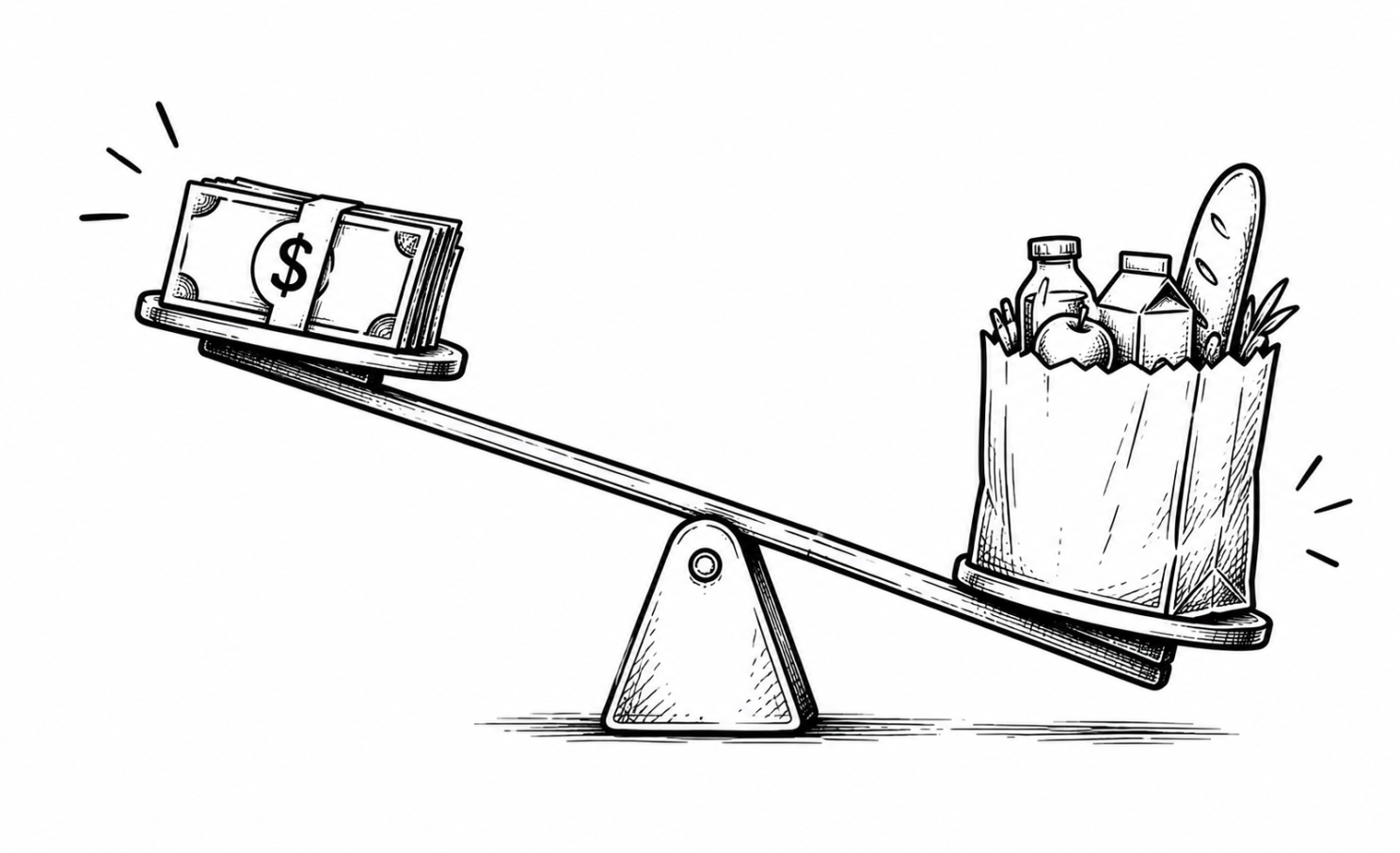
Wages Grew 3.5%. Prices Grew More. The May Numbers Confirm What Workers Already Know: Average hourly earnings rose 3.4% over the year ending in May, while the Consumer Price Index rose 4.2% over the same period — the steepest real-wage decline since the 2022 inflation shock. SSC reported on the full state-by-state breakdown, where real wage growth varied by as much as 7.2 percentage points across states, with Virginia posting the strongest gains at 5.1% and South Dakota seeing the steepest decline at -2.1%.
Workers who switched jobs picked up 5 to 8% nominal raises, compared to 3 to 4% for workers who stayed in place — meaning in a labor market where real wages are falling for people who hold steady, switching jobs has become one of the few reliable ways to keep pace with prices.
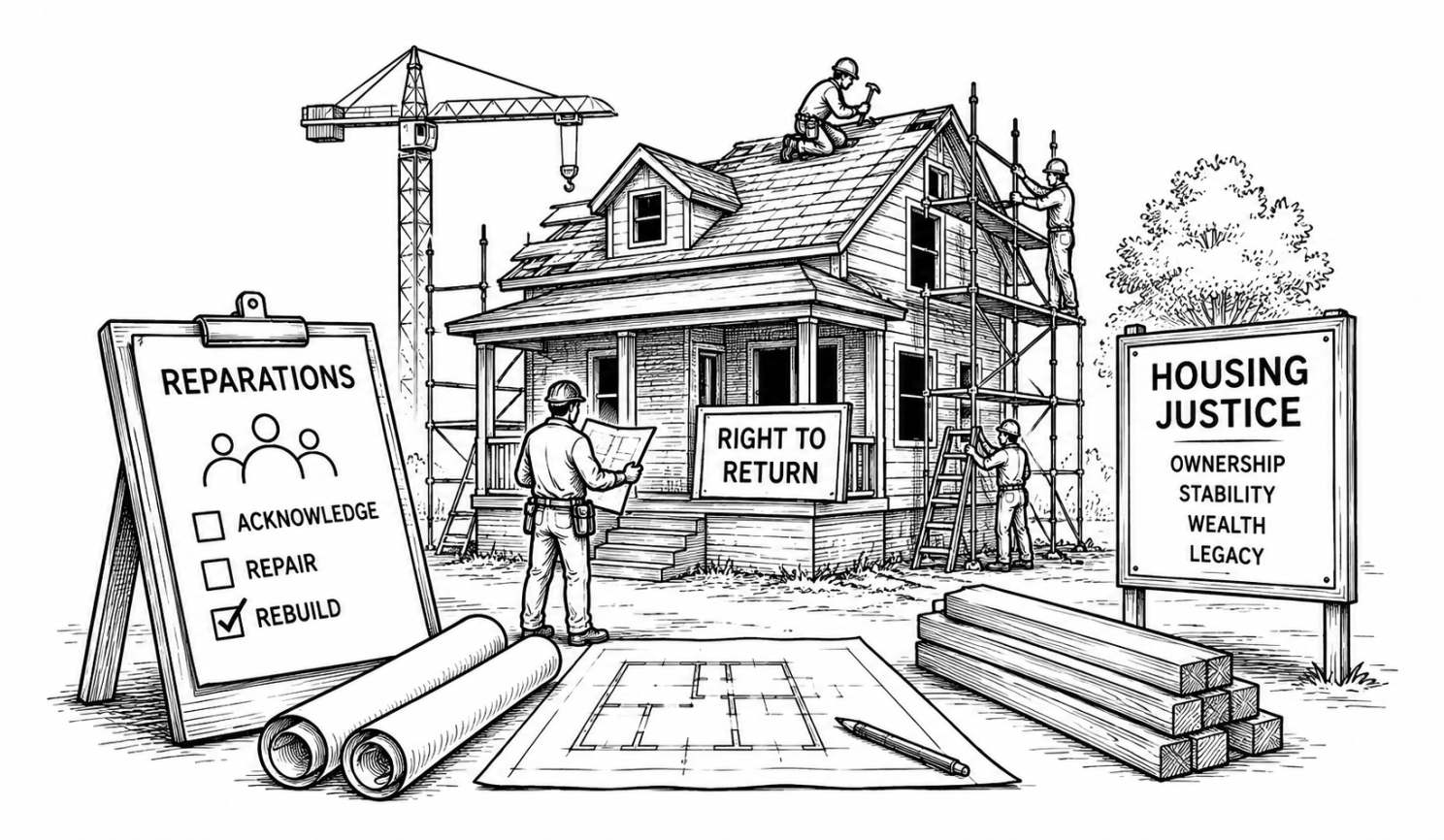
Reparations Moved From Commemoration to Architecture: Santa Monica and Evanston have both moved past the symbolic phase of reparations into actual program design — routing compensation through housing rather than direct cash payments. SSC reported on why that choice matters more than the dollar figures: Evanston’s Restorative Housing Program, funded by a $10 million reparations fund, offers up to $25,000 toward mortgage assistance or repairs, while Santa Monica’s Right to Return Program addresses the city’s use of eminent domain to displace Black residents in the 1950s and ‘60s.
The program isn’t without friction: only 16 of more than 600 applicants were selected in Evanston’s first housing lottery, and city counsel has warned that funding the program through general revenue could expose Evanston to taxpayer lawsuits — the same legal exposure that has kept federal reparations proposals stalled in Congress since 1989.

California Is Preparing for AI Displacement as a State Labor Issue: Governor Gavin Newsom signed Executive Order N-6-26 on May 21, directing state agencies to study AI’s labor market impact and develop recommendations on severance standards and unemployment insurance. SSC examined the political timing behind the order — it creates no immediate legal obligations, setting research deadlines instead, the most consequential due by mid-November, conveniently past the November election.
The order followed a February pledge from AFL-CIO president Liz Shuler and the California Labor Federation to withdraw support for a Newsom 2028 run without concrete AI worker protections. California Labor Federationpresident Lorena Gonzalez responded to the order directly: “It’s not enough to just study the issue, we have to take action now.”
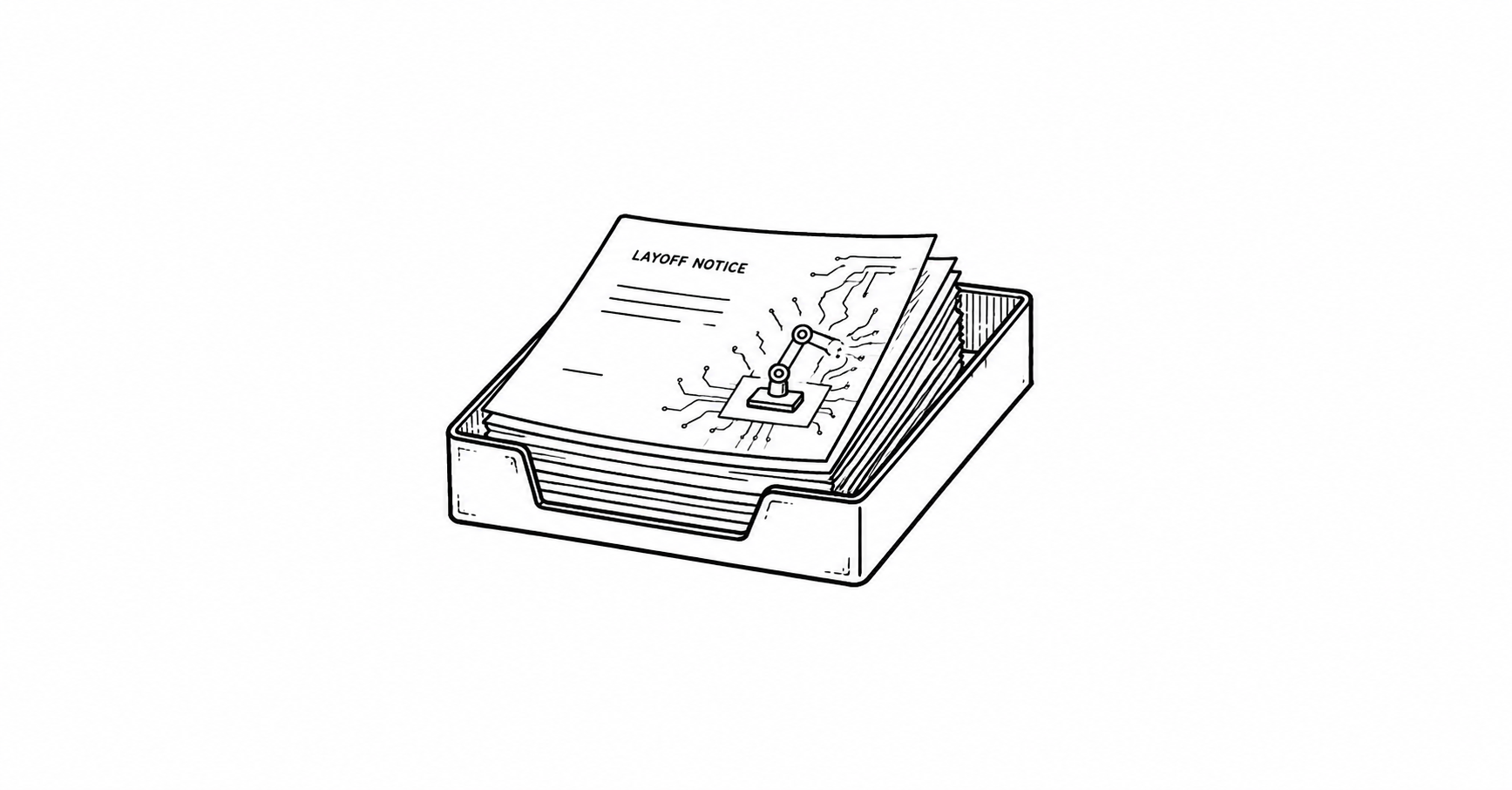
2,567 WARN Act Layoff Notices Filed So Far in 2026 — Tracking Below 2025’s Pace, But the Composition Has Shifted: As of June 20, 2,567 official WARN Act notices have been filed across 42 states in 2026, affecting 243,171 employees — running below 2025’s full-year total of roughly 3,691 notices and 329,018 employees at the same point last year. The slower pace doesn’t necessarily mean a calmer labor market: Challenger, Gray & Christmas reported 108,000announced job cuts in January alone, a 118% year-over-year increase, with AI-driven restructuring now cited as a leading factor for the third consecutive month.
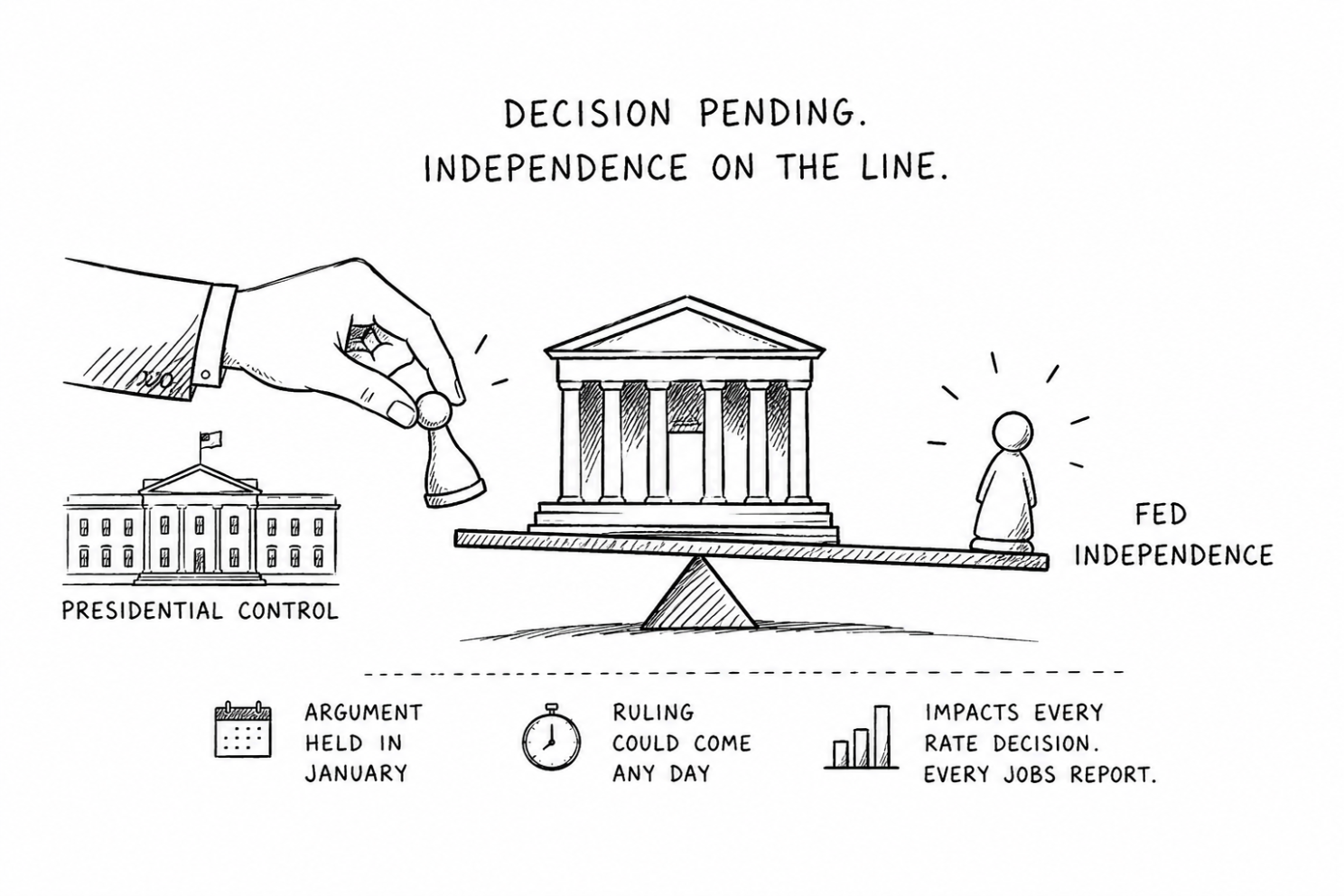
The Supreme Court is weighing whether Trump can remove Lisa Cook, the first Black woman to serve on the Federal Reserve board, after lower courts blocked her removal and the case reached the justices on appeal. Oral argument was heard in January, and a ruling could arrive any day before the term ends. The outcome will determine whether the Fed’s independence from direct presidential control — a structure courts have upheld since the 1930s — remains intact, with direct implications for every monetary policy and labor data story this week.

For the first time since the federal government began tracking this data, young Black men are now dying by suicide at a higher rate than young white men. Mental health professional Brandon Jones told Capital B the numbers reflect “an accumulation of unresolved pain colliding with a generation that is, perhaps for the first time, willing to name it” — but warns that rising awareness hasn’t been matched by the resources to respond to it. We broke down what the data reveals about the gap between naming a crisis and building the infrastructure to meet it.
We examined what happens when culture becomes inventory — UCLA’s newest Hollywood Diversity Report found representation in streaming films fell sharply across every category in 2025, with leads of color dropping from 51% to 36% and women directors hitting a historic low of 23.6%. In the same week, Gilmore Girls quietly left Netflix after its licensing window expired, a reminder that even a platform’s defining titles were never permanent. Both stories point to the same mechanism: streaming replaced the old gatekeepers without replacing the incentive structure behind them.
What We’re Reading
Derek Mobley, the lead plaintiff in the Workday case, is an African-American applicant over 40 — meaning the lawsuit tests both age and race-based disparate impact claims simultaneously. Lexology’s legal analysis breaks down why the court’s decision to let the case proceed as a collective action significantly broadens its reach: any Workday applicant over 40 since September 2020 was eligible to opt in, and the platform processed roughly 1.1 billion applications in that window.
ESPN’s Dan Wetzel published the definitive account of Nike’s four-year delay on Clark’s signature shoe, detailing how the company gave her just three social media posts across all of 2026 before the announcement, and hasn’t had a signature shoe for a Black WNBA player since Sheryl Swoopes in 2002 — a fact retired Nike executive Sonny Vaccaro raises without drawing a firm conclusion about how much it shaped the delay.
Daily Visual Signal
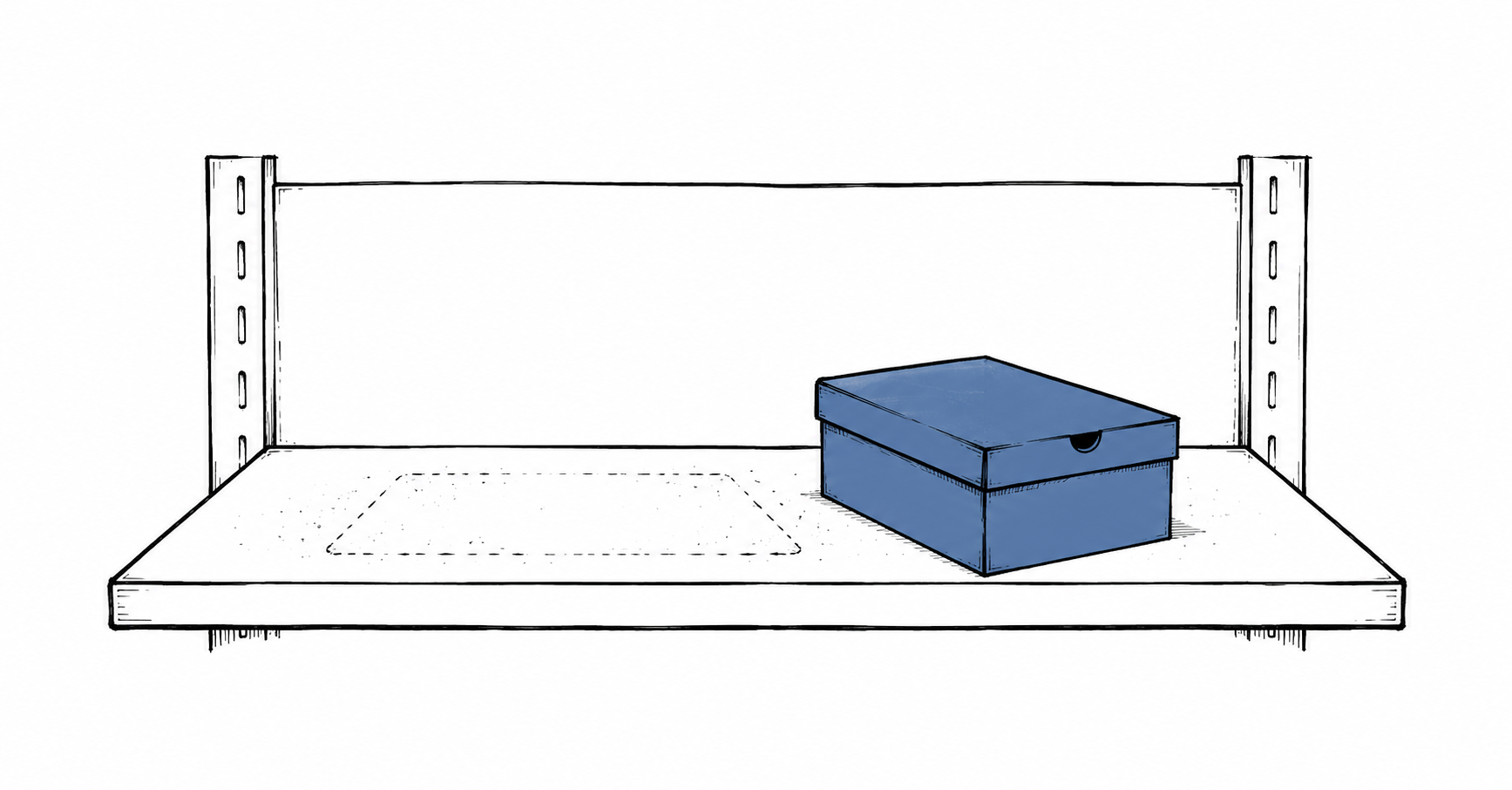
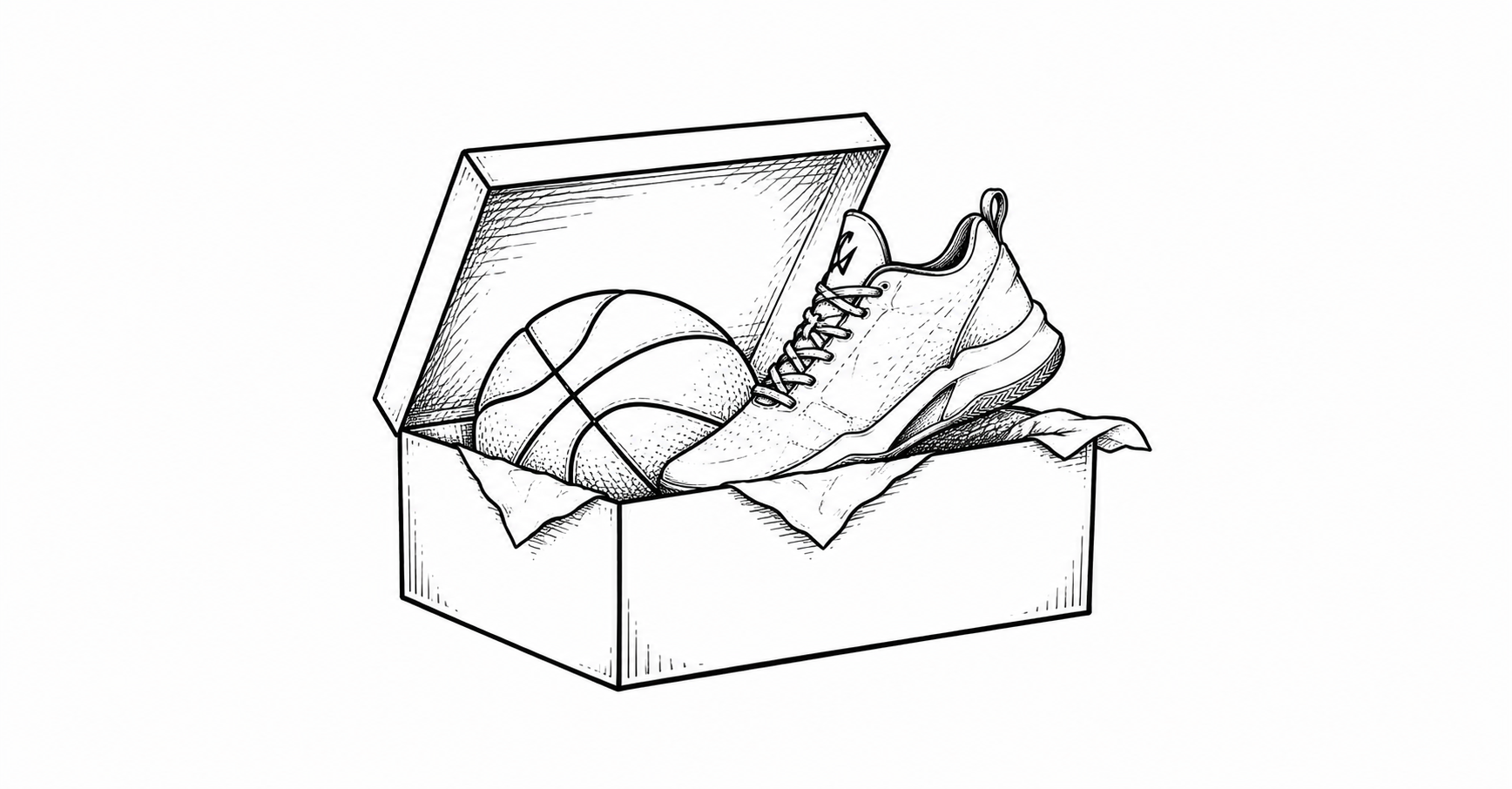
The Sneaker on the Shelf, Four Years Late: A single shoebox sits on an otherwise empty store shelf, slightly off-center. A faint outline traced in the dust around it shows where it should have been sitting for years. The image carries no text and no realism — just one focal point, because the absence is the entire argument. Rendered as a minimalist editorial line illustration on a pure white background, in carbon black lines, with a slate blue accent on the shoebox itself.
What We’re Watching Next
Watch the bias-testing data Workday now has to produce in discovery over the coming weeks. The company has resisted this level of transparency throughout the case, and what gets turned over will tell you whether the “agent, not decision-maker” defense actually survives contact with its own data. If the records confirm a statistically significant pattern against applicants over 40, the case moves toward a disparate-impact finding with implications well beyond Workday itself — every company using algorithmic hiring software at scale would be watching to see whether courts start treating vendor liability as settled law rather than an open question. If the data is murkier than the plaintiffs expect, expect Workday to push hard for decertification before the case reaches a jury.
Watch Evanston’s reparations program for a different kind of test. With its housing lottery already oversubscribed at 16selections out of 600 applicants, and city counsel warning against expanding the fund through general revenue, the real question over the next few months is whether the city finds an alternative funding mechanism or lets the program stay deliberately small. A program that stays small avoids the legal exposure that’s kept federal reparations proposals stalled since 1989, but it also means the model can’t scale to meet documented demand — which raises the question of whether “architecture over commemoration” actually closes a structural gap, or just creates a smaller, better-designed version of the same gap.
Watch the Supreme Court’s pending ruling in Trump v. Cook closely, because the timing intersects with nearly every other economic story this week. A ruling allowing the president to remove Fed governors at will would change how markets read every future statement from Jerome Powell or his successor — monetary policy decisions would carry an implicit asterisk about whether they reflect economic judgment or political pressure. Given that today’s edition includes a wage report, a K-shaped spending divide, and a state labor policy story all touching the Fed’s broader mandate, a ruling against Fed independence wouldn’t just be a constitutional story. It would reshape how every subsequent jobs report, inflation print, and rate decision gets interpreted by the public, markets, and the press covering them.
Finally, watch whether Nike treats the Caitlin Clark shoe launch as a one-off correction or the start of a faster cadence for women’s basketball signature deals. The clearest signal will be whether any other WNBA player not already under contract gets a comparable marketing push within the next two to three months — if the answer is no, the lesson the rest of the sneaker industry takes from this delay is that being four years late only costs you criticism, not market share, which is not the lesson that actually changes anyone’s behavior next time.
Free, daily structural analysis like this lands in your inbox every weekday morning. Subscribe: https://246481934.hs-sites-na2.com/newsletter