California Is Preparing for AI Displacement as a State Labor Issue
An executive order with no legal teeth is still a political document — and the politics behind it are pointed at 2028.
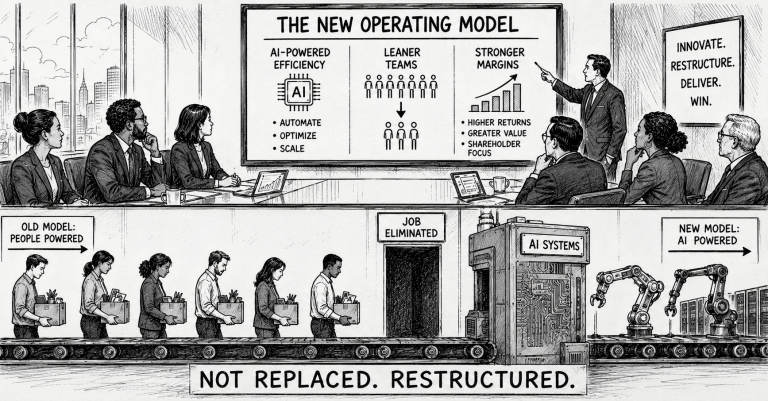
Governor Gavin Newsom signed Executive Order N-6-26 on May 21, directing California state agencies to study AI’s impact on the labor market and develop recommendations on severance standards, unemployment insurance, worker ownership models, and revisions to the state’s WARN Act mass-layoff notification law. The order creates no immediate legal obligations for employers — it sets deadlines for state agencies to produce reports and recommendations, the earliest due by August 19, 2026, with the most consequential review, on displaced-worker safety nets, due by mid-November. As several employment law firms have noted, the order doesn’t change what a California employer has to do tomorrow. What it does is put a government planning apparatus in motion for the first time at the state level, explicitly built around the premise that AI-driven job loss is coming and the state has a role in managing it.
The order didn’t arrive in a political vacuum. In February, AFL-CIO president Liz Shuler and the California Labor Federation publicly pledged to withdraw support for a Newsom 2028 presidential run if he didn’t take concrete steps to protect workers from AI — citing his earlier veto of an predecessor to the “No Robo Bosses Act” as the specific grievance. California Labor Federation president Lorena Gonzalez’s response to the new executive order makes the politics explicit: “We are glad that Governor Newsom is acknowledging the potential harm of AI on workers, but it’s not enough to just study the issue, we have to take action now. Catastrophic job loss from AI is not inevitable, it’s a political choice.” That’s a labor movement telling a likely presidential candidate that a study isn’t the win they’re asking for, even as the order’s own language leans into worker-protection framing usually reserved for legislation, not executive review.
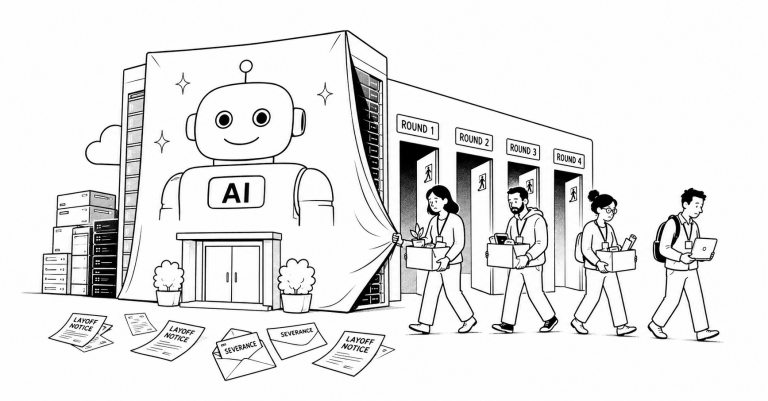
The substance underneath the politics is real, even if it’s still in the research phase. California already has pending legislation that the executive order sits alongside rather than replaces: SB 951 would extend the state’s WARN Act notice period from 60 to 90 days specifically for AI-driven layoffs and require employers to disclose which job functions are being automated and by which system. SB 947, the No Robo Bosses Act, has passed the State Senate and would restrict how employers use automated decision systems to discipline, terminate, or “deactivate” workers, while giving workers a right to access the data those systems used to make the call. Both bills have stalled or moved slowly in the Assembly. The executive order’s 180-day research window — which conveniently runs past the November election — gives the legislature a built-in argument for deferring action on both bills until the state’s own analysis is complete.
That deferral dynamic is the real mechanism worth naming. An executive order that directs agencies to study a problem functions, in practice, as a tool for managing the pace of legislative action as much as a tool for solving the problem itself. Labor groups read the order as evidence the governor is taking AI displacement seriously. Employer-side law firms read the same order as a reason the legislature should slow down on SB 951 and SB 947 until the LWDA’s findings are in. Both readings are accurate, and the order is structured to support both at once — which is precisely what makes executive orders politically useful in a way binding legislation isn’t.
Power, for now, sits with the state agencies conducting the review, not with displaced workers or the employers deploying the AI systems doing the displacing. The November 17 deadline for the LWDA’s safety-net recommendations is the first real test of whether this order produces policy or just produces a report. If the agency recommends binding severance standards or expanded unemployment protections, the fight moves to the legislature in 2027, with labor’s patience already on record as limited. If it doesn’t, Newsom will have spent a year studying a problem labor unions told him in February was not a study problem at all.
— SSC Policy Desk | Social Storytellers Collective
Free, daily structural analysis like this lands in your inbox every weekday morning. Subscribe: https://246481934.hs-sites-na2.com/newsletter