Comcast Is Separating the Pipes From the Programming
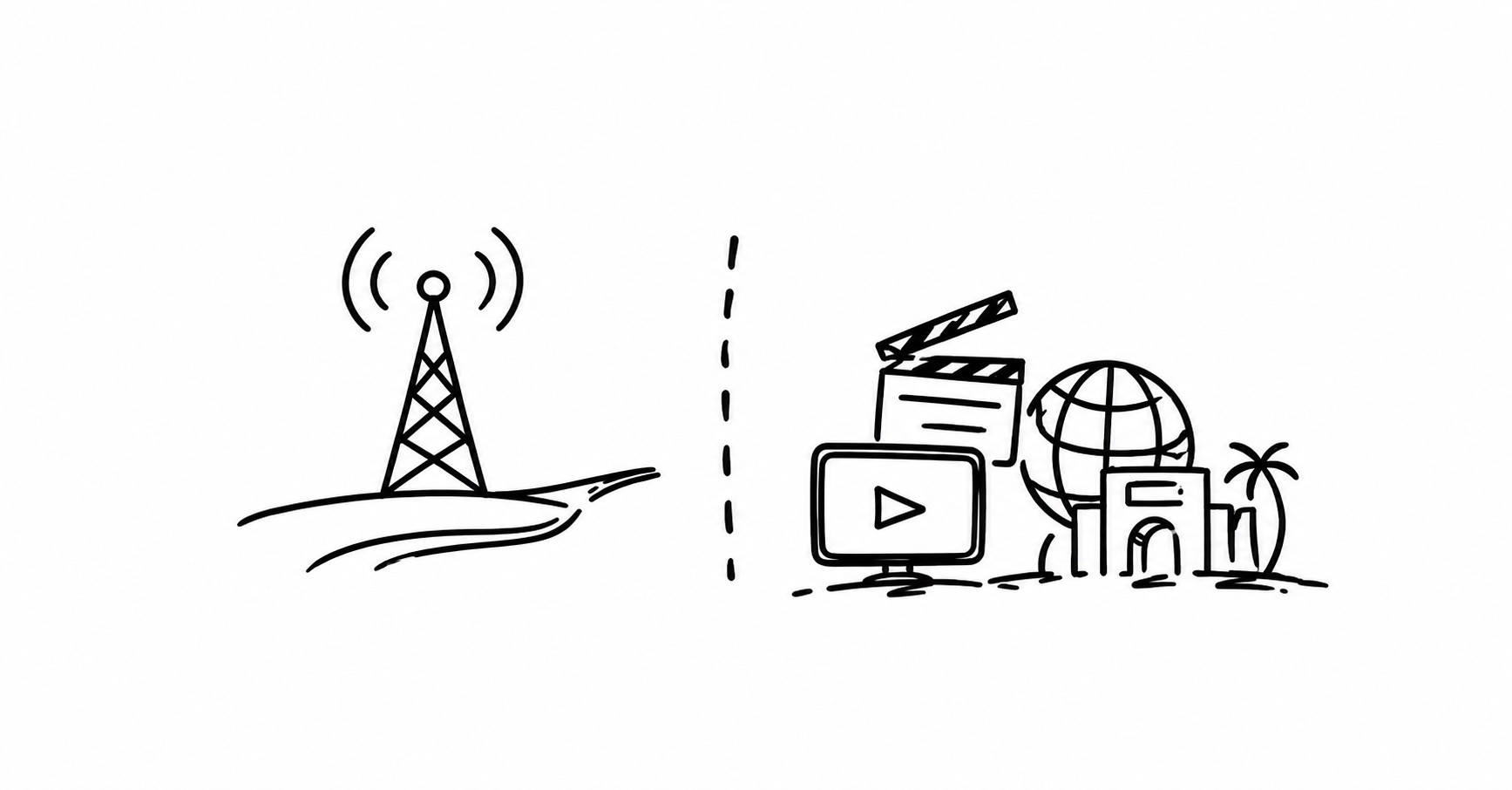
The split ends the old telecom-media logic and admits that connectivity and content now run on different clocks.
Reuters reporters Dawn Chmielewski and Aditya Soni reported on June 29 that Comcast plans to split into two publicly traded companies by spinning off NBCUniversal and Sky from its broadband and wireless business. The new media company will include NBC, Peacock, Universal Studios, Telemundo, Sky, Bravo, and theme parks. Comcast will initially retain up to 19.9% of the new NBCUniversal entity, while the remaining Comcast business will focus on cable, wireless, and business services.
Corporate structure follows where investors believe the value is easiest to read. Comcast spent years defending the logic of combining distribution and content. Broadband pipes delivered the customer relationship. NBCUniversal supplied programming, studios, theme parks, news, sports, and streaming ambition. That model made sense when cable bundles were still central to household media behavior. It looks weaker when broadband remains essential but television economics keep fragmenting.
The split separates two businesses carrying different pressures. Connectivity is utility-like: households and businesses still need internet access, wireless service, and network reliability. Media is volatile: streaming losses, sports rights inflation, studio cycles, cord-cutting, advertising swings, and competition from larger technology platforms. Keeping those businesses together can make the stable one harder to value and the unstable one harder to fix.
Wall Street rewards focus because focus makes discipline easier to demand. A standalone Comcast can be judged on subscriber retention, broadband pricing, wireless bundling, network investment, and cash flow. A standalone NBCUniversal can be judged on whether Peacock, studios, theme parks, Sky, and the broadcast networks belong together in a media company built for the post-cable market. The separation does not solve either problem. It removes the excuse that the problems are hidden inside a conglomerate.
The media company also gains a different strategic posture. Once NBCUniversal and Sky sit outside Comcast’s core connectivity business, they can raise capital, use stock, pursue partnerships, or become part of future consolidation conversations more cleanly. Comcast executives may reject the idea that the split is designed for a sale, but structural separation makes strategic transactions easier to imagine and easier to execute.
The decision also marks another retreat from the 2010s belief that telecom companies needed media assets to control the future. AT&T tried that logic with Time Warner and unwound it. Verizon moved away from digital media ambitions. Comcast held the structure longer because NBCUniversal performed better than many peers and theme parks gave the portfolio a physical growth engine. The June announcement says even the stronger version of telecom-media integration has reached its limit.
Power moved from the conglomerate model to separate capital-market stories. Investors gain cleaner lines of accountability. Executives gain clearer mandates. Workers inside the media business inherit sharper pressure to prove that content can stand on its own without the larger Comcast balance sheet around it. The next phase of media consolidation will be shaped by companies that look easier to buy, easier to partner with, and easier to judge. Comcast just made NBCUniversal one of them.