
Meta’s AI Slowdown Exposes the Cost of Building Strategy Around Expectations
Zuckerberg’s admission doesn’t undo the layoffs it was supposed to justify

Katie Paul of Reuters reported that Meta CEO Mark Zuckerberg told employees at an internal town hall that AI agent development over the last four months “hasn’t really accelerated in the way that we expected,” an admission that lands inside a company that spent the spring reorganizing its workforce around the opposite assumption.
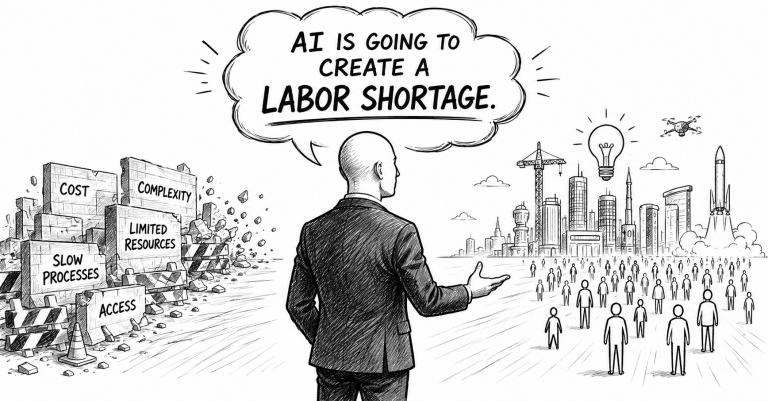
Corporate planning now moves on forecasted capability, not proven capability. That is the mechanism underneath the Meta story. AI does not need to be fully ready for companies to reorganize around it. Executives can cut headcount, slow replacement hiring, redirect capital, and redesign workflows around the expectation that agentic systems will eventually perform more of the work. The technology can still be unfinished while the labor consequences arrive on schedule.
Meta’s own timeline shows the gap. The company laid off roughly 10% of its global workforce and reassigned about 7,000 employees to AI-focused teams in May, moves Zuckerberg said were planned in January and February on the belief that agentic tools, including coding assistants like Claude Code, would move fast enough to justify the cut. Reuters reported he now says the reorganization “wasn’t as clean as it could have been” and that the bets behind it “haven’t come to fruition yet,” though he still expects meaningful gains within three to six months.
Meta matters here because it sits close to the center of the AI race, with projected AI infrastructure spending of up to $145 billion this year. When a company at that scale acknowledges slower-than-expected agent progress, it doesn’t mean the technology is failing. It means the distance between executive ambition and operational reliability is wider than markets, and workers, have been allowed to price in.
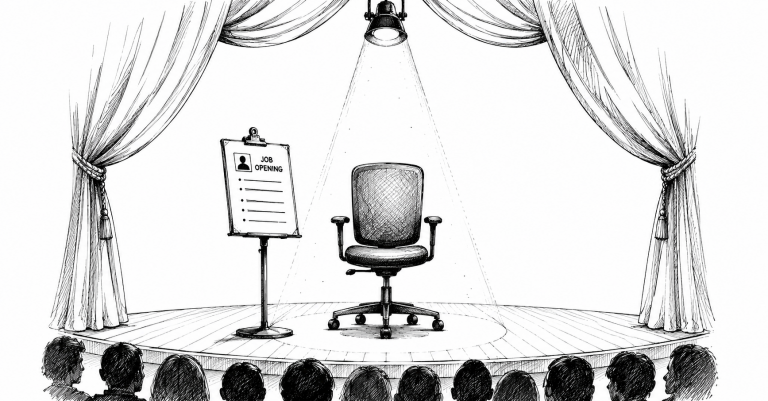
That gap has consequences for people, not just balance sheets. A team does not need to be replaced by a functioning agent for AI to change its bargaining position. It only has to operate inside a company that has already budgeted for fewer people. Once that belief enters headcount planning, labor stops being treated as the source of capacity and starts being treated as a placeholder until automation catches up. The leverage shifts from workers performing the work to executives forecasting its replacement.
That shift rarely shows up as one clean substitution. It shows up as open roles that don’t get filled, junior positions that quietly disappear, teams asked to cover more ground with fewer people, and managers told to justify headcount against tools that don’t yet do the job well. Reuters noted the May cuts already drew internal pushback and hurt morale — a workforce measuring itself against a future version of a system it hasn’t seen work yet.
Meta’s slowdown exposes what happens when that arrangement meets a delay. If agents take longer to mature than projected, companies may keep the staffing discipline the forecast justified anyway. The expectation does useful work for management even before the product performs — it already reset what teams can ask for, how thin staffing can run, and how investors score efficiency. None of that reverses just because the timeline slipped.
That is why the next phase of this story likely isn’t mass replacement arriving all at once. It’s a longer stretch of organizational limbo: companies holding open positions, consolidating teams, and delaying rehiring while the tools they’ve already budgeted around slowly close the gap they were supposed to have closed already. Meta reports earnings later this month, which will be the first real test of whether Zuckerberg’s three-to-six-month window holds — and whether the companies that cut fastest toward an AI-efficient org chart can now afford to wait for the AI to catch up to it.