205,832 Tech Workers Were Laid Off. AI Is Becoming the Explanation Companies Were Waiting For.
The question isn’t whether AI caused the layoffs. It’s why “AI” became the answer companies reach for, whether or not it’s the whole truth.
As of early August, tracking data puts 2026’s tech layoffs at 205,832 workers across 322 separate events. Of those, AI was specifically cited as a factor in 173 events, affecting roughly 170,945 workers, or 54 percent of this year’s cuts. That AI-cited share has moved fast: about 7 percent of layoffs named AI as a factor in January, rising to roughly 40 percent by May. The direction is no longer hard to see. Tech companies are reducing human headcount while increasing their commitments to AI infrastructure, tools, and AI-centered operating models, and they’re naming AI as the reason more often than they were seven months ago.
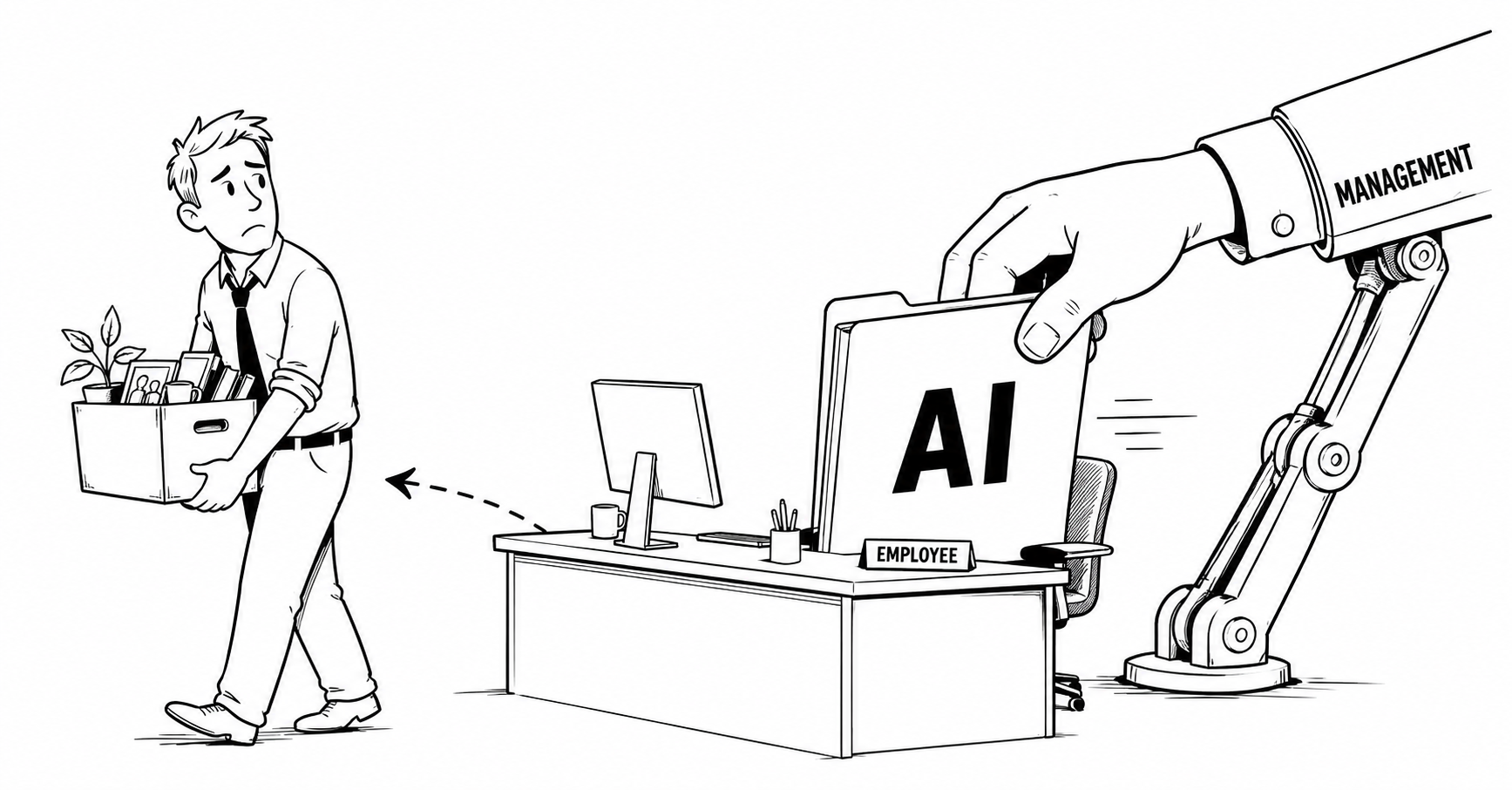
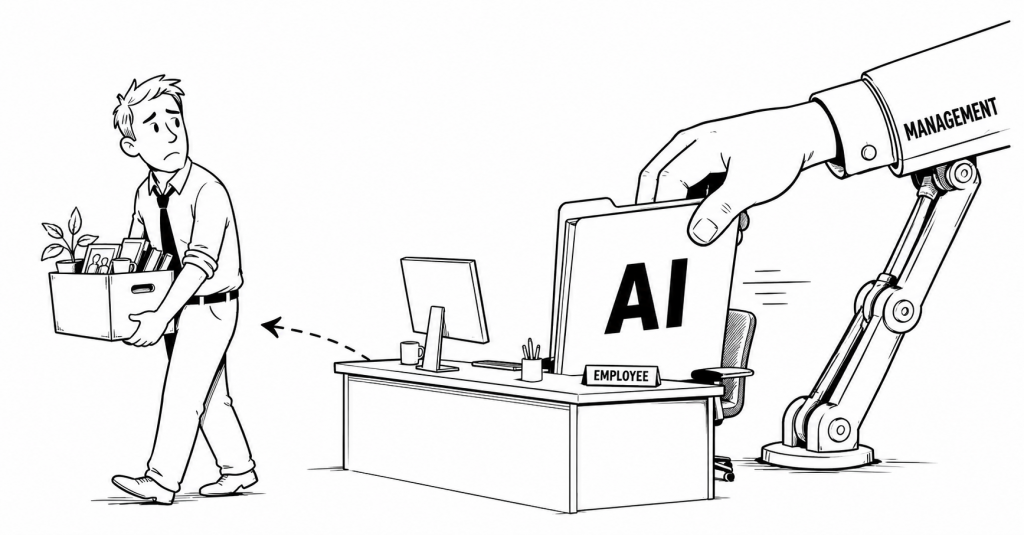
That’s the part of the story most coverage gets right. What it often gets wrong is the framing. The question is not whether AI “caused” the layoffs in a simple, one-to-one way. That’s too clean. It lets companies turn a management decision into a technological inevitability. AI did not walk into a finance meeting and decide whose badge stopped working. Executives did. Boards did. Investors did. AI is not replacing workers by itself. Companies are using AI to redesign the cost structure of work, and layoffs are one of the fastest ways to make that redesign visible.
This is why the current wave feels different from earlier tech downturns. In past cycles, layoffs were often explained through demand: ad revenue fell, consumer spending weakened, interest rates rose, pandemic hiring got excessive, growth slowed. Those explanations still matter. But the AI layer changes the internal logic of the cut. A company no longer has to say only, “We need fewer workers because revenue is under pressure.” It can say, “We need fewer workers because the company is transforming.” That distinction matters because transformation sounds strategic. It converts job loss into proof of modernization.
The result is a new corporate script. A company announces workforce reductions, then explains that it is reallocating resources toward AI, automation, or higher-priority technical work. The public hears efficiency. Investors hear discipline. Remaining workers hear warning. The layoff becomes both a budget move and a cultural message: the organization is being rebuilt around fewer people, faster systems, and a smaller definition of who counts as essential.
That doesn’t mean every AI-related layoff claim should be accepted at face value. The 205,832 total and the 170,945 AI-cited figure come from a single tracker, and other trackers report meaningfully different numbers for the same year — one widely cited count puts AI-affected workers closer to 170,500 using its own methodology, while a separate tracker limited to tech-sector cuts alone reports just over 122,000. Part of that gap is real: some trackers count only tech-industry layoffs, while others count AI-cited cuts across finance, healthcare, and retail too. Part of it is definitional: “AI cited as a factor” can mean anything from a company explicitly blaming automation to a vague line about “efficiency” that analysts later code as AI-related. That uncertainty isn’t a reason to dismiss the story. It is the story. We are entering a labor market where AI is becoming both an operational tool and a narrative tool. It can be a real source of automation, a justification for cost-cutting, a signal to investors, and a shield against harder questions about management choices.
The most exposed workers are not necessarily the least talented. They are the workers whose jobs have been broken into measurable, repeatable, software-readable tasks. Customer support, data entry, content moderation, basic coding, quality assurance, reporting, marketing operations, and administrative coordination all sit closer to the automation frontier because much of their work can be translated into tickets, prompts, workflows, outputs, and dashboards. The issue is not that these workers lack value. It is that their value has been made legible to systems designed to compress labor.
That is the uncomfortable shift. For years, tech workers were told to become more measurable. Track output. Document impact. Quantify performance. Move faster. The AI era is revealing the other side of that bargain. Once work becomes highly measurable, it becomes easier to benchmark against a tool. Once it becomes modular, it becomes easier to redistribute. Once it becomes standardized, it becomes easier to automate or offshore. The same systems that made productivity visible also made labor easier to replace.
This is why “upskilling” is an incomplete answer. Workers should absolutely learn how to use AI tools, understand prompt systems, workflow automation, and human-AI collaboration. But upskilling alone doesn’t solve a deeper problem. It assumes the labor market will create enough better jobs for the people pushed out of the older ones. That’s not guaranteed. It also puts the burden of adaptation almost entirely on workers, while companies capture the savings and investors capture the upside.
The deeper issue is that tech companies are not simply adopting AI to make workers better. They are adopting AI to change the ratio between revenue and labor. That is why job cuts can happen alongside heavy AI spending, not despite it. Oracle’s roughly 30,000-role reduction stands as the single largest cut of the year, arriving in the same stretch companies across the sector have committed hundreds of billions of dollars to AI data centers and chips. This is not a contradiction. It is the model. Human labor is being treated as the flexible line item that helps finance the capital-intensive AI buildout.
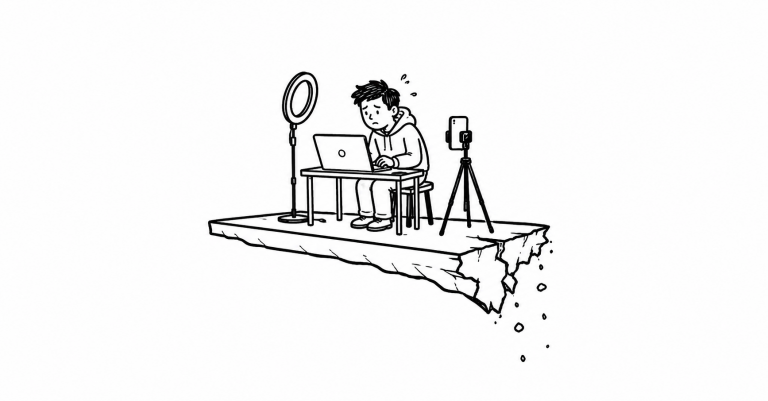
That model has consequences beyond the people laid off. It changes the psychological contract for those who remain. The stable tech career was already weakened by the post-pandemic correction. AI weakens it further because workers are no longer only competing with other workers. They are competing with a future-state version of the company that may not need their role at all. That turns every new AI deployment into a quiet performance review.
It also creates a trust problem. Companies say AI will augment human work, but workers keep watching departments shrink after AI tools arrive. Leaders say the goal is innovation, but employees see payroll reduced while infrastructure budgets expand. The public is told AI will create new opportunities, but displaced workers are asked to retrain into a market where the next layer of work may also be automated. The gap between the promise and the lived experience is becoming politically and culturally unsustainable.
The policy conversation will eventually catch up, but probably late. Governments are more comfortable funding training programs than challenging the incentives that make displacement attractive in the first place. Reskilling is easier to sell than labor protections. Innovation grants are easier to pass than rules around automation disclosure. But if companies can cite AI in broad terms without explaining which functions are being automated, which roles are being eliminated, what productivity gains are expected, and how workers are being transitioned, the public is left with a fog machine instead of accountability.
The next phase of the AI labor story won’t be measured only by layoff totals, which will keep climbing and keep varying by tracker. It will be measured by what companies disclose, what workers are expected to absorb, and whether productivity gains are shared or simply extracted. The future of work is not being written by AI alone. It is being written by the institutions deciding how AI’s benefits and costs are distributed.
That’s why the tech layoff story matters beyond tech. Tech is where the language gets tested first. “Efficiency.” “Transformation.” “Reallocation.” “AI-enabled productivity.” Those terms will migrate into finance, media, healthcare, education, logistics, government, and nonprofit work. The playbook is being built now.
The unsettling part isn’t that AI can do more work. The unsettling part is that companies are learning how to make fewer people responsible for more output while calling the transition progress. AI may be the tool. The labor strategy is the story.