BMW’s 8,000-Job Gamble: Why a Century-Old Automaker Is Hitting the Brakes
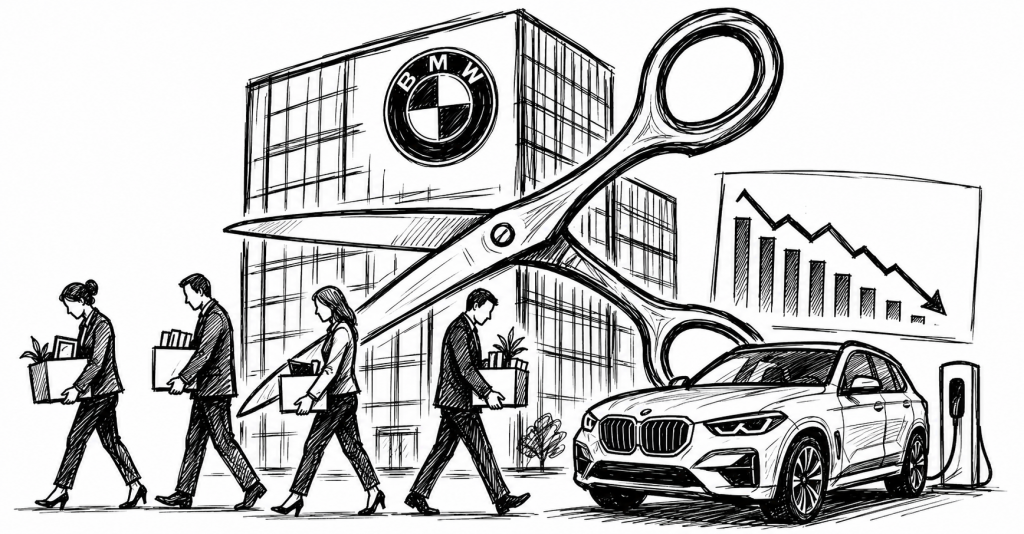
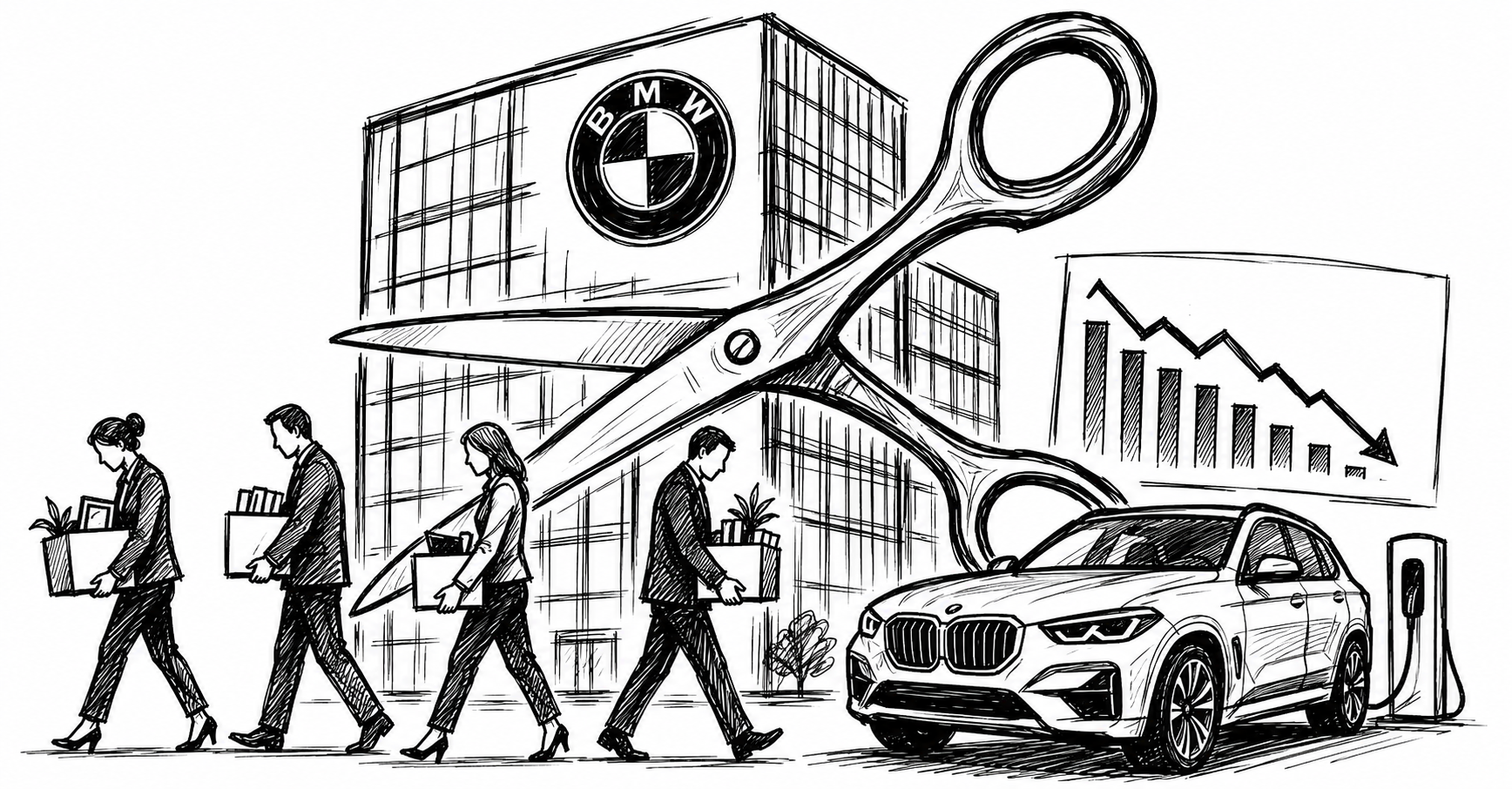
BMW’s announcement of 8,000 job cuts—roughly 5% of its global workforce—by end of 2027 marks a turning point for the German automotive giant. The cuts, primarily targeting desk jobs and administrative roles, signal a company in crisis mode: torn between protecting current profits and betting billions on an uncertain electric future. It’s a story that reveals far more than just one company’s troubles. It’s a window into the existential challenge facing legacy automakers worldwide.
The cuts themselves sound surgical. BMW is offering voluntary buyout packages rather than forced terminations, at least initially. Production plants will remain untouched, with factory workers largely shielded. The company plans roughly €1 billion in annual savings by 2028. On the surface, it reads like prudent restructuring. Dig deeper, and it tells a story of desperation.
The China Factor
The real driver behind BMW’s layoff announcement isn’t the global auto market—it’s China’s collapse. The world’s largest car market is contracting, and Germany’s luxury automakers, which have long depended on wealthy Chinese consumers, are getting crushed.
BMW sold over 840,000 vehicles in China last year, making it BMW’s single largest market. But growth has stalled. Chinese electric vehicle makers—BYD, Xiaomi, NIO, and others—have decimated BMW’s price advantage. These competitors offer EVs that are cheaper, sometimes better equipped, and increasingly seen as more innovative. Meanwhile, Chinese consumers are shifting preferences toward domestic brands faster than anyone predicted.
The math is brutal. Fewer cars sold in China means lower revenue. That hits luxury automakers like BMW harder than mass-market competitors because luxury segments depend on high-margin, high-volume sales in affluent markets. When China falters, there’s no easy backup plan.
Add to this the reality that traditional automakers face in China: they’re competing on Chinese turf against Chinese companies with government backing and lower costs. Tesla’s struggles in China during 2024-2025 should have been a warning sign. For legacy automakers built on century-old engineering and brand heritage, it’s even tougher.
The EV Transition Trap
But China alone doesn’t explain the cuts. The deeper issue is that BMW—like every major traditional automaker—is caught in what might be called the electrification paradox. To remain competitive, the company must invest tens of billions in electric vehicle development, battery technology, and manufacturing infrastructure. Simultaneously, these investments undermine current profitability.
Consider the economics: building an EV battery factory costs billions upfront. Manufacturing efficiency for EVs differs fundamentally from internal combustion engines. Supply chains need rebuilding. Software and autonomous capabilities demand entirely new competencies. For a company like BMW, rooted in combustion engine expertise developed over a century, this is essentially learning a new business while still running the old one.
The traditional car business still generates substantial cash, but it’s declining. Internal combustion engine vehicles face regulatory headwinds worldwide. Europe has set phase-out dates. California and other regions are tightening emissions standards. Tariffs on imported vehicles are rising, making production outside Europe less viable.
So BMW must keep the legacy business profitable enough to fund its EV transition while that transition simultaneously eats into legacy business margins. It’s a squeeze. The company can’t grow its way out—global auto demand isn’t expanding enough. It must cut costs, and cutting administrative overhead is the most politically palatable option in Germany.
The German Conscience Problem
This is where Germany’s labor laws and corporate culture complicate the picture. Laying off workers in Germany is expensive and legally complex. Works councils must be consulted. Negotiations with unions are mandatory. Severance packages are generous by global standards. Voluntary buyouts sidestep some of this friction, but they’re also more expensive per employee than outright terminations.
This partly explains why BMW is offering buyouts rather than forced cuts. It’s the path of least labor resistance. But it also means the company is paying a premium for restructuring—making the cost-cutting even more necessary to justify the expense.
The irony is thick: BMW, one of Germany’s flagship companies, is essentially paying workers to leave Germany. The message is clear—the company believes it can’t fund current employment levels while executing its EV transition.
What This Means for the Industry
BMW’s cuts are a canary in the coal mine for legacy automakers. Volkswagen, Mercedes-Benz, Audi, and others face similar pressures. These companies all depend on China, all are investing heavily in EVs, and all are watching their traditional profit sources erode.
What’s notable is that BMW isn’t cutting production capacity. That would signal demand destruction. Instead, it’s cutting administration—back-office functions, middle management, some R&D roles. This suggests BMW still believes in near-term demand for its vehicles, even as it restructures for a different future.
The question is timing. Can BMW cut enough overhead to fund its transition before EV competition erodes its premium positioning entirely? Tesla, while facing its own challenges, has far leaner administrative structures. Chinese EV makers operate on different cost bases. BMW must become more efficient while maintaining the engineering excellence that justifies its premium pricing.
The Broader Reckoning
These layoffs also reflect a sector-wide reality: the transition from combustion to electric vehicles likely requires fewer workers overall. A traditional car factory requires thousands of assembly line workers. Battery factories require far fewer. Software engineering jobs will grow, but not enough to offset manufacturing job losses.
This structural unemployment in the auto sector is beginning to bite. It won’t be reversed through innovation or market growth—it’s baked into the transition itself. For workers, communities dependent on auto manufacturing, and governments relying on auto industry tax revenue, this represents a significant challenge.
BMW’s decision to cut desk jobs first is savvy politics but also pragmatism. The company needs to preserve production for as long as demand holds. It’s betting that voluntary departures from administrative roles will ease the financial strain without triggering labor unrest at plants.
The Verdict
BMW’s 8,000-job cuts aren’t a sign of particular mismanagement—they’re symptomatic of an industry in structural transition. The company faces headwinds from weakening China demand, punishing EV transition costs, and increasing competition from both legacy competitors and nimble new entrants.
The real question isn’t whether these cuts make sense for BMW. They do. The question is whether they’re enough. Can slimmed-down administration support a successful EV transition while luxury competitors circle? Can BMW preserve its brand premium as Chinese competitors offer cheaper alternatives? Can the company execute a technology transformation while its core business faces secular decline?
For BMW, the next 18 months will determine whether these cuts buy enough time and capital to emerge as a credible electric automaker, or whether they’re merely the first wave of a longer, more painful restructuring yet to come.