Apple’s Price Hike Shows the Consumer Cost of the AI Buildout
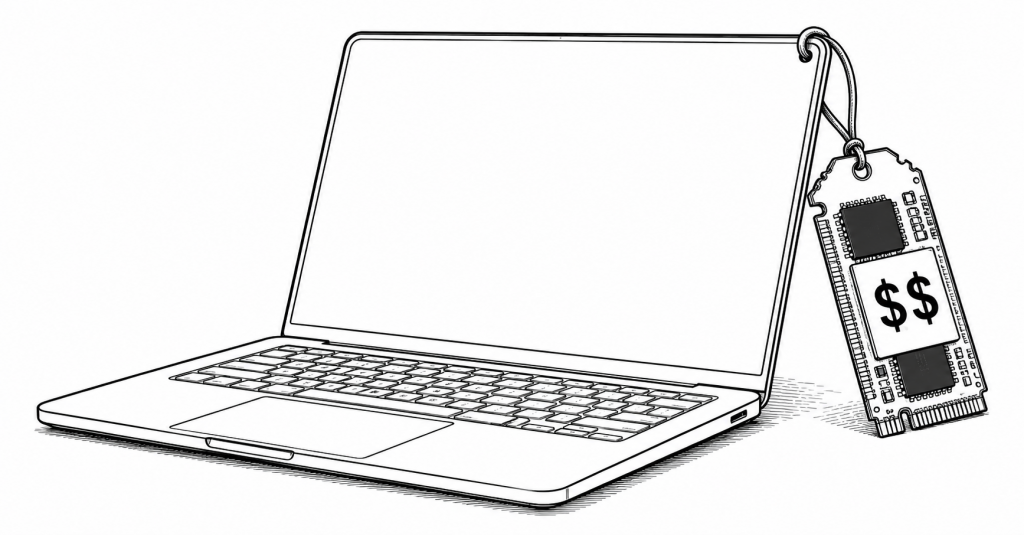
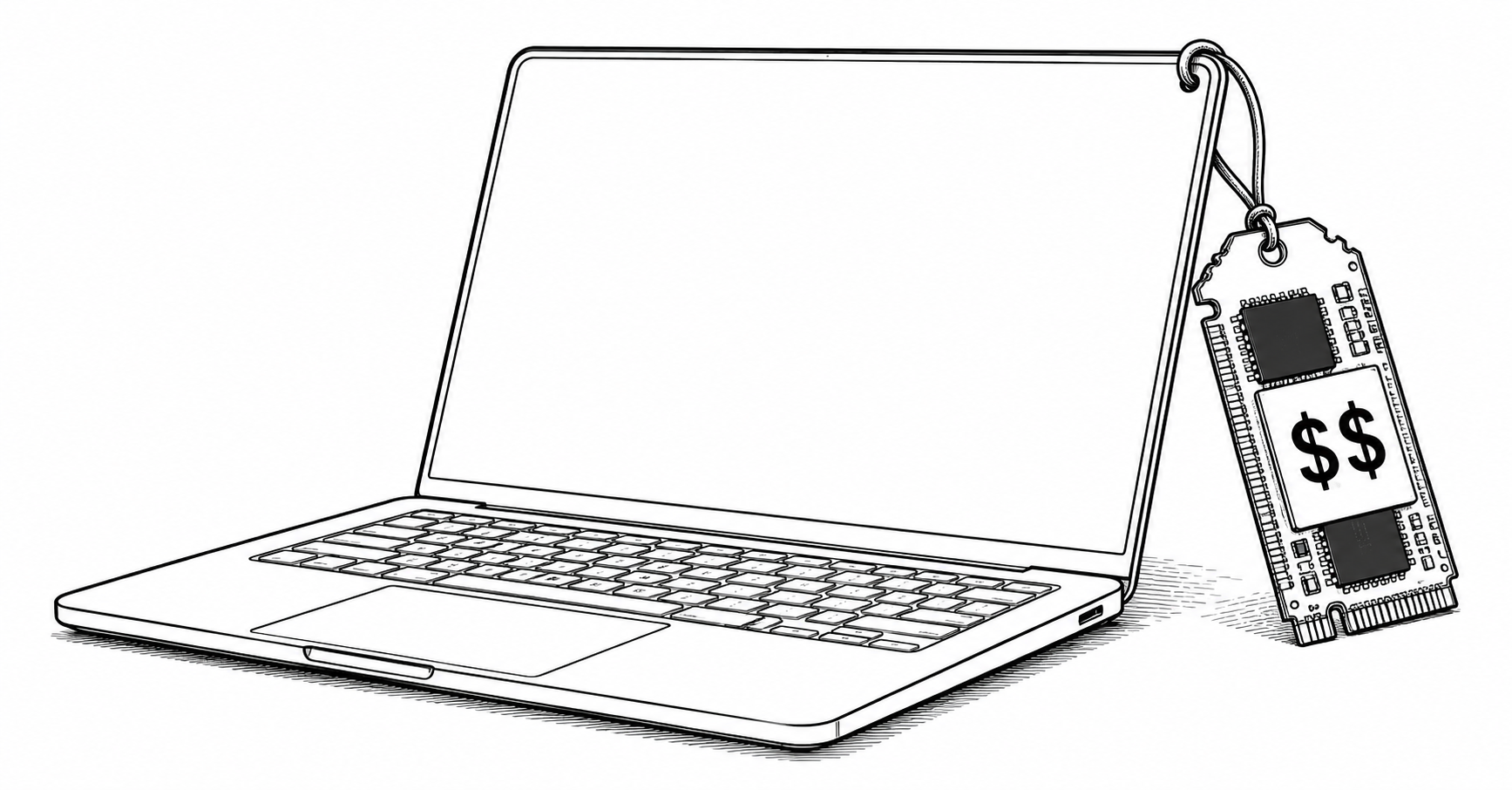
Apple is raising prices on MacBooks and iPads because the AI boom is driving up the cost of memory and storage. The move turns an abstract infrastructure race into a consumer-price story: the cost of AI is beginning to show up at checkout.
Apple’s latest price increase is not just a product-pricing decision. It is a signal that the AI economy is beginning to move from corporate balance sheets into household budgets.
The company raised prices on several MacBook and iPad models Thursday, citing sharp increases in the cost of memory and storage components. The MacBook Air now starts at $1,299, up from $1,099. The iPad Air is now $749, up from $599. Other models also moved higher, including the MacBook Pro, iPad Pro, and Apple’s lower-priced MacBook Neo.
Apple’s explanation was direct. The company said the rapid expansion of AI data centers has created extraordinary demand for memory and storage, raising component costs faster than it could absorb. “We know this is not welcome news,” Apple said, adding that it was working to find solutions. Outgoing CEO Tim Cook had already warned last week that price increases were becoming unavoidable.
That is the important shift. For much of the AI boom, the costs have been discussed in the language of capital expenditure. Microsoft, Meta, Amazon, Google, and other major technology companies have been pouring hundreds of billions of dollars into data centers, chips, servers, energy capacity, and AI infrastructure. Investors have debated whether those investments will produce enough revenue. Workers have debated whether AI will restructure employment. Policymakers have debated energy use, chip access, and national competitiveness.
Now consumers are being asked to pay part of the bill.
Apple’s price hike makes the AI buildout more visible because it connects the back-end infrastructure race to a familiar consumer product. A MacBook is not an AI data center. An iPad is not a frontier model. But both rely on memory and storage components that are now being pulled into a larger supply-chain contest. When hyperscalers compete for the same underlying materials and manufacturing capacity, the pressure does not stay confined to the companies building AI systems. It moves through the supply chain and eventually lands on consumers.
That is what makes this moment different from a normal Apple price adjustment. Apple has raised prices before. It has introduced premium tiers, adjusted configurations, and used product design to steer consumers toward higher-margin models. But an intra-cycle price hike tied explicitly to AI infrastructure costs carries a different message. It tells consumers that the AI economy is not only creating new tools. It is also raising the cost of existing ones.
This is a harder narrative for the technology industry to manage. AI has been sold to the public as a future of increased productivity, convenience, creativity, automation, and abundance. The promise is that the tools will make work faster, products better, services cheaper, and knowledge more accessible. But the near-term economics are moving in the opposite direction for some consumers. The infrastructure required to build that future is expensive, resource-intensive, and supply-constrained.
Apple’s position is especially revealing because the company has one of the strongest supply-chain operations in the world. It has scale, supplier leverage, cash, and long-term procurement power. If Apple says it can no longer fully shield consumers from component inflation, that suggests the pressure is broader than one company’s pricing strategy. It also raises the question of which other consumer electronics categories will follow: smartphones, PCs, tablets, gaming consoles, televisions, smart home devices, and even cars all rely on increasingly contested chips and storage components.
The company avoided raising iPhone prices in this round, which is telling. The iPhone remains Apple’s core product and the center of its consumer ecosystem. Holding that line may soften the immediate backlash, but it does not eliminate the structural problem. If memory and storage costs remain elevated, Apple and other manufacturers will face the same choice again: absorb costs, redesign products, reduce margins, delay features, or pass the costs to consumers.
That choice has broader consequences. Higher prices do not hit all buyers the same way. For affluent consumers, a $100 or $200 increase may be irritating but manageable. For students, freelancers, small business owners, educators, nonprofit workers, and lower-income households, that same increase can delay replacement cycles or push them toward older devices. The AI infrastructure race may therefore widen the access gap in consumer technology, especially if baseline devices become more expensive just as schools, workplaces, and services expect people to have more powerful hardware.
This is where Apple’s announcement becomes more than a business story. It shows how AI can create downstream costs even for people who never asked for AI features, never subscribed to an AI tool, and never bought into the hype. The infrastructure buildout changes component markets. Component markets change device prices. Device prices shape who can afford modern tools.
The AI boom is often framed as a competition over who will control the future. Apple’s price hike shows another side of that competition: who pays for the race while it is still being built.
The answer is becoming clearer. It is not just investors. It is not just companies. Increasingly, it is consumers standing at the checkout screen, discovering that the cost of AI has been added to the price of the device they were already planning to buy.