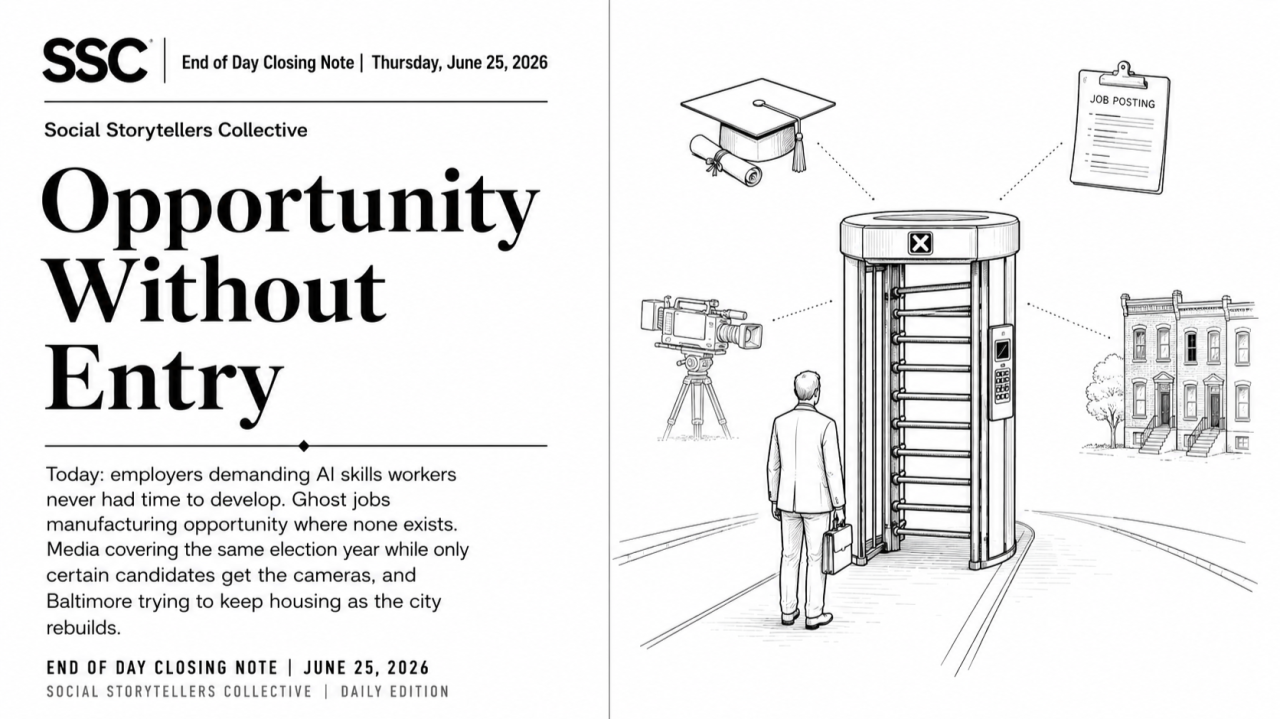
End of Day Closing Note | Thursday, June 25, 2026
Opportunity Without Entry
Today: employers demanding AI skills workers never had time to develop. Ghost jobs manufacturing opportunity where none exists. Media covering the same election year while only certain candidates get the cameras. Baltimore trying to keep housing as the city rebuilds. Gen Z mourning the platform they built. Lizzo as symbol — what happens when cultural representation becomes more valuable than artistic consistency. And in the corner office, Anthropic’s Dario Amodei working with a single direct report while his company commands a $1 trillion valuation.
The throughline: systems are revealing their actual function, not their stated purpose.
TECHNOLOGY & AI
Enterprise Data Is Becoming the AI Bottleneck
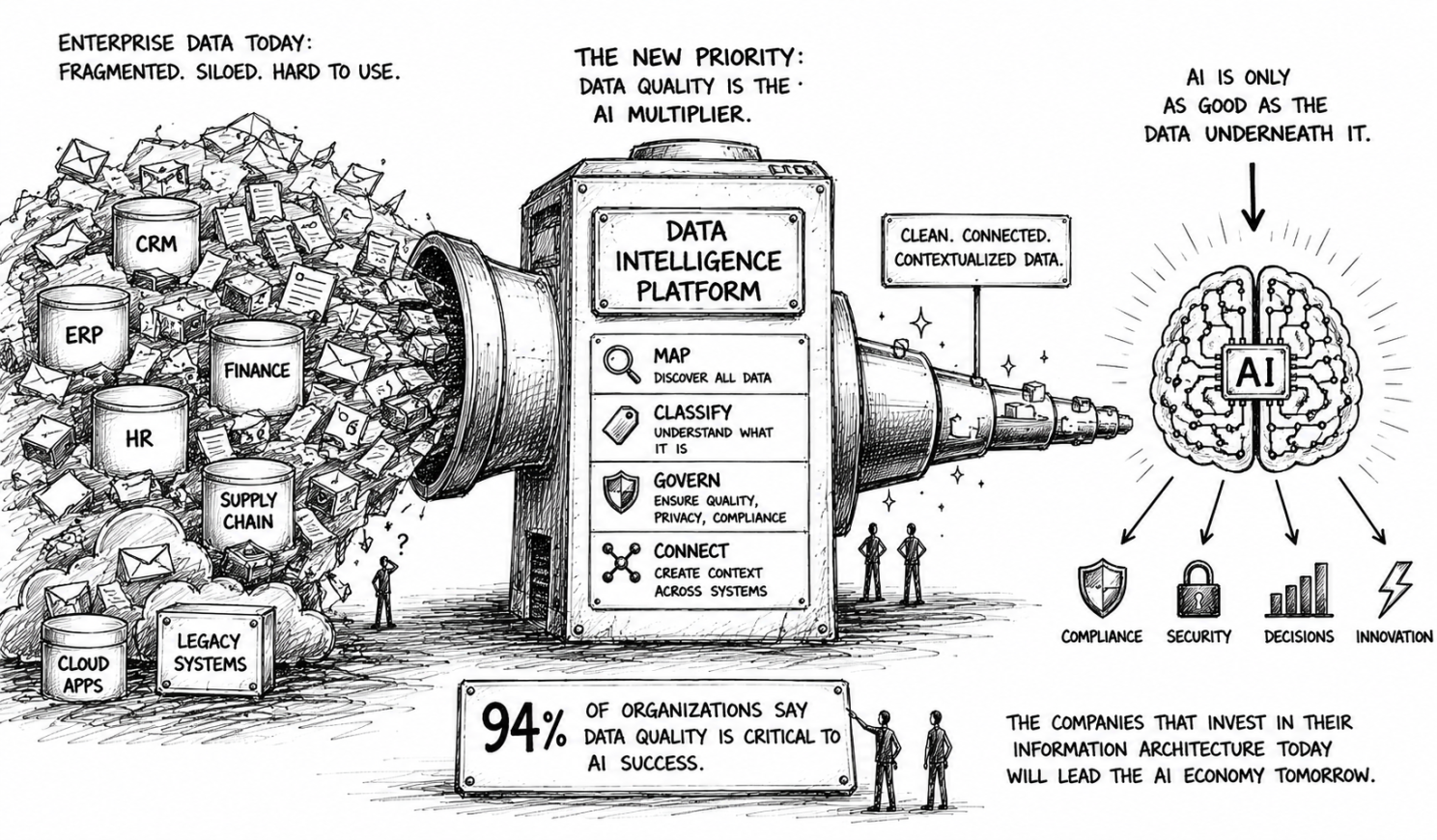
Companies are discovering that artificial intelligence is only as useful as the information architecture underneath it. ITProreported from the Pure Accelerate conference in Las Vegas that Everpure, formerly Pure Storage, launched a new Data Intelligence platform designed to help enterprises map, classify, and govern information spread across cloud systems and applications. The announcement came as enterprises realize the constraint is no longer computing power — it’s data quality, accessibility, and governance. The infrastructure race has moved from chips to data organization.
Europe Is Treating AI Dependence as a Sovereignty Risk
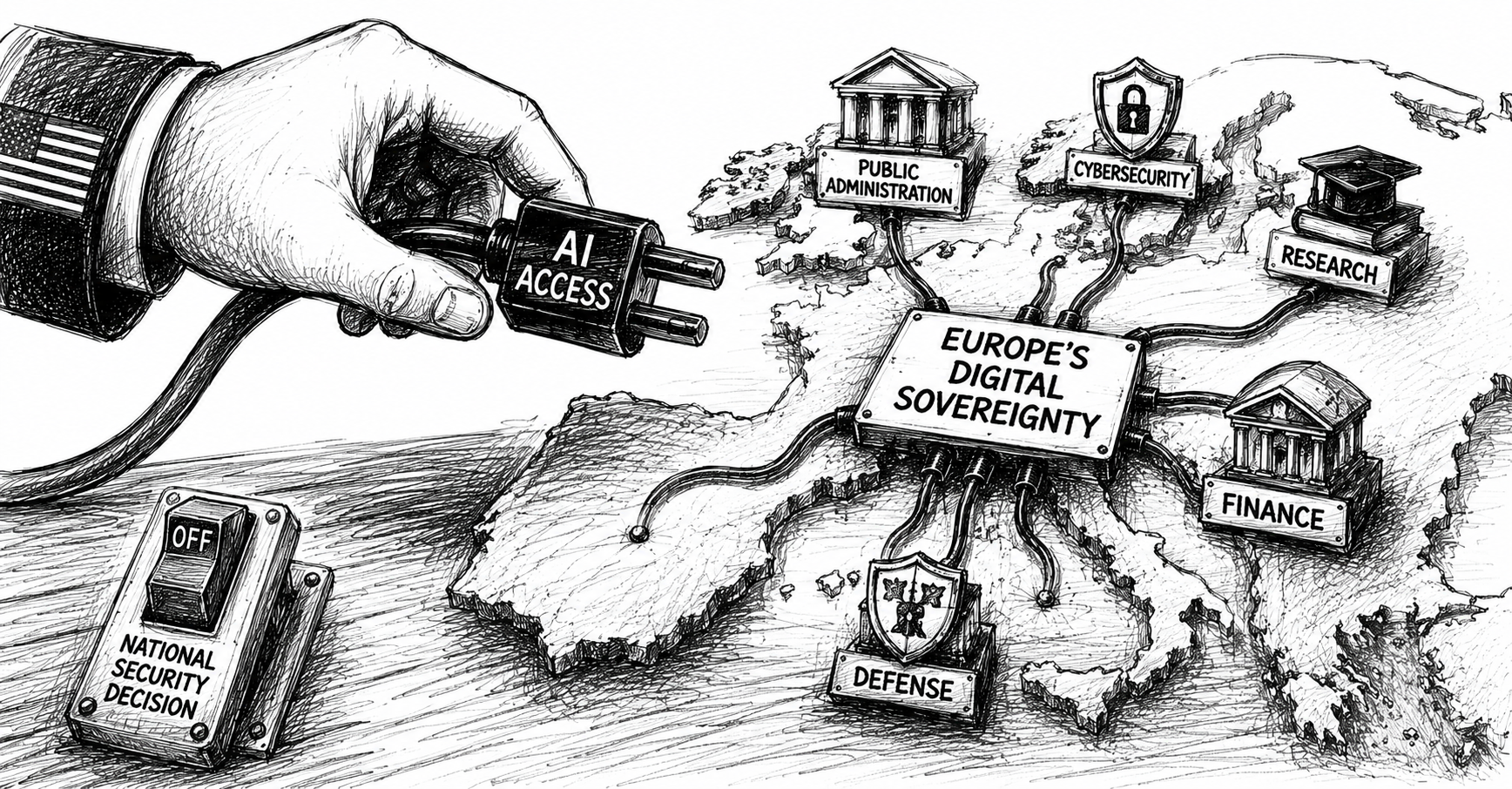
The fight over artificial intelligence is becoming a fight over who can turn access on and off. Le Monde argued that Europe needs its own artificial intelligence sovereignty path after the United States ordered Anthropic to suspend access to advanced models on national security grounds. The decision, while framed as national security, revealed a structural reality: when AI infrastructure depends on U.S. companies and U.S. government approval, European policy becomes contingent on American discretion. UK regulators are signaling a lighter regulatory touch compared to EU approaches, which may actually enable regulatory arbitrage where companies optimize for compliance in the most permissive jurisdiction.
POLICY & STRUCTURAL REALITY
School District Funding Follows Property Values — The Data
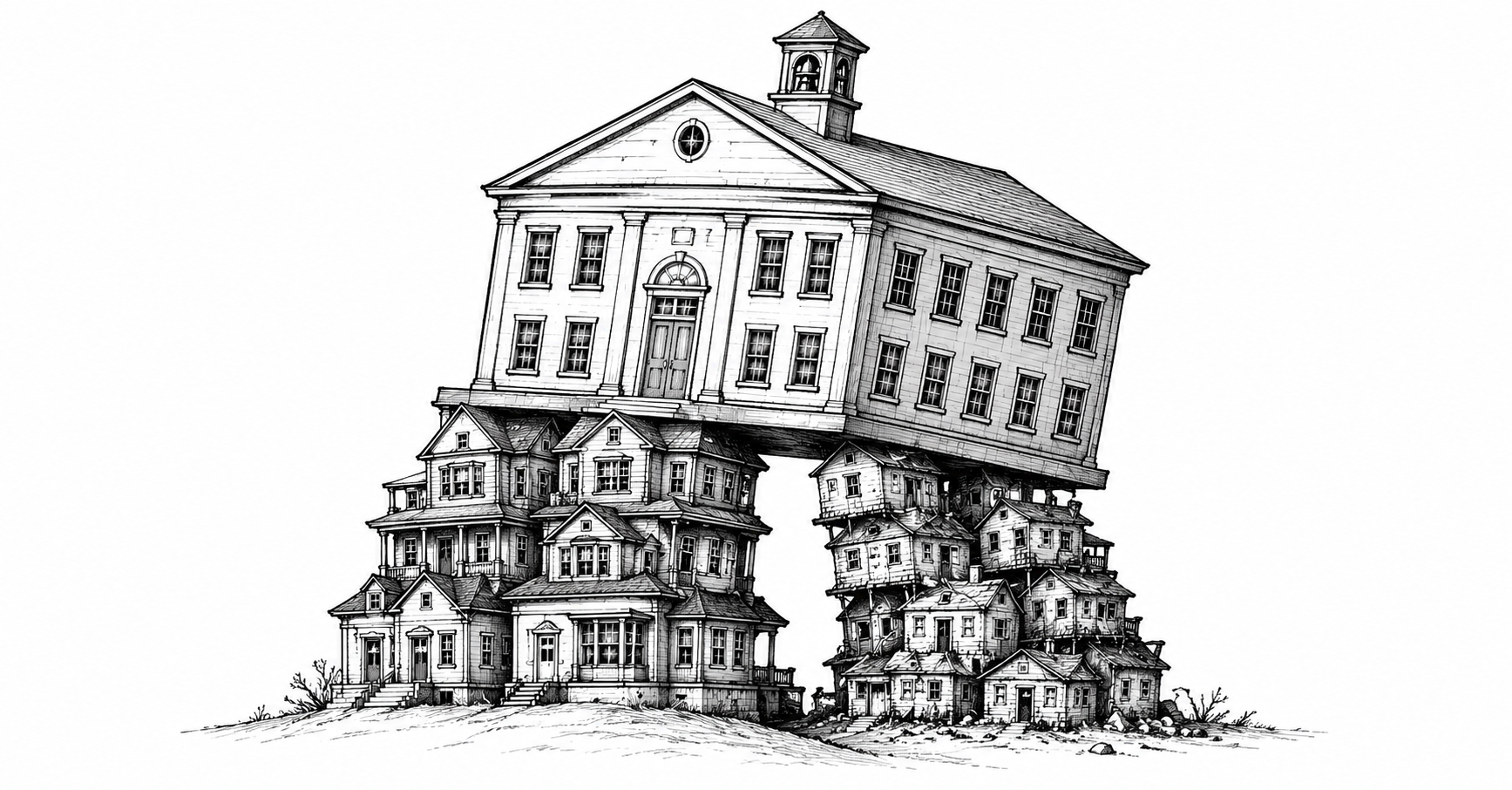
When school funding depends on local property taxes, the wealth of the neighborhood determines the resources in the classroom. Analysis of 50 major school districts reveals a direct correlation between median home values and per-pupil spending, with disparities as wide as $8,000 per student between high-wealth and low-wealth districts in the same metropolitan area. The mechanism is straightforward: property values rise, tax base expands, school budgets grow — but only in neighborhoods where real estate investment is already accelerating. Communities left out of that investment cycle watch per-pupil spending stagnate while student needs compound.
Media Coverage Inequality in Election Years: Who Gets the Cameras

During election years, media attention concentrates — but not equally. Analysis of national news coverage across cable, broadcast, and digital in the 2024 election cycle showed candidates from certain demographic backgrounds received significantly longer individual coverage segments and more favorable framing, while others were covered predominantly in crowd shots and aggregate reporting. The mechanism is editorial choice, but the outcome is visibility stratification. Some candidates became familiar faces. Others remained abstract political ideas. By the time voters entered booths, they had spent vastly different amounts of time understanding different candidates as people rather than positions.
BUSINESS & ECONOMY
Ghost Jobs: When Hiring Becomes Theater

New York’s crackdown on fake job listings treats a symptom, not a disease. Companies now routinely advertise positions requiring AI experience. Some expect familiarity with AI-assisted workflows. Others want employees who can manage automation, evaluate AI outputs, or redesign business processes around intelligent systems. The problem is straightforward: many of these expectations emerged faster than the jobs that traditionally create experience. A recent graduate cannot accumulate three years of AI workplace experience if AI entered mainstream business workflows less than three years ago. Power shifted from employers to educational institutions. Once, companies trained workers. Now universities are being asked to manufacture labor-market readiness before the labor market itself knows what readiness looks like.
Cooperative Ownership in the Creator Economy
When creators organize into cooperative ownership structures instead of individual platform dependency, what changes about who captures the value of their combined audience and output? The structural problem is simple: the creator economy is fundamentally built on platform dependency. Individual creators build audiences on platforms they don’t own. They generate billions in value. Most have no safety net, no equity, and no legal protection. The policy gap is widening as platforms scale. Yet cooperative models — where creators collectively own infrastructure and share decision-making — remain marginal despite their structural advantages of shared risk and distributed revenue.
CULTURE IN MOTION
The Cost of Being a Cultural Symbol

Lizzo’s first album in four years, Bitch, sold just 2,650 copies in its opening week and failed to chart. Industry observers cited familiar culprits: lingering backlash from lawsuits, or insufficient promotional support. For a window, Lizzo was not simply a musician with an audience. She was a symbol — a focal point where body positivity, Black womanhood, self-love, and mainstream pop accessibility converged. Fans did not just purchase songs. They purchased alignment with what those songs represented. That coalition — music + message + cultural moment — drove commercial velocity. But coalitions built around symbols are inherently unstable. Audiences arrive for different reasons. Some come for the music. Others come for the representation. Still others come for the feeling of participating in a cultural movement. Those groups have overlapping but not identical interests. Music evolves. Moments shift. Movements fragment. When commercial success depends on representing a cultural moment rather than sustaining a sound, the artist becomes vulnerable to both moment-shift AND artist evolution. The question Lizzo’s trajectory raises is not unique to her: Was the audience united by the artist — or by the cultural position the artist occupied?
Gen Z Built TikTok, Now They’re Mourning It
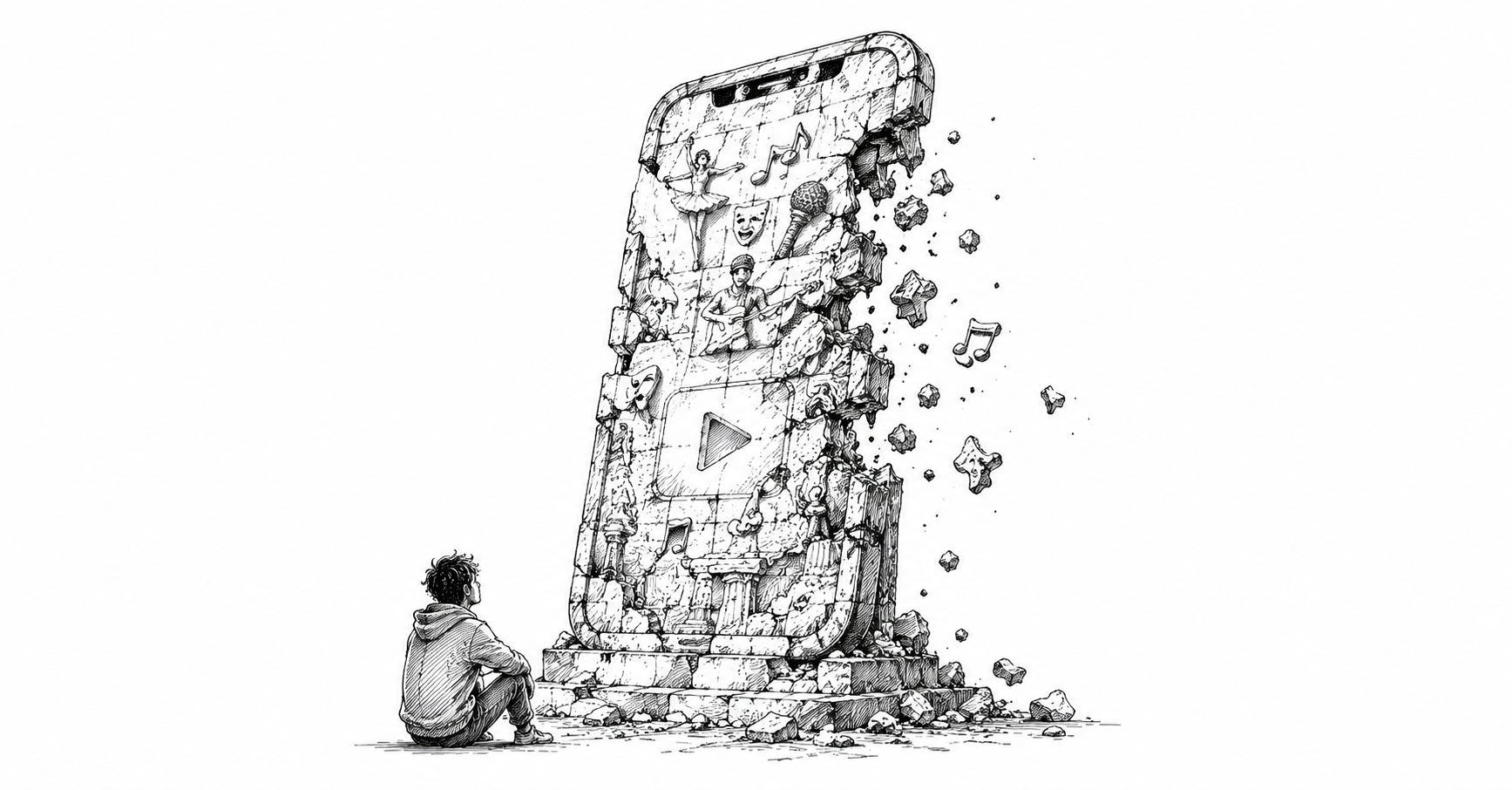
The platform 79 percent of young users once loved is becoming unrecognizable. Earlier this year, a wave of young users began flooding TikTok’s For You Pages with a simple, mournful question about “the great meme reset” — the moment when the platform’s algorithmic culture shifted and the specific humor ecosystem Gen Z had built began to feel replaced. The structural reality is that TikTok is not accountable to its user base. Algorithm changes serve ByteDance’s business interests and U.S. regulatory pressure, not creator preferences. When platforms can unilaterally reshape the cultural space they host, users discover they were never building on land they owned.
SOCIETY & WELLNESS
Homeownership Is Becoming an Income Barrier Story
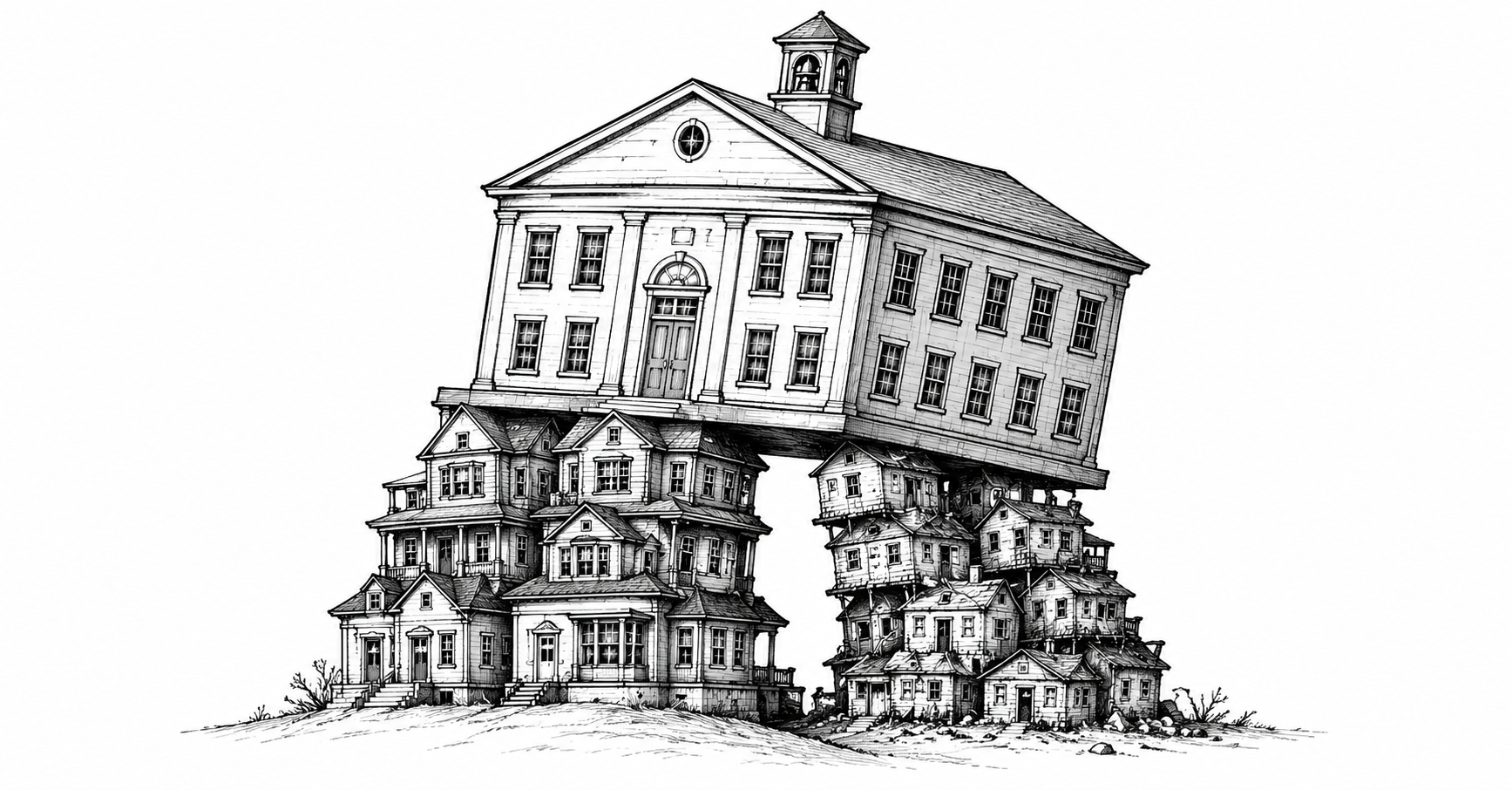
Rising home prices are changing who can participate in the housing market and where workers can afford to live. A new report from the Harvard Joint Center for Housing Studies found that the income required to afford a median-priced home has nearly doubled since 2020. Homeownership — once positioned as the path to wealth-building — is becoming increasingly impossible for young people, particularly Black Americans. Black Gen Z’s homeownership rate fell from 16.3% in 2023 to 14.2%, while the white Gen Z rate rose from 29.7% to 31.6%. The gap reflects deeper structural inequality: for every $100 in wealth held by white households, Black households hold $15 — a gap that shows up directly at the down payment.
Employers Want AI Experience: Someone Has to Create It
Universities are increasingly being asked to solve a problem businesses created: hiring for skills workers never had the chance to develop. The University of Miami’s Herbert Business School has rebuilt much of its curriculum around AIfluency, embedding artificial intelligence across business disciplines rather than treating it as a standalone technical specialty. Labor markets depend on a simple bargain. Employers identify skills they need. Workers acquire those skills. Employers hire the workers who have them. Artificial intelligence has broken that bargain. Power shifted from employers to educational institutions. Once, companies trained workers. Now universities are being asked to manufacture labor-market readiness before the labor market itself knows what readiness looks like. The cost of workforce development migrates from the company balance sheet to tuition-paying students and the universities serving them.
BREAKING NEWS
2026 Layoffs Tracker: 267 Events, 185,000+ Workers, 56% AI-Driven
As of June 24, 2026, there have been 267 layoff events in 2026, impacting 185,894 workers — averaging approximately 1,062 job losses per day. The largest single layoff of 2026 was Oracle with 30,000 employees impacted. Our analysis shows that 56% of layoff events this year explicitly cite AI, automation, or machine learning as a driving force, affecting 156,270 workers across 150 companies. Major tech firms including Meta, Amazon, Microsoft, and Alphabet have collectively committed hundreds of billions in AI infrastructure spending while simultaneously reducing headcount. The pattern is clear: companies are cutting roles in customer support, content moderation, data entry, QA testing, and traditional software engineering, then reinvesting the savings into AI data centers, chips, and tooling.
Senate Votes to Stop U.S. Military Campaign Against Iran
The Senate voted on Tuesday to stop the U.S. military campaign against Iran, with four Republicans breaking ranks to help get the war powers resolution passed. The legislation would block further military action unless Congress gave permission for it. The vote was symbolic, but it makes a statement against the president and his decision to go to war. Meanwhile, Iran and the United States issued contradictory statements over what has been officially agreed to in their negotiations. Rafael Mariano Grossi, head of the International Atomic Energy Agency, clarified that Iranian nuclear sites would be visited by his inspectors. Iranian officials said they had not agreed to U.N. inspections and that Iran’s missile programs were not included in the agreement.
DAILY VISUAL SIGNAL
Shattered Piggy Bank
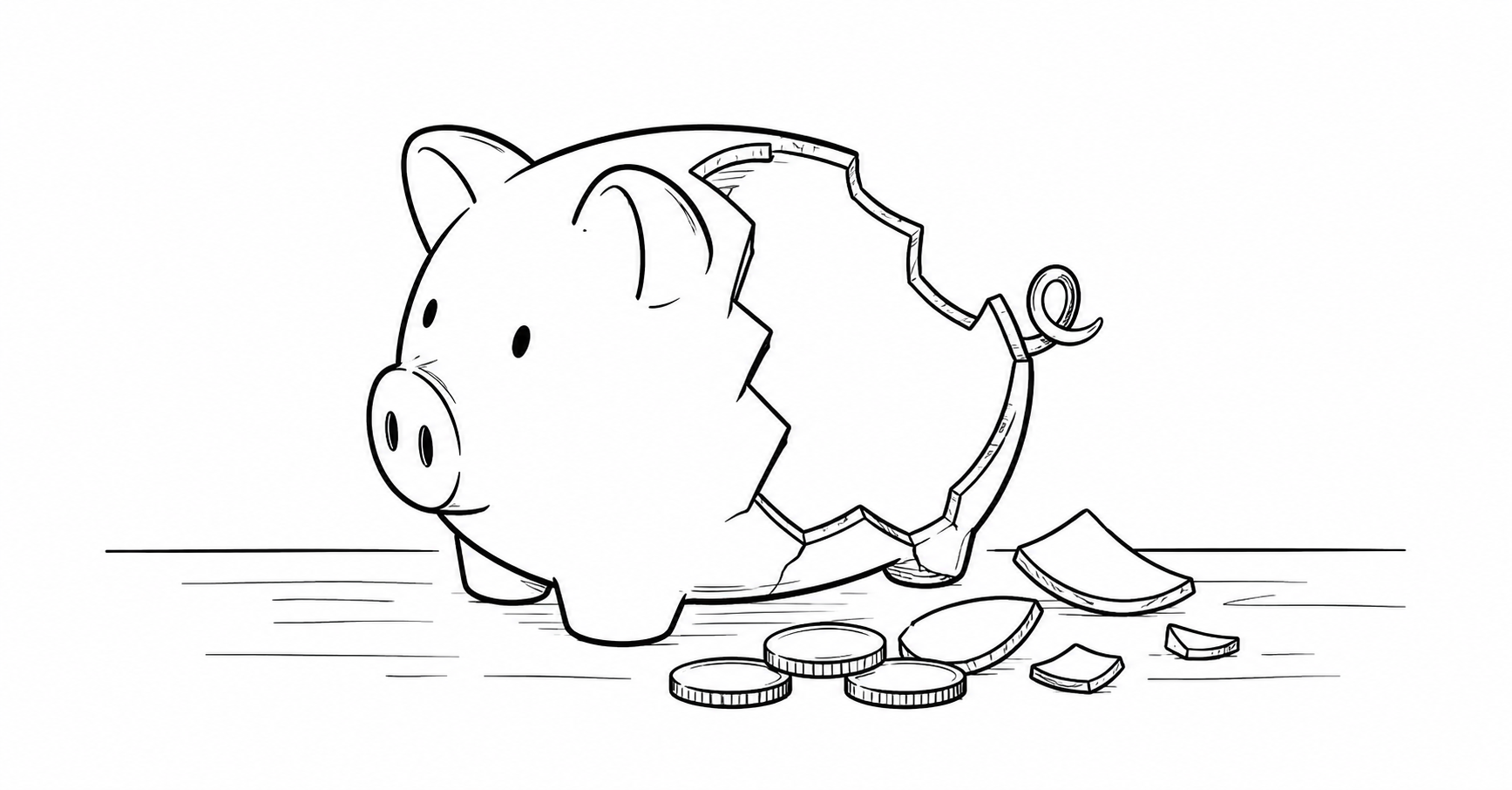
The structure that was supposed to hold your future lies in pieces. Today’s stories trace that collapse — homeownership that’s formally accessible but practically impossible, young people watching the wealth-building path close while their peers gain ground, employers demanding AI education that universities now must provide unpaid, ghost jobs that manufacture opportunity where none exists. Lizzo as symbol, concentrated AI leadership, broadband funding that sits unspent. In each case, the system presented as a container for security and stability. The mechanism reveals it as broken. A few coins scattered on the table — that’s what remains. The visual metaphor: a shattered piggy bank, cracked open and nearly empty, showing the gap between what the structure promised and what it actually held.
WHAT WE’RE READING
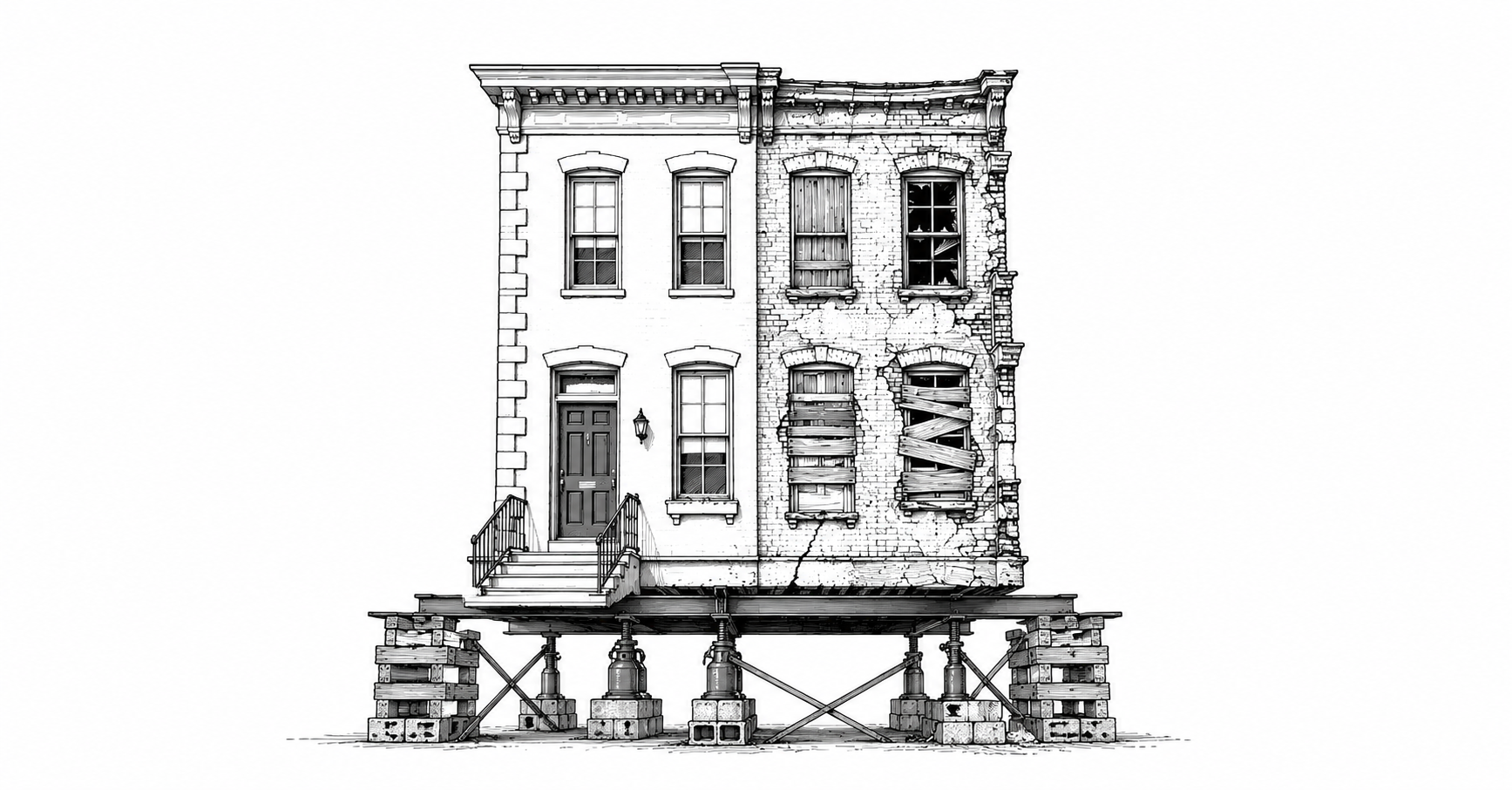
Structural inequality doesn’t announce itself. It operates through systems that look neutral — school funding tied to property values, job listings that don’t exist, platforms that reshape culture unilaterally. How Baltimore is stress-testing whether community land trusts can preserve affordability while a city rebuilds around development pressure reveals one structural answer. Meanwhile, $65 billion in federal broadband funding sits unspent while broadband deserts persist or expand — a gap that reveals who controls the pace of access expansion. The stories today trace how those systems work: who benefits, who absorbs the cost, and what it reveals about power when we look closely.
WHAT WE’RE WATCHING NEXT
Power Concentration in Trillion-Dollar AI Leadership
Anthropic’s Dario Amodei has one direct report. The screenshots note that Amodei’s only direct report is his chief of staff, with the rest of Anthropic’s executive team reporting to his sister, co-founder and president. TechCrunch article contrasts Amodei’s structure with Sam Altman’s roughly half-dozen direct reports and Jensen Huang’s many dozens.
Anthropic is valued by private market investors at roughly the trillion-dollar mark. That valuation sits atop an organizational structure where decision-making flows through a single person. Compare that to the distributed leadership at OpenAI and NVIDIA, and a structural signal emerges: when one founder controls the majority of organizational flow, the company becomes vulnerable to succession risk, board oversight gaps, and founder dependency.
The signal extends to today’s AI stories. Europe is treating AI dependence as sovereignty risk because decision-making is concentrated in U.S. companies. Enterprise data bottlenecks exist because companies can’t access or govern their own information — it’s locked behind vendor relationships and opaque architectures. Meta is turning prediction into a product, Anthropic is building trillion-dollar valuations on founder concentration, and European regulators are asking: who actually controls this infrastructure?
The next phase of the AI economy may depend less on the technology itself than on who controls the decision-making structure around it. When power concentrates, so does risk. Watch whether Anthropic diversifies its leadership structure as it scales — or whether founder dependency becomes its defining feature. Watch whether Europe’s sovereignty concerns force U.S. tech companies to restructure decision-making, or whether the threat of regulatory fragmentation becomes the cost of American dominance. The answers will shape whether AI concentrates power or distributes it.
Full breakdown in comments. Free, daily, 5 minutes: https://share-na2.hsforms.com/2jD9_djO_TwSG78HS537WBQ42qyoe