Europe Is Treating AI Dependence as a Sovereignty Risk
The fight over artificial intelligence is becoming a fight over who can turn access on and off.
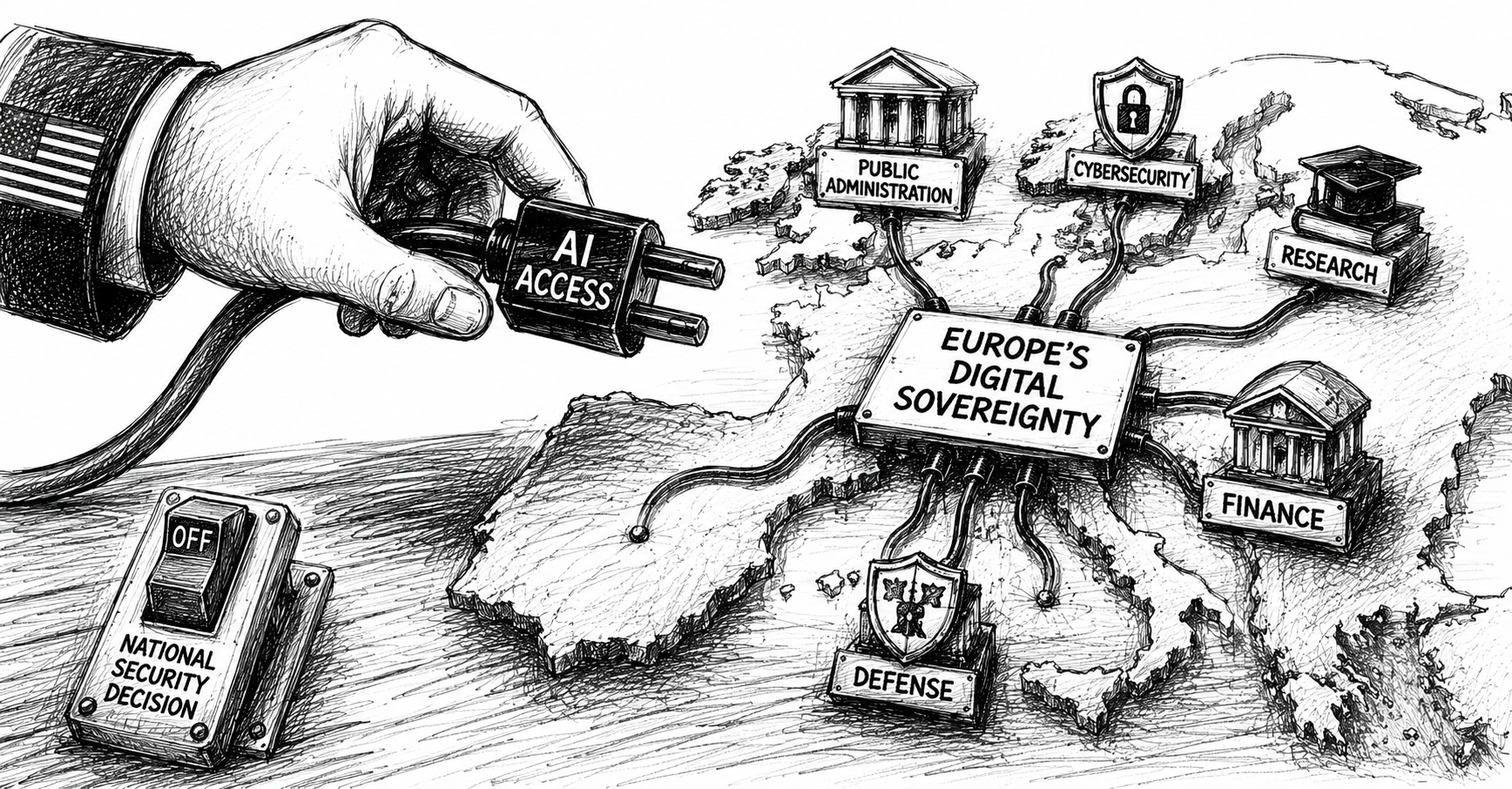
Le Monde argued on June 16 that Europe needs its own artificial intelligence sovereignty path after the United States ordered Anthropic to suspend access to advanced models on national security grounds. The article framed the decision as a warning about Europe’s dependence on American technology infrastructure. The named writer should be confirmed before publication, but the structural point is already visible: AI access is becoming geopolitical leverage.
Technology dependence used to be discussed mostly as a business risk. A company relied on one vendor. A government relied on one cloud provider. A university relied on one platform. Artificial intelligence raises the stakes because the systems are becoming embedded in cybersecurity, public administration, research, defense, and finance. When access changes, entire workflows can be disrupted.
The Anthropic episode gave Europe a concrete example of that vulnerability. A model built by a private company can become strategically important enough that a government decides who may use it. That means the governing authority over the technology may sit outside the country or region depending on it. Europe can regulate AI through the AI Act, but regulation does not create compute capacity, foundation models, data infrastructure, or domestic vendors by itself.
That gap is pushing sovereignty from slogan to procurement strategy. France’s domestic intelligence agency has also moved to replace Palantir with French firm ChapsVision, according to recent reporting from Le Monde and the Financial Times. That transition is expected to take years, which is the point. Once a foreign system becomes deeply embedded, independence is not a switch. It is a rebuild.
The incentive for governments is control. If a foreign provider supplies the model, stores the data, owns the cloud infrastructure, or updates the system, then technical dependence becomes political dependence. The provider does not have to intend harm for the structure to create exposure. A change in law, export rules, licensing, or national security policy can alter access overnight.
Power moves from public institutions to infrastructure owners when governments lack domestic alternatives. A ministry may set policy, but the system carrying out the work may depend on a vendor governed elsewhere. Citizens may experience the service as national, while the technical backbone is foreign. That split weakens institutional autonomy because the state can promise continuity only if the underlying provider remains available.
Europe’s challenge is that sovereignty requires more than regulation. It requires capital, procurement discipline, talent development, compute access, and willingness to support domestic firms before they are as polished as American incumbents. That is expensive and slow. It also forces governments to choose between short-term performance and long-term control.
The next phase of AI policy will likely be fought through contracts as much as legislation. Governments that want autonomy will have to decide which systems are too important to outsource completely. The countries that treat AI infrastructure like roads, energy, and defense capacity will have more room to maneuver. The countries that treat it like ordinary software may discover that access can disappear exactly when the system has become hardest to replace.