The Cost of Being a Cultural Symbol
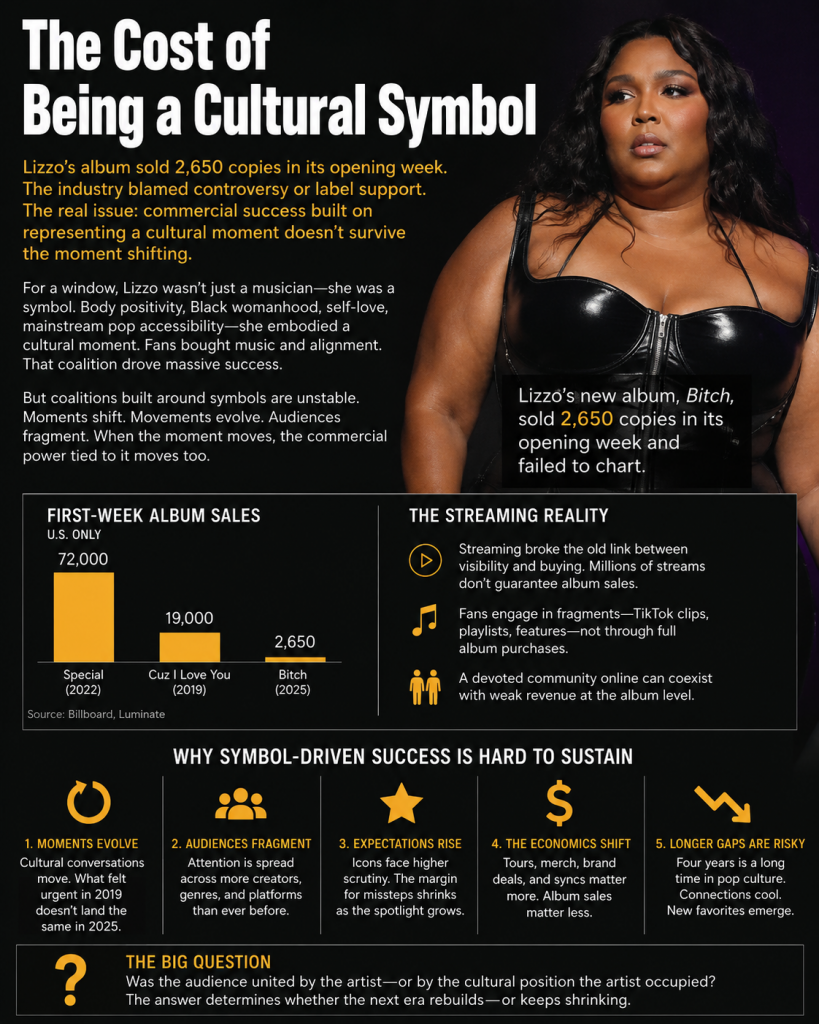
Lizzo’s album sold 2,650 copies in its opening week. The industry blamed controversy or label support. The real issue: commercial success built on representing a cultural moment doesn’t survive the moment shifting.
Lizzo’s first album in four years, Bitch, sold just 2,650 copies in its opening week and failed to chart. Rolling Stone reported industry observers citing familiar culprits: lingering backlash from lawsuits, or insufficient promotional support.
Those explanations describe tactics. They don’t describe structure.
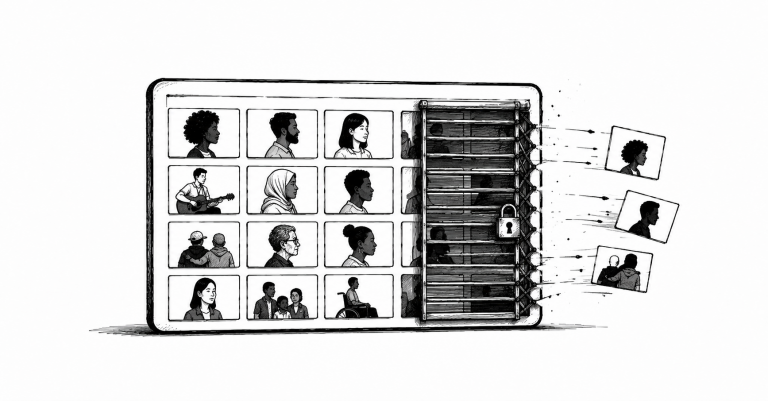
For a window, Lizzo was not simply a musician with an audience. She was a symbol—a focal point where body positivity, Black womanhood, self-love, and mainstream pop accessibility converged. Fans did not just purchase songs. They purchased alignment with what those songs represented. That coalition—music + message + cultural moment—drove commercial velocity.
But coalitions built around symbols are inherently unstable.
Audiences arrive for different reasons. Some come for the music. Others come for the representation. Still others come for the feeling of participating in a cultural movement. Those groups have overlapping but not identical interests. Music evolves. Moments shift. Movements fragment.
The economics of streaming accelerated this fragmentation. A listener no longer needs to buy an album to support an artist. They can save a few songs to a playlist, follow on TikTok, watch clips on YouTube, and never contribute to first-week sales. Visibility and loyalty became separate things. An artist can have millions of viewers and collapsing sales simultaneously.
The celebrity landscape intensified the problem. Audiences once rallied around a handful of cultural figures. Now they divide attention across creators, influencers, niche genres, and algorithmically curated communities. Sustaining a broad coalition requires constant renewal. Four-year gaps between projects make that harder.
This is not a story about whether one album underperformed. It is about the structural difference between artists whose commercial power depends on sustained artistry and artists whose commercial power depends on representing a moment.
Moments end. Artistry persists. When those two become inseparable in the audience’s mind, the artist becomes vulnerable to both. The coalition doesn’t disappear. It scatters—back to the TikTok clips, the playlists, the prior era where cultural alignment was tighter.
The question Lizzo’s trajectory raises is not unique to her: Was the audience united by the artist—or by the cultural position the artist occupied?